History
Event 7
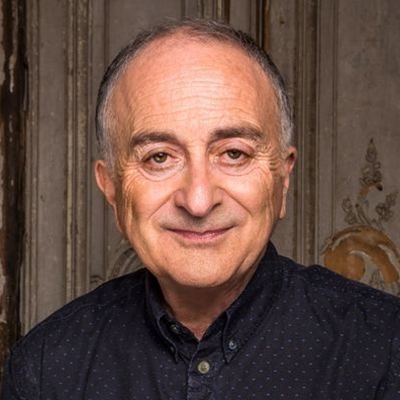
Tony Robinson talks to Kate Bliss
Power, Faith and Betrayal in the Making of England
– Meadow Stage
Read moreHear from one of our best-loved historical experts and actors, Sir Tony Robinson, about his debut novel for adults, an epic story of greed, ambition and betrayal. The House of Wolf moves between multiple characters across Rome, Wessex and Lindisfarne, and is a witty recreation of the Anglo-Saxons, Alfred the Great and the making of England.
Robinson discusses drawing on his own knowledge of history, how his acting career impacted his book, and moving from writing for children to adults. Robinson was the original presenter of Time Team, and has had a long acting career, including playing Baldrick in Blackadder and the Sheriff of Nottingham in Maid Marion and Her Merry Men, which he also wrote. He talks to antiques expert and television presenter Kate Bliss.
Event 14
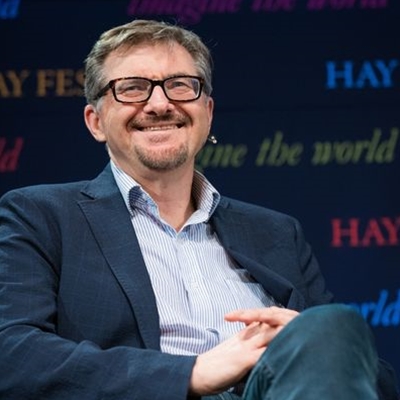
Serhii Plokhy talks to Oliver Bullough
The British Pugwash Lecture: The Nuclear Age
– Meadow Stage
Read moreIt is 35 years since the end of the Cold War – and the nuclear threat is once again reshaping global politics. But in the decades since the Berlin Wall fell, have we become complacent about the risks it poses? Acclaimed historian Serhii Plokhy discusses his timely new book, The Nuclear Age: An Epic Race for Arms, Power and Survival, tracing the history and geopolitics behind the nuclear arms race from the first atomic bomb to today.
The Professor of Ukrainian History at Harvard talks to investigative journalist Oliver Bullough, author of Everybody Loves Our Dollars, asking what we can learn from the first nuclear arms race that can help us to stop the new one.
Supported by Pugwash Conferences on Science and World Affairs
Event 35
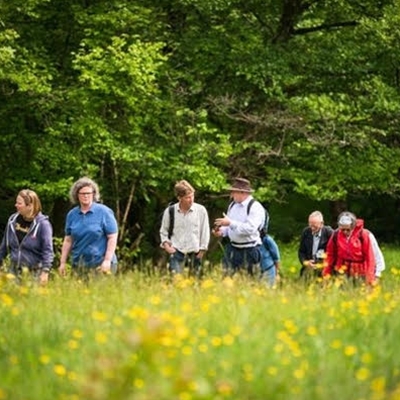
A Borderland Walk: New Roots, Ancient Paths
With Sarah Price and Joseph Emmett
– Meeting Point on Festival Site
Read moreThis special guided walk invites you to step beyond Hay-on-Wye and into the richly layered border landscape that has shaped centuries of history. Led by professional walking guide Sarah Price, with writer and historian Joseph Emmett accompanying, this gentle circular walk blends walking, listening and reflection.
Sarah will share local insight into the landscape and its human history, while Joseph draws on his book New Roots, Ancient Lands: Walking Herefordshire’s History, offering short readings and welcoming questions as the walk unfolds. A chance to experience the countryside as both place and story.
In partnership with Sarah Price Hiking
Event 43
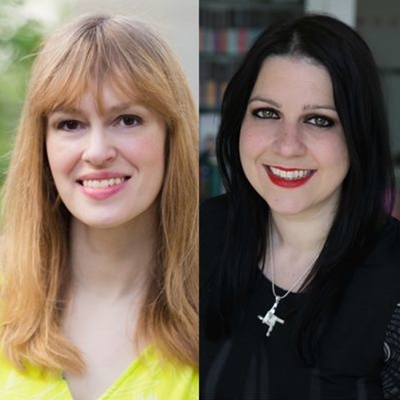
Elodie Harper and Janina Ramirez talk to Samira Ahmed
(Mis)representation: Women’s Stories
– Discovery Stage
Read morePeel back the layers of history and learn the stories of misunderstood, ignored and forgotten women in this discussion with writers Elodie Harper and Janina Ramirez. The pair speak to journalist and broadcaster Samira Ahmed about finding and writing about the stories of real women from centuries past.
Harper’s latest novel is Boudicca’s Daughter, in which she imagines the life of Solina, daughter to the legendary warrior and queen. Harper, who worked as a reporter at ITV News, is also the best-selling author of the Wolf Den trilogy.
Historian Ramirez’s Legenda looks at how the lives of women including Joan of Arc and Lady Godiva have been misrepresented by those keen to craft national identities. She explores the real stories behind the legends. Ramirez is an Oxford University academic, author of Femina, and a regular guest presenter of BBC Radio 4’s Front Row.
Event 51
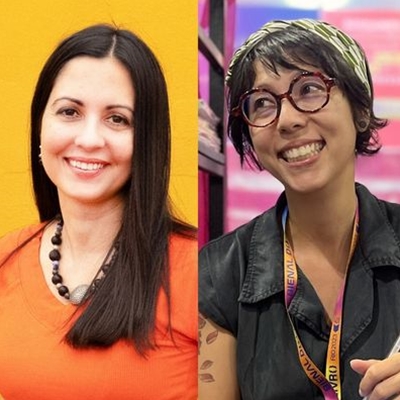
Liliana Colanzi and Hanna Limulja talk to Polly Russell
Dreaming of Resistance: Indigenous Cultures in the Face of Collapse
– St Mary’s Church
Read moreHow can ancient cultures open up our senses and help us dream of a better collective future? Bringing together ideas, traditions and perspectives from indigenous cultures, Brazilian anthropologist Hanna Limulja considers how dreaming is a form of indigenous resistance and hope while Bolivian writer Liliana Colanzi reflects on how environmental devastation and neoliberal violence threaten to create a dreamless future. They talk to British Library curator Polly Russell.
In You Glow in the Dark, Colanzi imagines eerie, post-nuclear futures where survival and postcolonial revolution are the norm, while Limulja’s work focuses on how dreams have been part of the territorial and cultural struggle of the Yanomami people.
Co-curated with FLIP festival. Part of the UK/Brazil Season of Culture 2025–26
Event 508
BBC Radio 4: Natalie Haynes Stands Up for the Classics
– Exchange Marquee
Read moreJoin the mythologist Natalie Haynes, author of Divine Might, Pandora’s Jar and No Friend to This House as well as a reformed comedian who is a little bit obsessive about Ancient Greek and Rome. Today, for BBC Radio 4, she stands up in the name of a great figure from the ancient world. Expect life-enhancing knowledge and entertaining stories from a millennium or so ago.
Event 84
Wayfaring Walk 5: Historic Buildings
With Bannau Brycheiniog National Park Guides
– Meeting Point on Festival Site
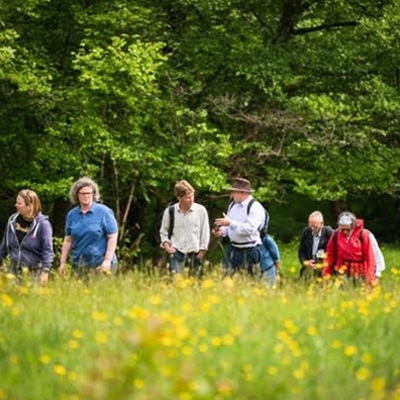
Read moreCome on a walk through the beautiful surrounds of Hay-on-Wye, led by guides from the Bannau Brycheiniog National Park. Learn about the historic buildings of the town and its surroundings.
Hay-on-Wye is located within 520 square miles of beautiful countryside that makes up the Bannau Brycheiniog National Park. The National Park is driving change to bring about a sustainable future, meeting our needs within planetary boundaries. Their Hay Festival series of walks take you into the town’s local environment while offering the opportunity to learn more about the Park’s work and its treasured landscape.
In partnership with Bannau Brycheiniog National Park
Event 88
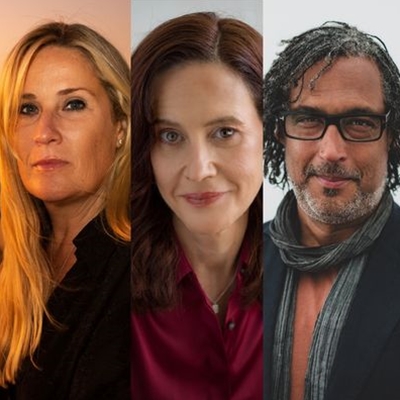
Sarah Churchwell, David Olusoga and Sarah Pearsall
America 250: Revolution
– Global Stage
Read moreTwo and a half centuries after the Declaration of Independence, what can historians teach us about the past, present and future of the United States? Who’s really benefitted from the core promises enshrined in the Declaration of equality, liberty and happiness? Writer and professor of American literature Sarah Churchwell and British-Nigerian historian and BAFTA-winning film-maker David Olusoga are joined by author Sarah Pearsall.
Churchwell explores the myths used as origin stories for the United States, and how they still permeate the way the country’s self-image is sold to the rest of the world. Olusoga highlights the persistent legacy of Empire, obstructing the founding ideals and still stubbornly structuring the present. And Pearsall introduces her new book Freedom Round the Globe: How the World Made the American Revolution, revealing how the fires of change that sparked the American Revolution were igniting all around the world.
Supported by the Eccles Institute for the Americas and Oceania
Event 513
BBC Radio 4: Start the Week
Tom Sutcliffe with Antony Beevor, Susan Neiman and Natalie Haynes
– Exchange Marquee
Read moreMythmaking at Hay Festival: from Medea to Rasputin. Tom Sutcliffe explores the power of mythmaking with three writers who challenge the stories we think we know. Historian Antony Beevor examines the invention and reinvention of the ‘mad monk’ Rasputin. Philosopher Susan Neiman questions the way politics is hijacking fundamental stories for its own ends. And classicist and comedian Natalie Haynes reimagines what Medea really thought of the two-timing Jason. Together they reveal how myths – old, new, personal and political – shape our understanding of the past and frame the battles of the present.
Event 91
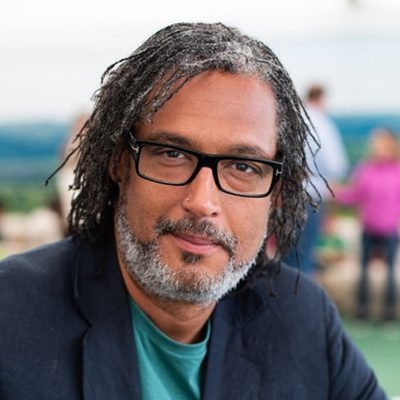
David Olusoga talks to Kirsty Lang
The George Alagiah Lecture
– Discovery Stage
Read moreHay Festival’s annual lecture celebrates the issues central to the late George Alagiah’s work: migration, the power of the global majority and questions of representation. This year, British-Nigerian historian, author, presenter and BAFTA-winning film-maker David Olusoga discusses the history and legacy of the British Empire and how colonial nostalgia is shaping contemporary geopolitics, with journalist Kirsty Lang.
In support of the Migration Museum
Event 94
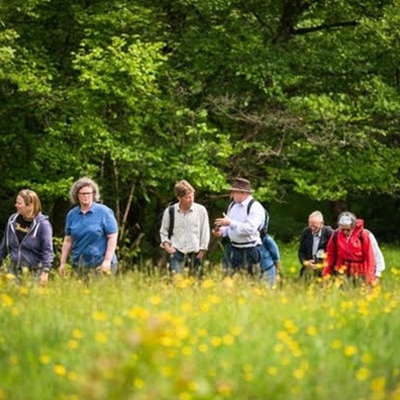
Wayfaring Walk 6: Historic Buildings
With Bannau Brycheiniog National Park Guides
– Meeting Point on Festival Site
Read moreCome on a walk through the beautiful surrounds of Hay-on-Wye, led by guides from the Bannau Brycheiniog National Park. Learn about the historic buildings of the town and its surroundings.
Hay-on-Wye is located within 520 square miles of beautiful countryside that makes up the Bannau Brycheiniog National Park. The National Park is driving change to bring about a sustainable future, meeting our needs within planetary boundaries. Their Hay Festival series of walks take you into the town’s local environment while offering the opportunity to learn more about the Park’s work and its treasured landscape.
In partnership with Bannau Brycheiniog National Park

Event 96
Antony Beevor
Rasputin and the Downfall of the Romanovs
– Global Stage
Read moreAcclaimed historian Antony Beevor weaves a tale as seductive as Rasputin himself as he presents his unmissable new book. Beevor combines forensic research with gripping storytelling to unpick how Rasputin – a barely literate Siberian peasant – wove an intricate web of seduction and superstition through the Imperial household, resulting in the downfall of a dynasty.
Beevor challenges us to question whether Rasputin was an impressive visionary, an accomplished fraudster or in fact a victim of history. His previous masterful best-sellers Stalingrad and D-Day: The Battle for Normandy position Beevor as one of the great military historians of our times. This is a must for anyone fascinated by Russian history, the forces that shape great empires, and lovers of compelling true stories.
Event 100
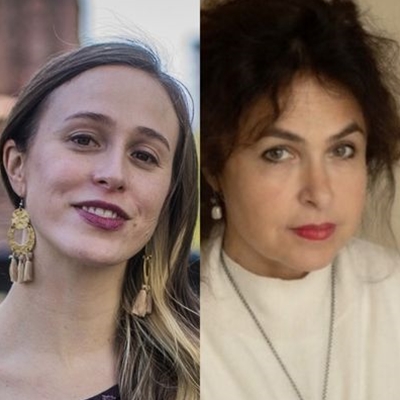
Selma Dabbagh and Elisa Díaz Castelo talk to Gaby Wood
Literary Pairs: The Past Inside the Present
– St Mary’s Church
Read moreCan the past live inside us, even if we have no knowledge of it? British-Palestinian author Selma Dabbagh and Mexican poet, author and translator Elisa Díaz Castelo discuss violence, collective trauma and literary inspiration, led by the chief executive of the Booker Prize Foundation, Gaby Wood.
Dabbagh’s writing explores the themes of idealism (however futile), placelessness and political engagement (or lack thereof). Castelo writes on intergenerational history and considers how the pasts that live inside us – including those we have no knowledge of – affect the present.
Part of the Literary Pairs series produced by Hay Festival and supported by the British Council
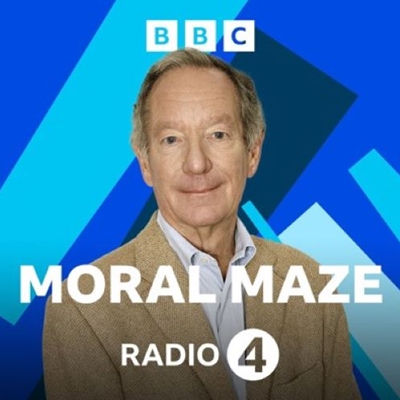
Event 515
BBC Radio 4: Moral Maze
Michael Buerk with Matthew Taylor, Anne McElvoy, Ella Whelan and Mona Siddiqui
– Exchange Marquee
Read moreAre networks the glue of society or the architecture of privilege? Come and join a lively, provocative and engaging debate, examining a core ethical issue of the day, chaired by the veteran BBC journalist Michael Buerk. For more than three decades, t Moral Maze on BBC Radio 4 has brought together different worldviews and challenged conventional thinking in the spirit of philosophical enquiry. With panellists Matthew Taylor (former advisor to Tony Blair), Anne McElvoy (journalist and executive editor at POLITICO), Ella Whelan (author and commentator) and Mona Siddiqui (Professor of Religion and Society, King’s College London).
Event 110
Milton Hatoum talks to Ángel Gurría-Quintana
Memory and Democracy in Brazilian Literature
– Spring Stage
Read moreSince the 1980s, Brazilian writer Milton Hatoum has depicted a hauntingly accurate pattern: the rise-and-fall cycle of Northern empires, endlessly repeating itself every few decades. In this event, Hatoum explores themes that have helped him find his own creative voice, including memory, democracy and the role that time and literature play in reshaping our common knowledge of history.
Hatoum is a three-time winner of the Jabuti Award, Brazil’s oldest and most prestigious literary prize. He speaks to literary journalist and translator Ángel Gurría-Quintana.
Co-curated with FLIP festival. Part of the UK/Brazil Season of Culture 2025–26
Event 115
Natalie Haynes
No Friend to This House: One-Woman Show
– Discovery Stage
Read moreJason and the Argonauts’ search for the Golden Fleece is one of the most enduring myths in history, told and retold for thousands of years. Here Haynes performs a gripping feminist reclamation of the classic tragedy – this time focusing on Medea, the sorceress who holds the key to Jason’s survival. A brilliant new telling of an ancient story from broadcaster, classics author and comedian Haynes – known for her BBC Radio 4 series, Natalie Haynes Stands up for the Classics.
Event 117
Renato Cisneros and Philippe Sands talk to Sophie Hughes
Family, Memory and History
– Spring Stage
Read moreA captivating conversation between writers Renato Cisneros and Philippe Sands on family, memory and history, asking the question – how much are our private lives shaped by political and historical forces?
Peruvian author Cisneros (The Distance Between Us, You Shall Leave Your Land and The World We Saw Burning) reflects on inheritance, silence and identity within a family marked by power and conflict. Lawyer and historian Sands’ 38 Londres Street examines legacies of violence, justice and belonging that resonate across generations and borders. They talk to Sophie Hughes, who is the most nominated translator in the International Booker Prize’s 10-year history.
This event features consecutive interpretation from Spanish into English.
Sponsored by the Peruvian Embassy and the British Council
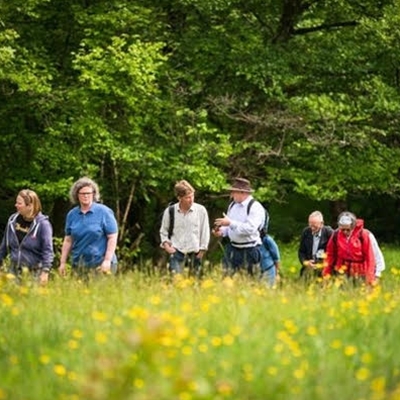
Event 130
A Borderland Walk: New Roots, Ancient Paths
With Sarah Price and Joseph Emmett
– Meeting Point on Festival Site
Read moreThis special guided walk invites you to step beyond Hay-on-Wye and into the richly layered border landscape that has shaped centuries of history. Led by professional walking guide Sarah Price, with writer and historian Joseph Emmett accompanying, this gentle circular walk blends walking, listening and reflection.
Sarah will share local insight into the landscape and its human history, while Joseph draws on his book New Roots, Ancient Lands: Walking Herefordshire’s History, offering short readings and welcoming questions as the walk unfolds. A chance to experience the countryside as both place and story.
In partnership with Sarah Price Hiking
Event 143
Sarah Churchwell and Simon Schama
America 250: A Declaration of Literary Independence?
– Meadow Stage
Read moreHow did the divisions of the American Revolutionary War play out in literature? On the 250th anniversary of the signing of the Declaration of Independence, Professor of American Literature Sarah Churchwell and historian Simon Schama consider how American and British literature diverged in the wake of revolution – and how these literary traditions eventually found their way back to each other.
With discussion and short readings of their favourite books from both sides of the Atlantic, this session traces how writers responded to political rupture, cultural independence and shared language, and how a transatlantic literary relationship was reshaped, challenged and renewed over time.
Event 153
Carmen Urbita and Ana Garriga talk to Kim Sherwood
Convent Wisdom: How Sixteenth-Century Nuns Could Save Your Twenty-First-Century Life
– Discovery Stage
Read moreAn evening filled with sixteenth-century wisdom, laughter and hope for our anxiety-ridden contemporary lives. No matter what the century, nuns know best!
When most of us think of nuns, we picture cloistered halls and hands clasped in prayer. But what about the nuns who erupted into jealous fights over makeup or crushed on their girlfriends? These women were no one-dimensional martyrs. Scholars, podcasters and best friends Ana Garriga and Carmen Urbita lift the veil on monastic life, sharing the infectiously edifying advice of sixteenth- and seventeenth-century nuns, with writer Kim Sherwood
Resourceful, rebellious and refreshingly relatable, the nuns offer guidance on everything from procrastination to imposter syndrome, friendship drama to creativity slumps – with a wink and a prayer.
Supported by Acción Cultural Española A/CE and Instituto Cervantes in London
Event 155
James Hanning talks to Horatio Clare with guests Derek Addyman and Anne Brichto
The Bookseller of Hay
– Spring Stage
Read moreDiscover the story of how Hay-on-Wye came to be known as a book town, and the man who made it happen. Journalist James Hanning talks to writer and broadcaster Horatio Clare about the story of Richard Booth, the eccentric and chaotic entrepreneur known as the King of Hay. Guests Derek Addyman (who worked for Booth in the ‘70s) and Anne Brichto, who together run four bookshops in Hay including Addyman Books and Murder & Mayhem, bring first-hand experience of the early days of Booth’s reign.
They delve into Booth’s life, from buying a small shop in an obscure market town on the edge of the Brecon Beacons, to creating the world’s largest second-hand bookshop. Booth laid the foundations for the town’s reputation, eventually resulting in the founding of Hay Festival, a rival attraction that dismayed him.

Event 164
Ben Macintyre
Spies, Lies and Skulduggery: Does Espionage Matter?
– Global Stage
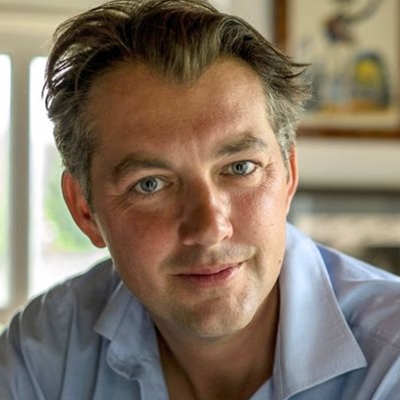
Read moreBack by popular demand, best-selling author Ben Macintyre brings a fascinating exploration of international espionage to Hay Festival. Macintyre has spent his career chronicling secret intelligence and the hidden lives of some of history’s most intriguing figures. He profiles the small and select list of world-changing spies: Oleg Gordievsky, Kim Philby, the Bletchley Park Code Breakers. And he reveals the important and far-reaching impact when espionage works (and when it doesn’t). A real treat for Macintyre’s existing fans, as well as anyone intrigued by the hidden forces and extraordinary people who’ve secretly shaped world events.
Event 166
James Holland
The Visionaries: The Making of the Post World War II Order in the West
– Global Stage
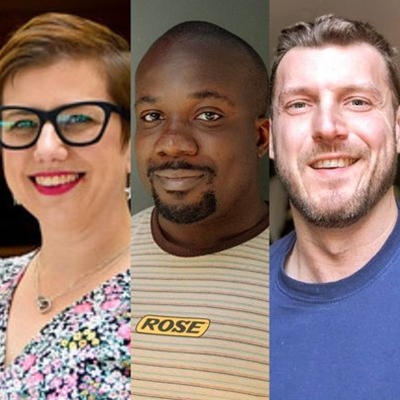
Read moreWho rebuilt the world, raising order from the ashes of the Second World War? Award-winning historian James Holland shares his extensive knowledge of the war and its aftermath, offering unique insight into the leaders, the philosophies and the policies that kickstarted unprecedented European growth and heralded peace and economic stability.
Through the economic and political earthquakes of the mid-twentieth century, Holland brings to life a broad sweep of history, linking to important lessons for the shifting world order we’re now experiencing.
Event 176
Emily Garside and Jason Okundaye in conversation with Sacha Coward
Queerness: A Hidden History
– Meadow Stage
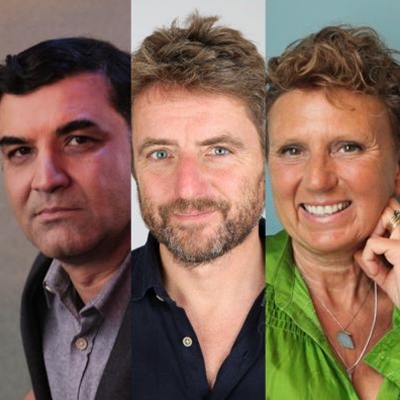
Read moreDiscover the hidden world of queer history and the forgotten queer heroes whose legacy lives on with our panel of experts. In this conversation with Sacha Coward, writers Emily Garside and Jason Okundaye discuss the stories they have uncovered in the course of their writing, the importance of queer history to our cultural landscape, and the people they wish everyone knew about.
Garside’s Rainbow Wales: Queer Icons Past and Present is an exploration of the household names and hidden icons who have shaped their fields and driven forward queer representation in Wales. Okundaye’s Revolutionary Acts: Love & Brotherhood in Black Gay Britain looks at an elder generation of Black gay men, as he seeks to reconcile the Black and gay narratives of Britain. Coward’s Queer as Folklore: The Hidden Queer History of Myths and Monsters travels across centuries and continents to investigate the queer history of different mythic and folkloric characters.
Event 189
Gordon Corera, Charlie English and Daria Santini talk to Ava Glass
Spy Salon: Fact, Fiction, Secrets and Lies
– Spring Stage
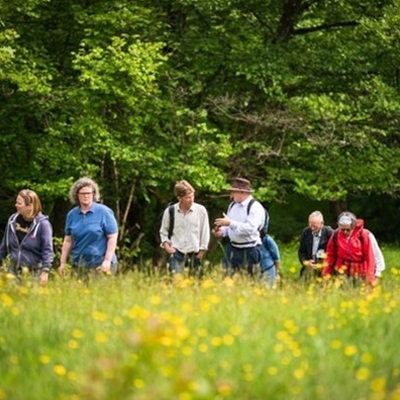
Read moreSpies are glamorous, dangerous, heroic and utterly compelling – and the perfect subject for the books we devour, in both fiction and non-fiction. Step inside Hay Festival’s first ever Salon to celebrate our inaugural Crime Day, where our panel of spy writers discuss the incredible stories they’ve uncovered in their work. They swap tales of secret worlds and hidden influence, and of people whose courage and ingenuity quietly shaped history. And they compare the real-life agents with the beloved spies of fiction who fill our bookshelves.
Gordon Corera has been the BBC’s security correspondent for two decades, and now co-presents the podcast The Rest is Classified. His latest book The Spy in the Archive tells the story of a KGB archivist turned traitor. Charlie English is a former head of international news at the Guardian, and author of The CIA Book Club, the story of how 10 million books were smuggled across the Iron Curtain during the cold war. Daria Santini’s book A Woman Named Edith is a major new biography of the photographer and Soviet agent who recruited Kim Philby. They talk to Ava Glass, the UK’s leading female spy fiction writer and a former investigative journalist.
Event 197
Wayfaring Walk 11: Historic Environment
With Bannau Brycheiniog National Park Guides
– Meeting Point on Festival Site
Read moreCome on a walk through the beautiful surrounds of Hay-on-Wye, led by guides from the Bannau Brycheiniog National Park. Learn about the historic environment of the town and its surroundings.
Hay-on-Wye is located within 520 square miles of beautiful countryside that makes up the Bannau Brycheiniog National Park. The National Park is driving change to bring about a sustainable future, meeting our needs within planetary boundaries. Their Hay Festival series of walks take you into the town’s local environment while offering the opportunity to learn more about the Park’s work and its treasured landscape.
Please wear appropriate footwear and outdoor gear. Walk level: easy.
In partnership with Bannau Brycheiniog National Park
Event 199
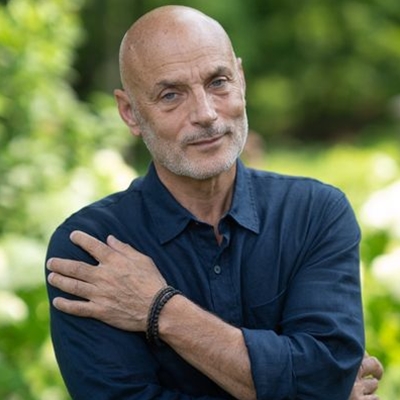
Daniel Mendelsohn talks to Chris Power
The Odyssey: Taking on a Masterpiece
– Discovery Stage
Read moreA must-attend event for Classics lovers with a world-class expert in Greek mythology. Daniel Mendelsohn has produced a brand new translation of The Odyssey, poised to become the authoritative English-language version of this magnificent, endlessly enjoyable masterpiece. He talks about the joys and challenges of translating such an iconic piece of work and why the story still appeals to modern audiences.
Mendelsohn is editor-at-large of the New York Review of Books, and author of An Odyssey: A Father, a Son, and an Epic, which was shortlisted for the Baillie Gifford Prize.
Event 200
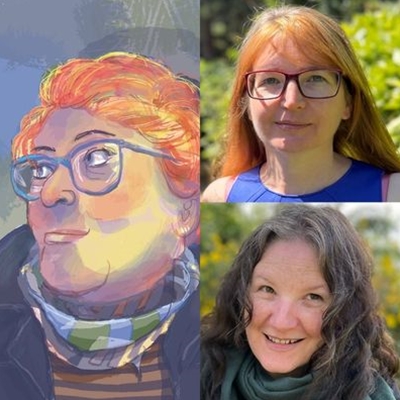
Sophie & Scarlett Rickard and Myfanwy Tristram
Placards & Panels: Graphic Novels as Protest
– Exchange Marquee
Read moreUnderstanding the need for and art of protest has never been more important, as across the world people stand up against injustice. Graphic novelists Scarlett and Sophie Rickard and Myfanwy Tristram discuss writing about protest, the link between art and activism, and why the comic book is the perfect medium to discuss raising our voices against injustice.
This Slavery by the Rickards is adapted from a novel by radical author Ethel Carnie Holdsworth, who was the first working-class woman to have a novel published in Britain. It tells the story of sisters Rachel and Hester Martin, one of whom agitates for reform, while the other submits to the slavery of a patriarchal marriage. For Noisy Valley, Tristram visited the Rhondda Valley in South Wales, inviting people to recount their memories of the times they’d refused to take things lying down.
In association with SelfMadeHero
Event 210
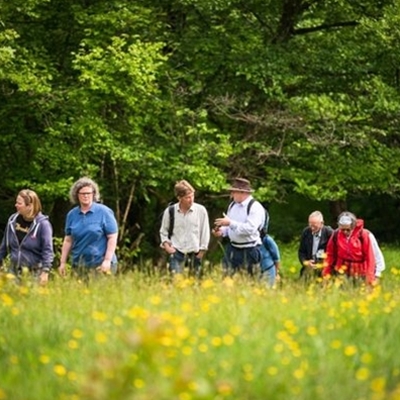
Wayfaring Walk 12: Historic Environment
With Bannau Brycheiniog National Park Guides
– Meeting Point on Festival Site
Read moreCome on a walk through the beautiful surrounds of Hay-on-Wye, led by guides from the Bannau Brycheiniog National Park. Learn about the historic environment of the town and its surroundings.
Hay-on-Wye is located within 520 square miles of beautiful countryside that makes up the Bannau Brycheiniog National Park. The National Park is driving change to bring about a sustainable future, meeting our needs within planetary boundaries. Their Hay Festival series of walks take you into the town’s local environment while offering the opportunity to learn more about the Park’s work and its treasured landscape.
In partnership with Bannau Brycheiniog National Park
Event 224
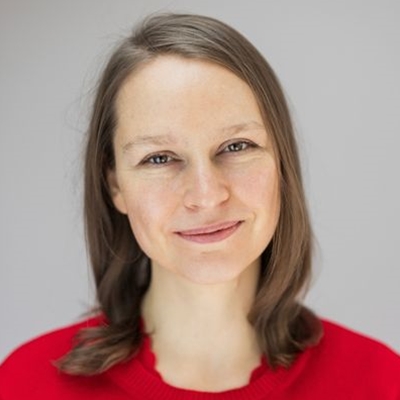
Selena Wisnom
The Library of Ancient Wisdom: Mesopotamia and the Making of History
– Discovery Stage
Read moreTravel back in time for an immersive tour of the extraordinary library of the Mesopotamian king Ashurbanipal, which was burnt to the ground in the seventh century but rediscovered thousands of years later. Despite the burning, the texts, carved on clay tablets, were baked and preserved by the heat. They are written in cuneiform, a language only a few hundred people on earth can read.
Assyriologist Selena Wisnom brings Mesopotamia to life in this session, illuminating the culture of the time and its impact on us today. Casting back to the customs of Mesopotamian civilisation, she will also perform haruspicy live on stage – the ancient art of divination using a real-life liver! Wisnom is lecturer in the heritage of the Middle East at the University of Leicester.
Event 226
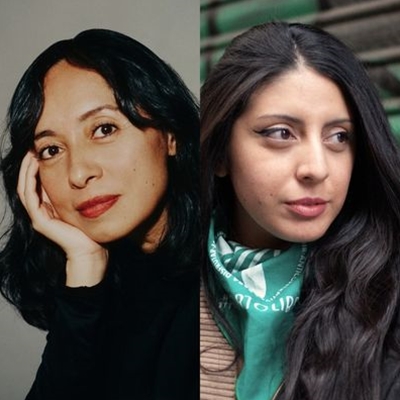
Brenda Navarro and Mónica Ojeda talk to Chris Power
Kinship, Memory and Survival
– Exchange Marquee
Read moreFeel the power of two stories from South America as award-winning Mexican author Brenda Navarro and acclaimed Ecuadorian storyteller Mónica Ojeda discuss kinship, memory and survival in the face of collective trauma. Navarro’s Eating Ashes, which is set to receive a film adaptation releasing in Autumn 2026, follows the experience of a woman caught between rage and heartbreak in the wake of her teenage brother’s suicide. In Ojeda’s psychedelic novel Electric Shamans at the Festival of the Sun, a wild tale of two women attending an underground music festival high in the Andes gives way to a heartfelt meditation on love, family and kinship.
Navarro and Ojeda speak to Guardian literary critic Chris Power, exploring themes of violence, displacement and loss in tandem with courage and hope.
Supported by Open Society Foundations, Instituto Cervantes in London and the British Council

Event 230
Jess Robinson
Barrel of Laughs: Life is Rosi – Grandma, Me and our Diaries at 23
– Meadow Stage
Read moreAn interactive evening of storytelling, song and performance from Dead Ringers actor Jess Robinson, as she brings to life the wartime diaries of her grandmother, Rosi, and her own early journals. She reads extracts from both diaries, interwoven with short live performance moments, to illustrate how stories of survival and identity create bonds across the generations. The event ends with a rendition of ‘The Impossible Dream’, a song that deeply connects her to her grandmother.
Event 235
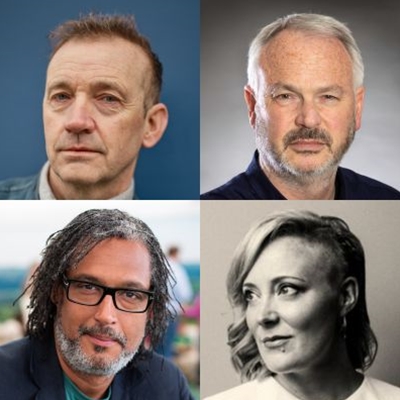
Jerry Brotton with Tim Marshall, David Olusoga and Emma Jane Unsworth
What’s Your Map? Live at Hay Festival
– Discovery Stage
Read moreThis entertaining and immersive event turns maps into theatre, bringing them to life in a way you’ve never seen before. In its Hay Festival debut, the award-winning podcast What’s Your Map? comes to the stage with host Jerry Brotton, a leading authority on the history of maps. He asks each of his guests to unfold a map that’s special to them and share the story that lies behind it. Each map will be projected large-scale and discussed in all its rich detail. Tim Marshall is former diplomatic editor at Sky News and author of Prisoners of Geography. Historian and broadcaster David Olusoga is author of Black & British: A Forgotten History. Emma Jane Unsworth is a BAFTA-nominated screenwriter and best-selling novelist. A perfect way to spend the evening for anyone fascinated by history, adventure and culture.
In association with The Sunderland Collection

Event 246
Zakia Sewell in conversation with David Olusoga
Finding Albion: A Hopeful New View of British Identity
– Discovery Stage
Read moreBroadcaster and writer Zakia Sewell is on a quest for a different Britain. Criss-crossing the island from Somerset to Scotland, she joins acclaimed historian, David Olusoga, in search of stories beyond divisive national myths and symbols. Together they consider ancient legends, Celtic rites and the mystic stone circles that punctuate our landscape, and ask whether this alternative history could help unite an increasingly divided country. A thought-provoking session offering a fresh, hopeful perspective on British identity.
Event 251
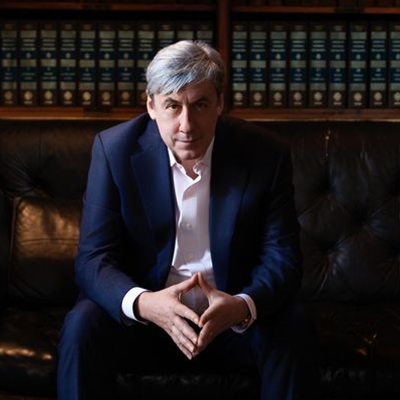
Andrew Graham-Dixon
Vermeer: A Life Lost and Found
– Discovery Stage
Read moreArt historian Andrew Graham-Dixon uses previously undiscovered archives to paint a vivid new picture of the life of artist Johannes Vermeer, most famous for his painting ‘The Girl with the Pearl Earring’. Following new leads, and drawing on a mass of historical evidence, some of it freshly uncovered in the archives of Delft and Rotterdam, Graham-Dixon uncovers the painter’s unknown friendships, and reveals his previously undetected allegiance to a radical movement driven underground by persecution.
Event 253
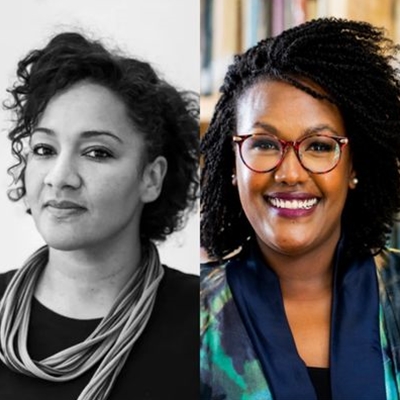
How to Build a Library: Maia Lekow and Angela Wachuka talk to Kitty Corrigan
Documentary Screening Followed by Q&A
– St Mary’s Church
Read morePremièred at the 2025 Sundance Film Festival, How to Build a Library takes us to Nairobi to witness how two Black women tackle the rebuilding of what was until 1958 a whites-only library. The documentary is a fascinating study of colonisation and the power of individual and collective action.
Following the screening, director Maia Lekow and founder of Book Bunk Angela Wachuka will discuss the film with freelance journalist and editor Kitty Corrigan. Book Bunk is a firm driving the restoration of some of Nairobi’s most iconic public libraries.
Supported by Open Society Foundations and the British Council
Event 265
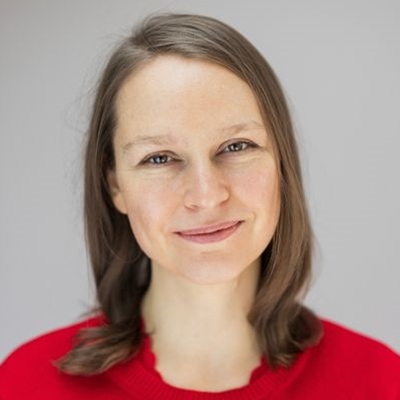
Selena Wisnom
Learn to Write in Cuneiform, the World’s First Writing System
– Creative Hub
Read moreAbandon your Biro and learn all about the world’s oldest writing, invented in Mesopotamia five thousand years ago. Mesopotamia expert Dr Selena Wisnom will demonstrate how simple pictograms evolved into a complex writing system with nearly a thousand signs, and how it was deciphered after two millennia of silence. She’ll show you how to make your own cuneiform tablet out of plasticine and impress the signs into it just like the Mesopotamians did. You can write your name in this ancient script, and take home a piece of history.
Event 275
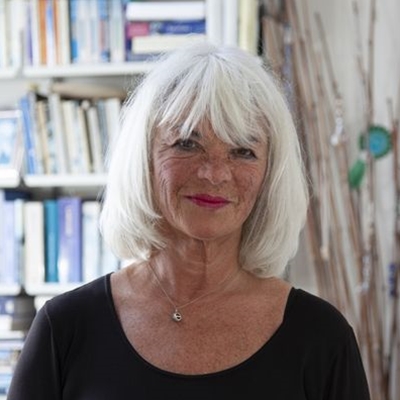
Sara Wheeler talks to Oliver Bullough
Jan Morris: A Life
– Meadow Stage
Read moreWelsh writer Jan Morris was once the most famous journalist in the world: she joined the 1953 Everest expedition and was first to get news of Hilary and Tensing’s successful climb back to London. Morris’ glittering career included interviewing Che Guevara and scooping the story of the Suez collusion. When she transitioned in the early 1970s, she documented the experience in her book Conundrum. Writer and broadcaster Sara Wheeler discusses her biography of Morris with author Oliver Bullough.
Event 280
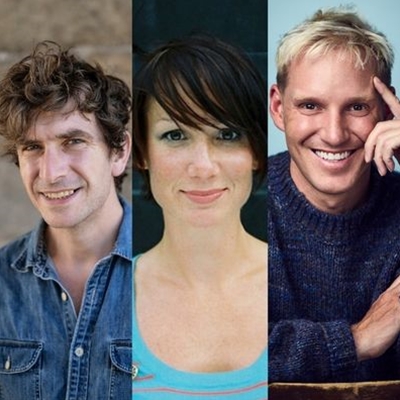
Joey Batey, Peter Jones and Aleks Krotoski talk to Colin Grant
Heard at Hay Festival: three brilliant speakers all on one ticket
– Spring Stage
Read moreThe perfect session if you love new ideas, original thinking and passionate speakers all on one ticket! Actor, musician and now author Joey Batey shares his passion for modern folk horror. Historian Peter Jones reveals how self-help worked in the Middle Ages. And journalist Aleks Krotoski discusses the moguls and tech bros who are trying to defy death so they can live forever. Hosted by author and historian Colin Grant. We guarantee you’ll leave having learnt something new – something you Heard at Hay Festival.
Sponsored by Passion Pictures
Event 285
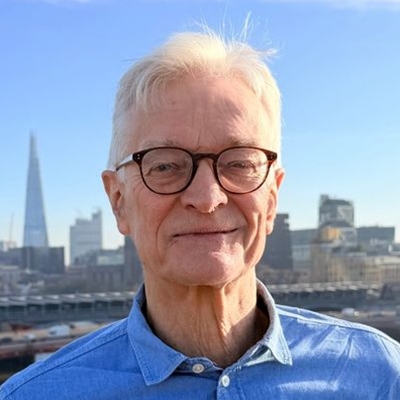
Nicholas Crane talks to Nicola Cutcher
The Path More Travelled: The Secret History of Britain’s Footpaths
– Discovery Stage
Read moreExplore the hidden history of Britain’s coast-to-coast web of walkways with geographer and travel writer Nicholas Crane as he chats to nature journalist Nicola Cutcher. This event takes you from the prehistoric routeways walked by European migrants 12,000 years ago to the Hadrian’s Wall Path and the banks of the Severn, via our national parks and long-distance trails, which emerged from the ashes of two world wars.
Crane, who is a presenter on the BAFTA-winning series Coast, talks about the routes he took for his new book The Path More Travelled, the discoveries he made along the way, and offers up a passionate ode to walking, urging us all to rediscover and protect our landscapes.
Event 290
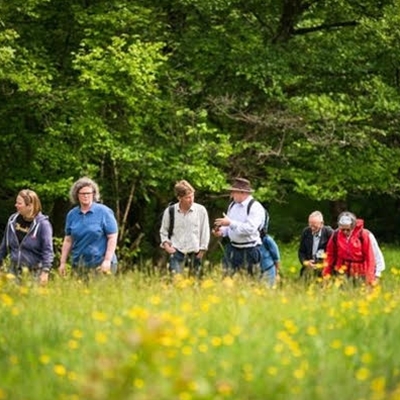
Guided Walk Around Hay-on-Wye: A Historic Landscape
With Sarah Price
– Meeting Point on Festival Site
Read moreStep away from the Festival site and into the rich border landscape that surrounds Hay-on-Wye on this gentle circular guided walk of around four miles, led by local professional walking guide Sarah Price. The route takes in the border-defining Dulas Brook and the hamlet of Cusop, encompassing St Mary’s Church and the ancient Cusop Castle mound, as well as a section of Offa’s Dyke Path.
Throughout the walk, Sarah brings the landscape to life with stories drawn from local history, lived experience, and years of guiding in the area. This is an ideal walk for anyone who enjoys history, place and thoughtful walking — a chance to explore the wider landscape that has long inspired writers, thinkers and wanderers.
In partnership with Sarah Price Hiking
Event 295
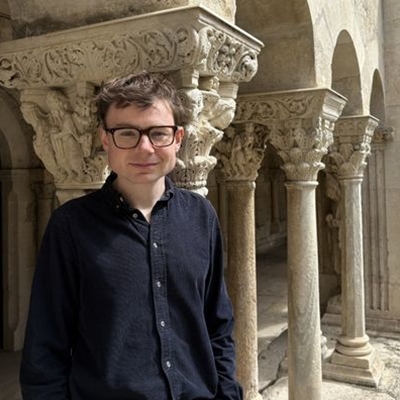
James Marriott talks to Georgina Godwin
The End of Reading and the Dawn of a Post-Literate Society
– Meadow Stage
Read moreWe are in the midst of the most important cultural shift of our time, argues journalist James Marriott: a decline in reading. In this National Year of Reading, join the Times columnist in conversation with broadcaster Georgina Godwin as he looks at the fall in literacy and reading, and presents an impassioned defence of the written word.
In his book The New Dark Ages, Marriott draws on history and classic works of literature and theory to show that reading and writing are essential for innovation, creativity and critical thinking. As print dies, he argues, we risk returning to the chaos, tribalism and rage of a pre-literate society.
Event 297
Colin Grant, Suzanne Harrington, Eric Ngalle Charles and Amanda Vilanova
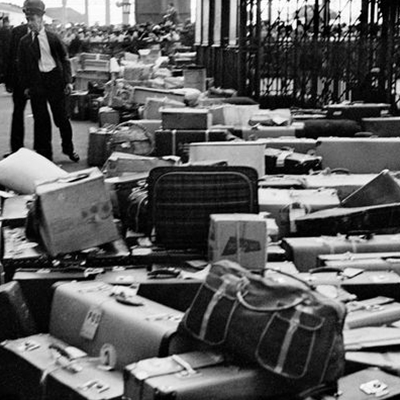
What We Leave We Carry: Voices of Migration to Britain
– MUBI Cinema
Read moreWhat do we leave behind when we move to a new place – and what do we carry with us, physically and emotionally, wherever we land? Colin Grant, director of WritersMosaic, draws out candid and moving stories of migration – foundational tales of arriving in a new land, along with rarely spoken tales of love and loss. This is a chance to listen to Britain, in all its richness and complexity.
He’s joined by storytellers sharing the secrets of their migrant songs and objects: Suzanne Harrington (The Liberty Tree), an Irish writer who travelled with an ‘introductory’ sick note from her psychiatrist; Eric Ngalle Charles (Homelands), a Cameroonian poet bestowed with an ancestral charm to ward off any danger encountered in Britain; and Amanada Vilanova (Hurricane Diaries), a Puerto Rican actor gifted her mother’s jewellery to sell in an emergency.
In association with WritersMosaic
Event 301
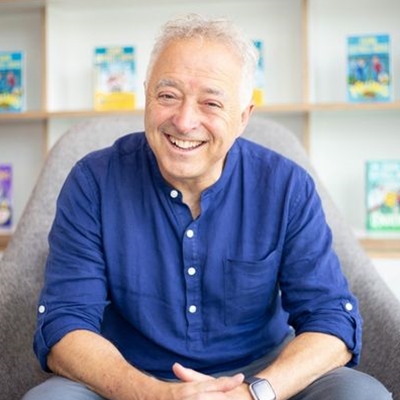
Frank Cottrell-Boyce talks to Tom Gatti
A British Childhood: How Our Children Live Now
– Meadow Stage
Read moreWhat does it mean to be a child today? And what will the future of Britain look like if we don’t care for those who will shape it? Join author and Children’s Laureate Frank Cottrell-Boyce as he talks to Observer literary editor Tom Gatti, casting a glaring new light on childhood in the 21st century. Cottrell-Boyce will share stories about the children and young people he has met during his work, and assess what the impact of successive crises – from the Covid pandemic to austerity and the pressures on the care system – mean for those growing up today.
This illuminating session is a call to arms to us all, to care for the children of today. Cottrell-Boyce is a multi-award-winning children’s book author and screenwriter, and began his two-year term as Children’s Laureate in 2024.
In partnership with The Observer. Hay Festival is proud to support the National Year of Reading
Event 310
Damien Lewis
SAS Great Escapes
– Discovery Stage
Read moreA rollercoaster ride through some of the most dramatic and daring escapes executed by the SAS during the Second World War. Best-selling author Damien Lewis uses verified diaries, mission reports, debriefings and letters written in the heat of danger to bring to life some of the most impressive escapes of the war. From prison camps to enemy territory, these are stories of ingenuity, courage and extraordinary resilience. He'll also discuss one of the greatest escape stories of WW2 as told in his book SAS The Great Train Raid.
A former war and conflict reporter, Lewis combines meticulous research with thriller-like pace in his books. His work has reached the screen, including The Ministry of Ungentlemanly Warfare, adapted into a 2024 film by Guy Ritchie. The perfect Hay Festival event for lovers of history at full throttle.
Event 317
Charlotte Cross and Mairi Kidd talk to India Ysabel
Gothic Greats: Retelling Horror Classics
– Spring Stage
Read moreGrab your garlic and prepare your pitchfork for this encounter with modern-day Gothic authors Charlotte Cross and Mairi Kidd. They discuss retelling horror classics to place women at the centre, taking the iconic stories of Dracula and Frankenstein and reimagining them from a feminist perspective.
Cross’s The Brides brings to life the three women who became the brides of Dracula – and the fourth who managed to escape. Kidd’s Poor Creatures follows a young Mary Godwin – who would go on to become Mary Shelley – as a troubled girl with a mysterious ailment.
Event 424
Carl Benedikt Frey talks to Toby Lichtig
How Progress Ends: Technology, Innovation and the Fate of Nations
– Meadow Stage
Read moreHumans have advanced incredibly over the past 1,000 years – but will it continue? Come on a sweeping journey through the history — and future — of progress, from early dynastic China to Deep Seek, as Carl Frey offers a fascinating explanation of why some societies flourish and others fail in the wake of rapid technological change. The Oxford economic historian and author of The Technology Trap shows how technological shifts have shaped, and sometimes destabilised, entire civilisations – challenging the conventional belief that progress is inevitable.
Perhaps we can't depend on any AI-fuelled great leap forward? Frey’s message is simple: progress is possible but never guaranteed. He talks to the Times Literary Supplement’s politics and fiction editor Toby Lichtig.
Event 329
Lloyd Llewellyn-Jones
Babylon: The Biography of a Metropolis
– Meadow Stage
Read moreAn ancient city brought vividly to life using extraordinary ancient sources, including acerbic letters between rival kings and bawdy drinking songs. Welsh academic Lloyd Llewellyn-Jones traces the history of the first metropolis from its foundation to world domination… and back to ruin. Babylon often appears more myth than history. But it was a real place teeming with life, a bustling mega-city which set the agenda for what civilisation meant. Llewellyn-Jones holds the chair in ancient history at Cardiff University and is author of Persians and The Cleopatras.