Event FiltersYou are viewing events filtered byLatin AmericaReset all filters
Event P1
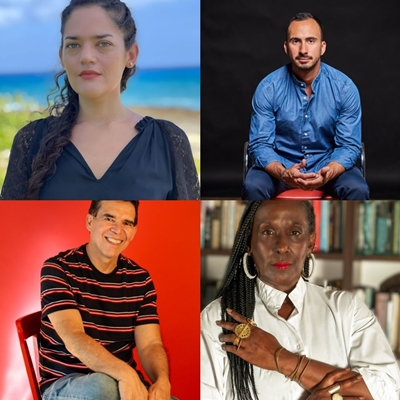
Cristina Bendek, Carlos Fonseca, Edmundo Paz Soldán and Mayra Santos-Febres
Hay Festival en español podcast: Other Stories from the Archivo de Indias
–
Casa del Moral
Stories change depending on who tells them and from where. Some stories only emerge when we shift our perspective and it is our viewpoint that shapes the narrative. The anthology Otras historias del Archivo de Indias is a project in which 10 writers from Latin America and Spain connect the historical legacy of the Archive with the present of their countries and contexts. Come and learn how an episode of the Hay Festival podcast in Spanish is recorded live, and listen to the reflections of Cristina Bendek, Carlos Fonseca, Edmundo Paz Soldán and Mayra Santos-Febreson their participation in the anthology and their personal perspectives on the project.
Carlos Granés and Fietta Jarque in conversation with Katerina Valdivia Bruch
How art can explain a continent
–
Teatro Municipal
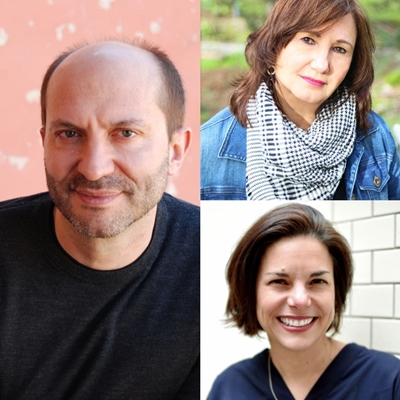
Can art explain a continent better than politics or history? Latin America has found in creativity a space to imagine futures, challenge power, preserve memory and reinvent its identity. The Colombian essayist Carlos Granés, author of Delirio americano and El rugido de nuestro tiempo, reflects on the relationship between art, culture and politics in the region. The journalist and writerFietta Jarque (Peru), author of Cómo piensan los artistas and known for her long career as a critic and chronicler of the visual arts, explores how Latin American artists have covered the continent’s major transformations and challenged traditional perspectives on its history. These two thinkers will engage in a dialogue alongside the curator and independent researcher Katerina Valdivia Bruch.
Carlos Granés and Edmundo Paz Soldán in conversation with Erna von der Walde
Other stories from the Archivo de Indias: viceroyalties and rebellions
–
Centro Cultural Peruano Norteamericano (auditorio)
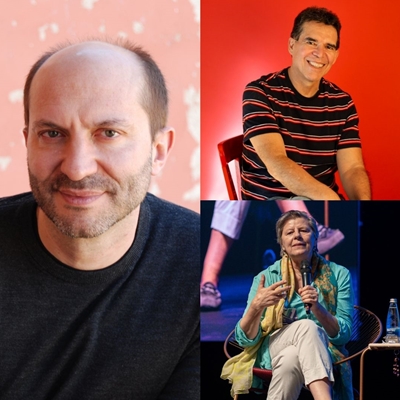
Otras Historias del Archivo de Indiasis a research project and an artistic initiative in which leading writers from the region engage with the documents held at the Archivo General de Indias. This project, organised by the Hay Festival and CAF, aims to introduce the general public to the archive’s vast collection of documents and to offer a critical and diverse perspective on the multitude of stories that record and challenge the colonial memory of the Americas. These texts have been compiled in the anthology Otras historias del Archivo de Indias, published by Anagrama. Carlos Granés(Colombia) and Edmundo Paz Soldán(Bolivia), who have contributed respectively with the texts La pesadilla del virrey Abascal and La enfermedad del canto: utopía y rebelión en los Andes —written together with Liliana Colanzi—, will talk to the anthology’s editor, Erna von der Walde(Colombia). Event introduced by Santiago Rojas, Northern Regional Manager from CAF.
Karina Pacheco and Mayra Santos-Febres in conversation with Cristina Fuentes La Roche
Other stories from the Archivo de Indias: memory persists
–
Teatro Arequepay
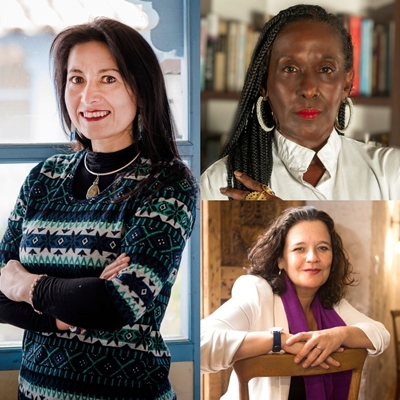
Otras Historias del Archivo de Indias is a research project and an artistic initiative in which leading writers from the region engage with the documents held at the Archivo General de Indias. This project, organised by the Hay Festival and CAF, aims to bring the archive’s vast collection of documents to the general public and to offer a critical and diverse perspective on the multitude of stories that record and challenge the colonial memory of the Americas. These texts have been collected in the anthology Otras historias del Archivo de Indias, published by Anagrama. Karina Pacheco (Peru) and Mayra Santos-Febres(Puerto Rico), who have contributed the texts Memorial de la serpiente and La negra del hospital respectively, are in conversation with the the International Director of the Hay Festival, Cristina Fuentes La Roche (Spain).
Farid Kahhat and Alberto Vergara in conversation with Camila Osorio
El País lecture: What is happening in the region?
–
Teatro Municipal
Peru is experiencing a period of particular political disillusionment: weakened institutions, a sense of insecurity, and a citizenry distanced from its representatives. At the same time, Latin America also seems to be shifting its priorities, veering to the right, with security as a key electoral priority for its presidential candidates. What does the Peruvian case tell us about this trend? Is this change in the political landscape due to a cyclical ideological shift in the region, or is there something deeper behind it? Farid Kahhat and Alberto Vergara will discuss the reasons for this disenchantment with politics in Peru, the new forms of leadership emerging in the region, and where all of this might lead us.
Cristina Bendek and Carlos Fonseca in conversation with Erna von der Walde
Other Stories from the Archivo de Indias: a world in transformation
–
Teatro Arequepay
Otras Historias del Archivo de Indias is a research project and an artistic initiative in which leading writers from the region engage with the documents held at the Archivo General de Indias. This project, organised by the Hay Festival and CAF, aims to introduce the general public to the archive’s vast collection of documents and to offer a critical and diverse perspective on the multitude of stories that record and challenge the colonial memory of the Americas. These texts have been compiled in the anthology Otras historias del Archivo de Indias, published by Anagrama. Cristina Bendek(Colombia) and Carlos Fonseca(Costa Rica), who have contributed with the respective texts Aclamación en dos voces para la Primera Madre and El color de todo lo que se perdió, will talk to the anthology’s editor, Erna von der Walde(Colombia).
Elma Correa and Karina Pacheco in conversation with María Emilia Ladrón de Guevara
South to North conversations: Reservoirs of memory, cracks of violence
–
Teatro Arequepay
Whether setting El bosque de tu nombre in the Guatemalan armed conflict or portraying border life in Mexicali in Donde termina el verano —winner of the 2026 Biblioteca Breve Prize— both Karina Pacheco (Peru) and Elma Correa (Mexico) find inspiration in reality for their fictional settings. Rather than depicting specific events, they sketch territories where various forms of violence coexist, guided by the leitmotif that memory is everything: memory to avoid forgetting, to give voice to what the official narrative conceals, to reconcile and remember. These two authors will speak to María Emilia Ladrón de Guevara about what Mexicali and the Guatemalan jungle have in common, and about the literary vision they share.
Liliana Blum and Alma Delia Murillo in conversation with Cecilia Barría
Mexico, the intimate and the wild
–
Centro Cultural Peruano Norteamericano (auditorio)
When you read the Mexican authors Liliana Blum and Alma Delia Murillo, you won't find headlines describing their work as "the great Mexican novel"; and yet, their work is a way to better understand the country. Both authors begin with intimate stories and look into areas where wounds permeate all of society — wounds that, in many cases, also resonate in Peru. Murillo does so in Raíz que no desaparecido, where she explores the limbo between absence and hope experienced by the families of the disappeared. Blum does the same, immersing her characters in stories of violence, family silences and contradictions, leading to landscapes as sordid as they are real. In conversation with the BBC Mundo journalist Cecilia Barría.
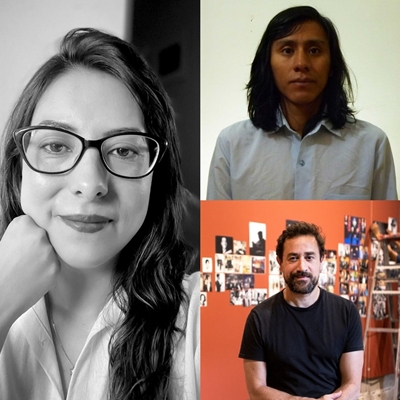
Ros Postigo and Raúl Chuquimia in conversation with Carlos Caamaño
Arequipa–Lima: photography as a meeting place
–
Casa Tristán del Pozo - Fundación BBVA
In the first half of the 20th century, Arequipa helped shape some of Peru's most memorable images. Today, new generations of photographers, curators and thinkers are once again asking what it means to look at a country in transformation. Photographer Ros Postigo and visual artist Raúl Chuquimia will speak to curator Carlos Caamaño about photography as a tool for creating memory and understanding territory, identity and diversity, and something more essential: photography can teach us to see the country better, and Arequipa, with its history and artistic vitality, can become a space for reflecting on contemporary photography in Peru.