Event FiltersYou are viewing events filtered byPhilosophyReset all filters
Event 4
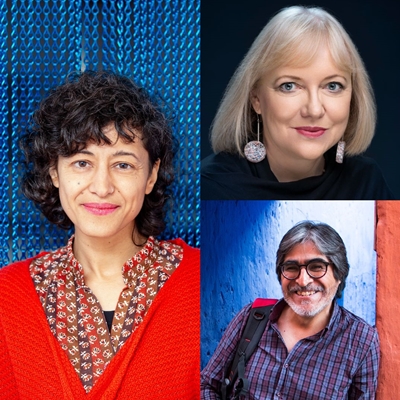
Sarah Babiker Moreno and Renata Salecl in conversation with Omar Zevallos
How to change the state of things
–
Teatro Municipal
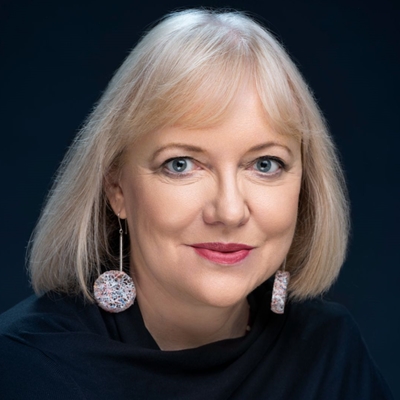
How do we cope with a world marked by uncertainty, polarisation and inequality? What levers must we pull to bring about change and move from words to deeds? The Slovenian philosopher and sociologist Renata Salecl, author of Maleducados and El placer de la transgresión, explores how fear, desire, power and social norms shape our decisions and behaviour. Joining her is the Spanish journalist and writer Sarah Babiker Moreno, author of La nada fértil, who reflects on racism, migration, feminism and inequalities from a critical and personal perspective. In conversation with Omar Zevallos, the two will analyse the narratives that shape our societies and the role of critical thinking in imagining fairer ways of living together.
Simultaneous interpretation from English to Spanish available
This event has taken place
With the support of Acción Cultural Española, AC/E
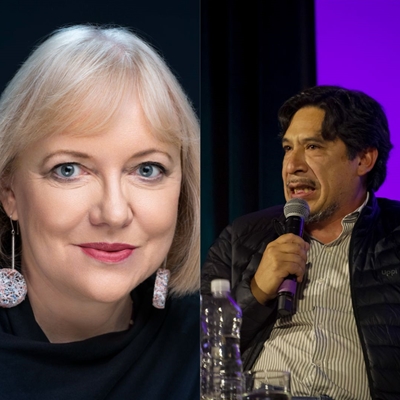
Renata Salecl in conversation with José Luis Ramos Salinas
Cohabitation, not competition
–
Colegio de Arquitectos
In a system that glorifies individualism and the cult of the self, it is hardly surprising that bad manners and rudeness are gaining ground across the social spectrum. One need only observe the outbursts of those who govern us or read the thousands of messages flooding social media. The sociologist and philosopher Renata Salecl (Slovenia) observes how neoliberalism has colonised our emotions, our decisions, and even our forms of empathy. She sets this out in Maleducados, where she also offers an alternative: kindness. Not as naive behaviour, but as a form of resistance. If the system wants competition, let us respond with coexistence. In conversation wtihJosé Luis Ramos Salinas.
Simultaneous interpretation from English to Spanish available
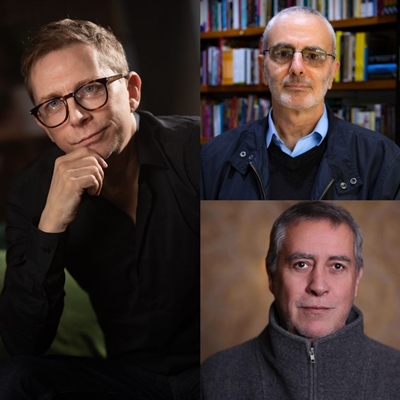
Gerald Bronner and Farid Kahhat in conversation with Benjamín Carrasco
Truth, propaganda and democracy in the digital era
–
Casa Gibson - Universidad Católica Santa María
The information we receive depends increasingly on algorithms, social media and communities that share their own versions of reality. The abundance of information does not necessarily make us better informed: it also encourages the circulation of fake news and narratives designed to confirm what we already believe. The French sociologist Gerald Bronner, one of the leading researchers into the effects of the digital environment on the way we obtain information, and the international analyst Farid Kahhat (Peru) will discuss with Benjamín Carrasco how the truths that reach the public sphere are constructed today, what role propaganda plays, and what consequences all this has for democracy.
Simultaneous interpretation from French to Spanish available
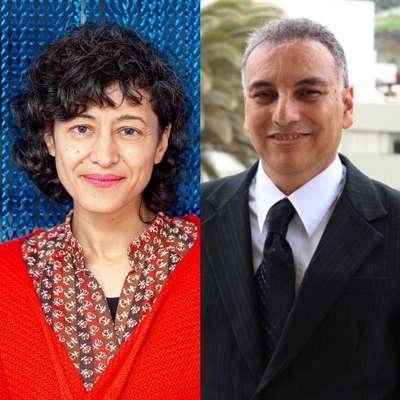
Sarah Babiker Moreno in conversation with Carlos Zeballos Velarde
Unequal cities
–
Colegio de Arquitectos
Even in the cities most dehumanized by neoliberalism, there is room for hope if we begin with the dignity of their inhabitants. That's why La nada fértil, by journalist and anthropologistSarah Babiker Moreno (Spain), goes beyond being an essay that interweaves stories criticizing the precarity we experience. It addresses all stages of life from a feminist perspective to depict an inhospitable and precarious landscape —in housing, education, relationships and employment— that suffocates us, yet whose citizens confront with affection and tenderness. The wasteland of the city blossoms into a field of social relationships and support networks that strive for a better life.
This event has taken place
With the support of Accion Cultural Española, AC/E and CAF
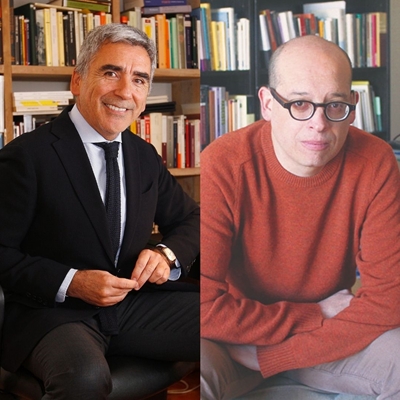
Living surrounded by information does not necessarily mean a better understanding of the world. In his book, Humanidades. Lo visible y lo invisible, the philosopher and essayist Carlos Peña (Chile) explores the role of the humanities in an era dominated by science, technology and information overload. Rector of the Diego Portales University and one of the most influential intellectuals in the Andean region, he defends the value of a discipline that does not seek immediate answers, but rather learns to interpret what we see. In conversation with the essayist Alberto Vergara (Peru), he will discuss what the humanities can contribute today in a world where data is incapable of explaining everything.
This event has taken place
With the sponsorship of Yura and with the support of the Open Society Foundations
Contemporary malaise: between anxiety, ignorance, and technology
–
CCPUCP - Sala de conferencias
In a system that glorifies individualism and the cult of the self, it is hardly surprising that bad manners and rudeness are gaining ground across the social spectrum. One need only observe the outbursts of those who govern us or read the thousands of messages flooding social media. The sociologist and philosopher Renata Salecl (Slovenia) observes how neoliberalism has colonised our emotions, our decisions, and even our forms of empathy. She sets this out in Maleducados, where she also offers an alternative: kindness. Not as naive behaviour, but as a form of resistance. If the system wants competition, let us respond with coexistence.
Simultaneous interpretation from English to Spanish available