Event FiltersYou are viewing events filtered byLiteratureReset all filters
Event HFPT5
Fietta Jarque in conversation with Carlos Capellino Fuentes
Blanca Varela, la vértebra perdida
–
Centro de Convenciones Jorge Basadre Grohmann, Tacna
On the centenary of Blanca Varela’s birth, tributes to the Peruvian poet have flourished, and one outstanding example is Fietta Jarque’s biography La vértebra perdida. Through interviews and published material, the journalist and writer delves into pivotal moments such as Varela’s trip to Europe and her integration into the cultural world, as well as darker chapters, such as the death of her son Lorenzo and her dismissal as director of the Fondo de Cultura Económica. A biographical account that reconstructs, through a meticulous examination of her life, her personal and literary journey from Lima to international acclaim. In conversation with Carlos Capellino Fuentes.
Mircea Cărtărescu in conversation with Giovanna Pollarolo
The most Macondian Romanian
–
CCPUCP
Mircea Cărtărescu (Romania) is one of the most prominent authors in contemporary European literature. A writer with a mystical bent, he has constructed a dreamlike, almost Macondian literary universe in which the real and the imaginary are interwoven with lyrical force. The author himself has remarked that some people view Romania as a Latin American country lost in Europe, and that he agrees with this view. The author of more than twenty books of poetry, fiction and essays, his most recent works translated into Spanish are the monumental Blinding trilogy—considered to be the summit of his literary output, together with Solenoid, Theodoros and Los conocedores. In conversation with Giovanna Pollarolo.
Consecutive interpretation from Romanian to Spanish available
Patricio Pron in conversation with Patricia del Río
Literature as resistance
–
Colegio de Arquitectos
It is said that Patricio Pron (Argentina) is a writer’s writer and that his understanding of literature, his efforts to avoid conventionalism and to experiment with language, make him one of the most distinctive and daring storytellers of his generation. En todo hay una grieta y por ella entra la luz begins as a biography of Benjamin Fondane, but soon becomes a tale of a fractured world, a snapshot of the dizzying pace of New York, with pain at the heart of the narrative, all woven together through footnotes. Pron says that literature is “a reservoir of possible ideas”, which is why this conversation with Patricia del Río is an invitation to reflect on the role of literature in our time.
This event has taken place
With the support of Acción Cultural Española, AC/E
Claudia Apablaza and Santiago Roncagliolo in conversation with Ricardo Sumalavia
Cuadernos hispanoamericanos
–
Centro Cultural Peruano Norteamericano (teatro)
The magazine Cuadernos hispanoamericanos promotes understanding and exchange amongst writers of different generations and nationalities, united by a shared language and a literary tradition enriched by these diverse origins. At this special gathering Claudia Apablaza, author of La siembra de las nubes, and Santiago Roncagliolo, author of El pastor y los lobos, will talk about their work and literary worlds with Ricardo Sumalavia.
This event has taken place
With the support of the Spanish Agency for International Development Cooperation AECID and PUCP
–
Centro Cultural Peruano Norteamericano (auditorio)
Founded in 2007, the publishing house Impedimenta was established to “publish the finest works of classic and modern literature”. Almost twenty years on, it has become one of the world’s most prestigious Spanish-language publishers. Its founder, Enrique Redel, talks to bookseller Ana Cañellas about two decades of independent publishing.
The event will be introduced by Juan Jaime, Director of CCE Lima.
This event has taken place
With the support of the Spanish Agency for International Development Cooperation AECID and Librerías Cálamo
El Hay Festival Arequipa y la PUCP invitan al público de todas las edades a una lectura en voz alta de Un mundo para Julius, la emblemática novela de Alfredo Bryce Echenique, una crítica mordaz de la clase alta limeña que evidenció las profundas brechas sociales y la desigualdad en la sociedad limeña y peruana. Conducido por Rossana Díaz Costa.
Luis Nieto Degregori, Karina Pacheco and Miguel Rubio in conversation with Luis Rodríguez Pastor
Yuyachkani: all the country is a stage
–
Centro Cultural Peruano Norteamericano (teatro)
For over half a century, Yuyachkani has used theatre as a way of listening to Peru. Miguel Rubio, the group’s founder, will be in conversation with the writers Luis Nieto Degregori and Karina Pacheco, whose novels have explored many of the questions that have accompanied Yuyachkani: memory, violence, identity, diversity and the possibility of reconciliation. Moderated by Luis Rodríguez Pastor, they will reflect on how art has helped to tell the story of a complex and diverse country, and on the role of creativity when a society needs to remember, understand and reimagine itself.
Greta García and Alessandra Pinasco in conversation with Augusto Carrasco
Literature without filters
–
Centro Cultural Peruano Norteamericano (auditorio)
Neither Greta García (Spain) nor Alessandra Pinasco (Peru) write to please. On the contrary, they relish flirting with the irreverent, pushing the boundaries of what is socially acceptable. Pinasco does this in Tan simple, tan puro by tackling one of the taboos of traditional mores: speaking explicitly about sex. Her collection of short stories explores desire, memory and autonomy in a world of hypocrisy and violence. García, meanwhile, does so right from the title — Muere, papá — through biting humour and the premise of imagining the death of her father, José Toro, who, incidentally, illustrates the book.
This event has taken place
With the support of Acción Cultural Española, AC/E
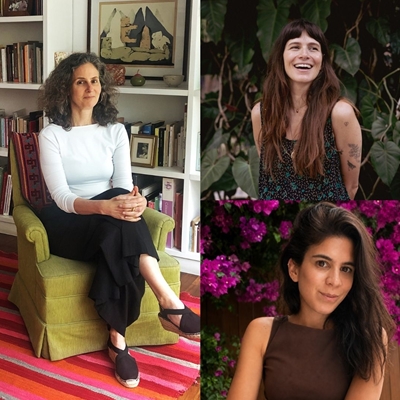
Micaela Chirif and Mariana Matija in conversation with Gracia Angulo
To see the world through wonder
–
Teatro Arequepay
En Niñapájaroglaciar, Mariana Matija(Colombia) writes about the need to rediscover our relationship with nature and with the living beings around us. For her part, Micaela Chirif (Peru) has devoted part of her literary work in recent years to books that bring us closer to national and regional wildlife, such as Animales peruanos, Navegar por los aires andher most recent production: Vida y costumbres de los animales de la Amazonía. Two authors that approach literature from the points of view of nature and of wonder talk to the publisher Gracia Angulo.
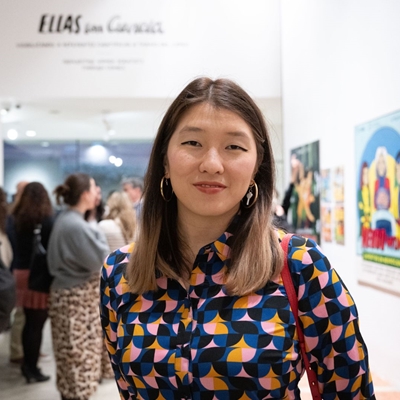
From neither here nor there? Or Andalusian and Chinese at the same time? As the daughter of immigrants born in Spain, Quan Zhou has often found herself on both sides of the fence, caught between questioning her own identity and being the target of racist discrimination. These life experiences have been covered by her with intelligence and humour, in autobiographical works such as the comics Gazpacho agridulce and Andaluchinas por el mundo, as well as the graphic essay Gente de aquí, gente de allí. She is also the creator of the documentary podcast Mi familia española, which uncovers an invisible chapter in the recent history of Spain: the experiences of migrant mothers, their children, and the Spanish nannies who looked after them in the 1980s and 1990s, when racial diversity was virtually non-existent.
This event has taken place
With the support of Acción Cultural Española, AC/E
Mircea Cărtărescu in conversation with Dante Trujillo
The most Macondian Romanian
–
Teatro Municipal
Mircea Cărtărescu (Romania) is one of the most prominent authors in contemporary European literature. A writer with a mystical bent, he has constructed a dreamlike, almost Macondian literary universe in which the real and the imaginary are interwoven with lyrical force. The author himself has remarked that some people view Romania as a Latin American country lost in Europe, and that he agrees with this view. The author of more than twenty books of poetry, fiction and essays, his most recent works translated into Spanish are the monumental Blinding trilogy—considered to be the summit of his literary output, together with Solenoid, Theodoros and Los conocedores. In conversation withDante Trujillo.
Consecutive interpretation from Romanian to Spanish available
Lucho Nieto Degregori and Eloísa Vaello in conversation with Diego Molina Rey de Castro
The diversity of sexual pleasure
–
Centro Cultural Peruano Norteamericano (teatro)
We are sexual beings whose survival depends on biological reproduction. But sexuality is also understood within a socio-cultural context, based on our beliefs and traditions. Lucho Nieto Degregori (Peru) explores the evolution of sexuality in Peru from pre-Inca times to the present day, analysing social transformations from a historical and cultural perspective. It is precisely in the present day that the stories about sexual diversity in En un mundo raro. Antología de voces LGTBIQ+ en español are set. This collection of diverse dissident voices has been co-published by AECID, whose Deputy Director of Cooperation and Cultural Action for Sustainable Development, Eloísa Vaello, will also join the discussion. The session will be moderated by Diego Molina Rey de Castro.
This event has taken place
With the support of the Eccles Institute for the Americas and Oceania at the British Library
Liliana Blum, Sophie Demange and Nerea Pallares in conversation with Zoila Vega Salvatierra
Resistance by women
–
Teatro Arequepay
There are places where nothing ever seems to change, until a breaking point is reached. Like when the women of a coastal village in Galicia rebel against the selfishness of the absent men and take a drastic decision in Punto de araña, the debut novel by Nerea Pallares (Spain). There are also places marked by events that change the lives of their inhabitants. Such as a middle-class neighbourhood in Rouen where three female butchers, victims of sexual abuse, take the law into their own hands in Las carniceras by Sophie Demange (France). Or the Second World War, during which Hannie Schaft went from being a university student to an icon of the Dutch resistance against the Nazi occupation, in Ráfaga roja by Liliana Blum (Mexico). These three writers will speak with Zoila Vega Salvatierra about how women have resisted and challenged the place that history seemed to have reserved for them.
This event has taken place
With the support of Acción Cultural Española, AC/E and the French Embassy
Carlos Caamaño, Rossana Díaz Costa and Greta García
Hay Festival en español podcast: another place to talk about art
–
Casa del Moral
Stories change depending on who tells them and from whose perspective. Some stories only emerge when we shift our perspective, and it is our viewpoint that shapes the narrative. Come and see how an episode of the Hay Festival podcast in Spanish is recorded live, and listen to the reflections of Carlos Caamaño, Rossana Díaz Costa and Greta Garcíaon how photography, film and dance engage with the world.
Fietta Jarque and Alonso Ruiz Rosas in conversation with Dante Trujillo
Blanca Varela, naked poetry
–
Centro Cultural Peruano Norteamericano (teatro)
2026 marks the centenary of the birth of Blanca Varela, one of the essential voices of 20th-century Latin American poetry. With a style refined to its very essence, she continues to reveal herself to new readers. To mark this anniversary, the journalist and writer Fietta Jarque, author of the biography La vértebra perdida, and the poetAlonso Ruiz Rosas will be in conversation with Dante Trujillo about the woman who wrote those poems. An exploration of her life and work, based on the conviction that a biography cannot encompass all the facets of an author’s life, but can shed light on the reading of her poems.
Sophie Demange and Melanie Pérez Arias in conversation with Ximena López Bustamante
Sorority: both weapon and support
–
Alianza Francesa de Arequipa
The feminine is not always rosy, cheerful and optimistic. The three protagonists of the feminist thriller Las carniceras by Sophie Demange (France) are victims of sexual abuse, whilst a woman who, as she begins to lose her hair, sees her identity falter is portrayed by Melanie Pérez Arias (Venezuela) in her debut novel, Un animal que se deja caer. But if life is not all roses, then let it at least be died a sisterly shade of purple. What is fragile, once broken, becomes a sharp weapon, and Demange’s three butchers begin to take justice into their own hands—and knives—, taking revenge on the men who harass the women in their neighbourhood. Sharp on one side, tender on the other. Faced with a body falling apart, Pérez Arias builds a refuge: a network of three women who support the protagonist whilst her body and inner self undergo transformation.
Simultaneous interpretation from French to Spanish available
PUCP Book Club run by María Gracia Ríos, Rosario Yori and PUCP students
'Oráculo' by Álvaro Bisama
–
Plaza San Francisco
At this event, participants will discuss some passages from the novel Oráculo, the most important themes and Álvaro Bisama’s particular style. The workshop is lead by Hispanic Literature students at PUCP, accompanied and guided by course lecturers: María Gracia Ríosand Rosario Yori.
Liliana Blum, Giovanna Pollarolo and Patricio Pron
Hay Festival en español podcast: another way to talk about literature
–
Casa del Moral
Stories change depending on who tells them and from whose perspective. Some stories only emerge when we shift our perspective, and it is our viewpoint that shapes the narrative. Come and see how an episode of the Hay Festival podcast in Spanish is recorded live, and listen to the reflections of Liliana Blum, Giovanna Polarollo and Patricio Pron on what is being written and read today.
Serge Barbet and Carlos Rivadeneyra in conversation with Omar Zevallos
Listening before thinking: a podcast against disinformation
–
Teatro Arequepay
At a time when artificial intelligence, algorithms and fake news are transforming our relationship with the truth, audio is emerging as one of the most intimate and reflective formats. Can the podcast become a tool for strengthening critical thinking and informed citizenship? Drawing on CLEMI’s experience in media literacy and pioneering research into the history of podcasting in Peru, Serge Barbet and Carlos Rivadeneyra—joined by Omar Zevallos— will explore how to educate new audiences to listen better, verify sources and participate more consciously in democratic life.
Consecutive interpretation from French to Spanish available
This event has taken place
Sponsored by the University of Lima and with the support of the French Embassy
PUCP Book Club with María Gracia Ríos, Rosario Yori and PUCP Students
'Un animal que se deja caer' by Melanie Pérez Arias
–
Plaza San Francisco
At this event, participants will discuss some passages from the novel Un animal que se deja caer, the most important themes and Melanie Pérez Arias’ particular style. The workshop is aimed at Hispanic Literature students at PUCP with the support and guidance of the professors from the program, María Gracia Ríos and Rosario Yori.
There are books that are best understood through the author’s life story. The singer, writer and content creator Elisa Tokeshi Peru) has borderline personality disorder (BPD); just like Julieta, the protagonist of Borderline sagrada, her first novel. Literature serves as a form of catharsis here, as Tokeshi began writing it on the very weekend she overcame her addictions. But whilst it draws on some personal experiences, it remains a work of fiction. The story recounts the day-to-day life of a young woman with BPD – a sort of chaos, with its emotional highs and lows. A self-destructive cycle, with failed attempts at healing, broken promises and wounds; and, also, a testimony to recovery.
Ximena López Bustamante, Morella Petrozzi, Giovanna Pollarolo, Mayra Santos-Febres and Romina Silman in conversation with Martín Zúñiga Chávez
Women poetising: ways of living in poetry
–
Centro Cultural Peruano Norteamericano (teatro)
Poetry is not a single language, but a constellation of perspectives. Some arise from intimacy, others from the body, memory, or desire. Ximena López Bustamante, Morella Petrozzi, Romina Silman, Giovanna PollaroloandMayra Santos-Febreswill share five ways of approaching the poem. Pollarolo, from the experience of one of the most established voices in contemporary Peruvian poetry; Santos-Febres, from the dialogue between poetry and the body, identity, Afro-Peruvian memory and desire; López-Bustamante, from the perspective of a new generation searching for its own language; Petrozzi, from a less conventional dimension, where the body, movement and performance expand the possibilities of the poetic act; and Silman, from the body and memory as places where one can reconstruct one’s own identity.
–
Biblioteca Personal de Mario Vargas Llosa (San Francisco 306) - Auditorio Amelia Díaz
Los Destacados 2026 is an initiative by Cedili IBBY Peru to celebrate excellence in Peruvian children’s and young adult literature through the first Cedili Prize. The competition will recognise works published between 2024 and 2026 in more than twenty categories, including novels, poetry, picture books, graphic novels, translations and indigenous languages, amongst others. Taking part in the award presentation are children’s literature author Micaela Chirif, illustrator Fernando Arce,Leonardo Dolores, director of the Department of Books and Reading at the Ministry of Culture, Jessica Rodríguez, president of Cedili IBBY Peru, and Milagros Saldarriaga, a representative of the jury.
Alma Delia Murillo, Nerea Pallares and Alessandra Pinasco
Hay Festival en español podcast: memory has no borders
–
Casa del Moral
Stories change depending on who tells them and from whose perspective. Some stories only emerge when we shift our perspective and it is our viewpoint that shapes the narrative. Come and see how an episode of the Hay Festival podcast in Spanish is recorded live, and listen to Alma Delia Murillo, Nerea Pallares and Alessandra Pinascoreflect on how memory travels across generations, territories and lives to shape the stories that define us.
Reading Club with Patricio Pron and Jorge Malpartida Tabuchi
En todo hay una grieta y por ella entra la luz
–
Instituto Cultural Peruano Alemán
The Hay Festival Reading Club comes to Arequipa with Jorge Malpartida Tabuchi presenting Patricio Pron(Argentina) and his novel En todo hay una grieta y por ella entra la luz, which begins as a biography of Benjamin Fondane, but soon becomes a tale of a fractured world, a snapshot of the dizzying pace of New York, with pain at the heart of the narrative, all woven together through footnotes.
Book to be read before attending
This event has taken place
SURA Invites, with the support of Acción Cultural Española, AC/E
Granta en español: passion, dialogue and debate in the Spanish-speaking world
–
Centro Cultural Peruano Norteamericano (auditorio)
The New York-based editor —as well as translator, writer and researcher— Valerie Miles is a key figure in contemporary Spanish-language literature. Of particular note is her role as co-founder and editor of Granta en español, a magazine that has showcased the work of several generations of Latin American writers.
Twelve participants of the Hay Festival Arequipa 2026 will pay tribute to Mario Vargas Llosa by reading 24 autobiographical texts by the extraordinary Arequipa writer. From his birth to his eighties, we will explore the many sides of this multifaceted figure, remembering the universal writer, the incisive journalist and the generous human being. A unique opportunity to celebrate life, art and the transformative power of literature.
Irenosen Okojie in conversation with Mayra Santos-Febres
Storytelling to connect us with the unexpected
–
Alianza Francesa de Arequipa
There are writers who shine when they flow between fiction and reality; when their imagination merges the everyday with the fantastical.Irenosen Okojie, the multi-award-winning Nigerian-British author, draws the reader into her narrative universe with a grace that immediately captivates. Novels like Butterfly Fish and Curandera, and short story collections such as Speak Gigantular and Nudibranch, boast a boundless imagination in which the fantastic approaches reality from angles that realism cannot reach. In conversation with Puerto Rican writer Mayra Santos-Febres, she will discuss the possibilities that imagination offers for crossing borders and writing about memory, desire, identity and belonging from other perspectives.
Simultaneous interpretation from English to Spanish available
Reading Club with Rosa Chávez Yacila and Jorge Malpartida Tabuchi
Las nerviosas
–
Instituto Cultural Peruano Alemán
The Hay Festival Reading Club arrives in Arequipa, led by Jorge Malpartida Tabuchi, presenting Rosa Chavez Yacila (Peru) and her non-fiction book, Las nerviosas, in which she discovers that anxiety and depression are shared with other members of her family, and in which she reflects on inherited pain, emotional fragility and the internal struggle of women to break a cycle.
Soledad Cunliffe and Ruhuan Huarca in conversation with Paco Goyanes
Why and how to open a bookshop, as well as with what aims and for whom
–
Centro Cultural Peruano Norteamericano (auditorio)
Commercial outlets, but also essential cultural and social centres serving the community: bookshops have become vital spaces for democratic coexistence. With Soledad Cunliffe (La Rebelde Librería), and Ruhuan Huarca (Fabla Salvaje) in conversation with Paco Goyanes (Librerías Cálamo).
Proyección de película seguida de Rossana Díaz Costa en conversación con Luis Rodríguez Pastor
Un mundo para Julius
–
Plaza San Francisco
Rossana Díaz Costa dirige la adaptación cinematográfica de la novela Un mundo para Julius de Alfredo Bryce Echenique. Julius es un niño de clase alta de los 50 en Lima. Vive en un palacio con su familia y muchos sirvientes. Perderá la inocencia poco a poco, al descubrir y nunca entender un mundo lleno de injusticias. Tras la proyección, Díaz Costa dialogará con Luis Rodríguez Pastoracerca de esta obra clave, que con el uso de la ironía y la ternura retrató la profunda desigualdad social y el racismo en el Perú.
J. M. Coetzee and Valerie Miles in conversation. Introduced by Alonso Ruiz Rosas
The 'making of': Mariano Melgar, poetry of love and rebellion
–
Teatro Municipal
There is a link that connects a Nobel laureate like J. M. Coetzee (South Africa) with Arequipa: the poetry of Mariano Melgar. At the end of last year, he translated, along with Valerie Miles (USA), the poem "Por no sé qué capricho" into English and published it in the prestigious literary magazine The Paris Review under the title "On Some Whim or Other." This is a small preview of what is to come: the publication of Mariano Melgar: poesía de amor y rebelión, a bilingual edition in Spanish and English with poems by the "poet of the yaravíes." They will discuss the culmination of three years of work in which they selected and translated Melgar's work, how Coetzee came to discover Melgar, and what fascinated him about his poems. It is significant that, 200 years after Melgar's death, his poetry is finally being translated into English. Both Coetzee and Miles will be introduced by Alonso Ruiz Rosas.
Simultaneous interpretation from English to Spanish available
A theatrical piece about humanity, literature and the sea. Es necesario navegar is a performance-lecture that examines the inseparable relationship between human beings, literature and the sea — spanning everything from the Epic of Gilgamesh (written in 2100 BCE) to the video art of French artist Sophie Calle, and from Homer’s Odyssey to Defoe’s Robinson Crusoe. Javier Peña invites the audience to embark with him on a one-hour voyage, accompanied only by the sea and a handful of stories.
Hay Festival en español podcast: another way of talking about the environment
–
Casa del Moral
Stories change depending on who tells them and from where. Some stories only emerge when we shift our perspective and it is our viewpoint that shapes the narrative. Come and discover how a live episode of the Hay Festival podcast in Spanish is recorded, and listen to the reflections of Xabier Díaz de Cerioand Rosa Vásquez Espinoza on the environmental legacy our generation can leave.
Catherine Fletcher in conversation with Juan Esteban Constaín
Travelling through Words
–
Centro Cultural Peruano Norteamericano (teatro)
Aunque la metáfora sea manida, comenzar una lectura es abrir la puerta a nuevos mundos. Con Los caminos a Roma de Catherine Fletcher (Reino Unido) lo hacemos al Imperio romano, en específico a los caminos trazados en aquella época, que dos milenios después siguen siendo transitados en muchos de los casos. Transitadas por cruzados, peregrinos, revolucionarios, dictadores, turistas, escritores, refugiados y artistas, estas vías transformaron para siempre las culturas europeas y entrelazaron los destinos de sus ciudadanos.
Se ofrecerá interpretación simultánea del inglés al español
Fietta Jarque and Javier Peña in conversation with Cecilia Barría
Living in the cracks
–
Centro Cultural Peruano Norteamericano (auditorio)
Javier Peña (Spain), creator of the podcast Grandes Infelices, and Fietta Jarque (Peru–Spain) —journalist and author of the most recent biography of Blanca Varela, La vértebra perdida— come together with Cecilia Barría to reconstruct the life and work of one of the most extraordinary figures in Latin American poetry. Marking the centenary of her birth, this conversation offers a fresh perspective on Varela: moving beyond the myth of the tormented writer to explore the lucidity, loss, love and radical honesty that permeate her work.