Event FiltersYou are viewing events filtered byPoliticsReset all filters
Event 2
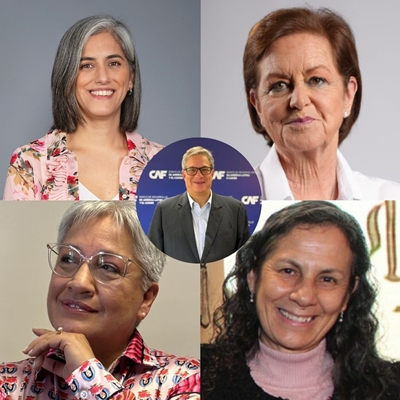
Toni Alva, Cecilia Bákula, María Emilia Ladrón de Guevara y Patricia Salas O’Brien en conversación con Santiago Rojas
One country, four viewpoints: is there a common horizon for Peru?
–
Colegio de Arquitectos
Peru is entering a new phase amidst deep social, institutional and cultural divisions. Four women with different backgrounds have taken on an unusual challenge: to consider the country beyond ideological differences, and to ask themselves what we need to rebuild if we hope to restore trust, strengthen democracy and envisage a shared project. Former Minister of Economy and Finance Toni Alva, historian Cecilia Bákula, former Minister and education specialist Patricia Salas O’Brien and the President of the Business Women’s Committee of the Arequipa Chamber of Commerce, María Emilia Ladrón de Guevara, will take part in a discussion moderated by Santiago Rojas, exploring the common ground that offers a glimpse of shared hope for Peru.
There are times when it seems as though the world has lost its bearings, and that there is no compass to guide us through its political decisions. Situations in which the established rules appear to be blurring and international relations fluctuate with the emergence of new conflicts, alliances and world orders. The political scientist Farid Kahhat (Peru) attempts to shed some light on current socio-political events in his book of essays El mundo se ha vuelto un lugar extraño, in which he analyses the most relevant issues in contemporary international politics. He will speak to Camila Osorio, El País journalistabout the coordinates needed to navigate such uncertainty.
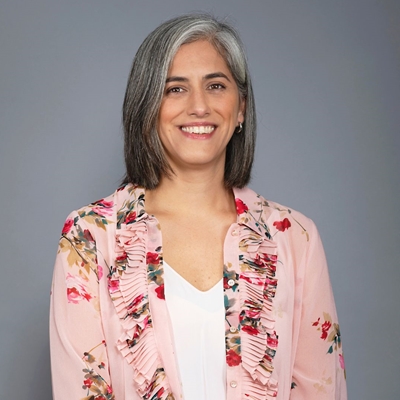
Toni Alvatenía 34 años cuando asumió el cargo de ministra de Economía y Finanzas del Perú, en uno de los momentos más difíciles de la historia reciente del país, la pandemia. Economista formada desde muy joven en el servicio público, tuvo que tomar decisiones bajo una presión extraordinaria. Después de dejar su cargo, comenzó una nueva etapa profesional vinculada a proyectos internacionales de salud y educación. Desde esos espacios de gestión, su trayectoria dibuja su capacidad de liderazgo, de toma de decisiones y de reinventarse.
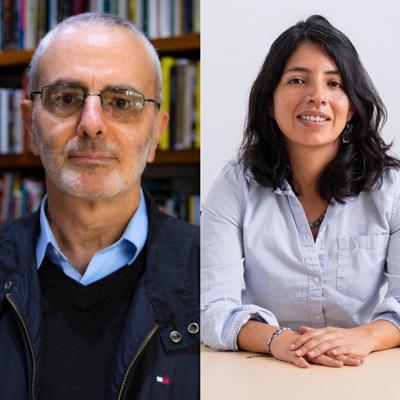
Julio Arbizu, Cecilia Bákula, Javier Ciurlizza and José Luis Ramos Salinas in conversation with Patricia del Río
Truth, memory and the challenges that Peru still faces
–
Colegio de Arquitectos
More than two decades ago, the Truth Commission documented the wounds inflicted by the armed conflict. Since then, Peru has made progress in acknowledging past violence, though challenges persist regarding racism, classism, territorial exclusion and the inequalities that run through society. Is knowing the truth enough to move toward reconciliation? How can we build a shared national identity when there are differing ways of interpreting our past? Javier Ciurlizza, Julio Arbizu, Cecilia Bákula and José Luis Ramos Salinas reflect on what we have learned from our history and on the challenges of building a more inclusive and reconciled Peru.
Gerald Bronner and Farid Kahhat in conversation with Benjamín Carrasco
Truth, propaganda and democracy in the digital era
–
Casa Gibson - Universidad Católica Santa María
The information we receive depends increasingly on algorithms, social media and communities that share their own versions of reality. The abundance of information does not necessarily make us better informed: it also encourages the circulation of fake news and narratives designed to confirm what we already believe. The French sociologist Gerald Bronner, one of the leading researchers into the effects of the digital environment on the way we obtain information, and the international analyst Farid Kahhat (Peru) will discuss with Benjamín Carrasco how the truths that reach the public sphere are constructed today, what role propaganda plays, and what consequences all this has for democracy.
Simultaneous interpretation from French to Spanish available
How do we tell the truth when democracy, freedom of the press and reality itself are under pressure? Democracy is facing one of its most uncertain periods in recent decades: polarisation, the rise of authoritarianism, disinformation, armed conflicts and growing competition between major powers are redefining the international balance of power. Journalist Branko Soban (Slovenia) has practiced the profession for over fifty years, covering global events in Europe, the Middle East and Russia. He will analyse how these challenges are transforming global politics and testing the resilience of democracies. A conversation with El Pais journalist Camila Osorio, to understand a world where the boundaries between domestic and international politics are becoming increasingly difficult to define.
Simultaneous interpretation from English to Spanish available
Farid Kahhat and Alberto Vergara in conversation with Camila Osorio
El País lecture: What is happening in the region?
–
Teatro Municipal
Peru is experiencing a period of particular political disillusionment: weakened institutions, a sense of insecurity, and a citizenry distanced from its representatives. At the same time, Latin America also seems to be shifting its priorities, veering to the right, with security as a key electoral priority for its presidential candidates. What does the Peruvian case tell us about this trend? Is this change in the political landscape due to a cyclical ideological shift in the region, or is there something deeper behind it? Farid Kahhat and Alberto Vergara will discuss the reasons for this disenchantment with politics in Peru, the new forms of leadership emerging in the region, and where all of this might lead us.
After an election decided by fewer than 50,000 votes and with the first months of the new government already past, it is necessary to try to decipher a democracy as complex as Peru's. To discuss 21st-century Peru beyond politics, we have invited two of the country's most renowned analysts: the political scientist Alberto Vergara and the writer Raúl Tola.
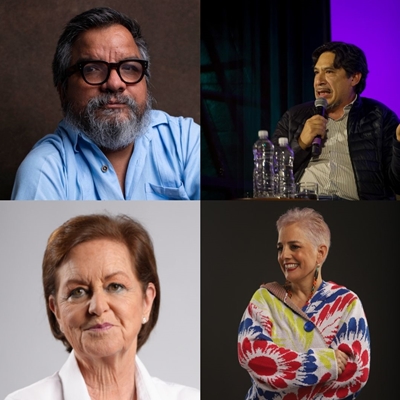
Elma Correa, Catherine Fletcher, Vidya Narine and Irenosen Okojie in conversation with Enrique Planas
Maps for understanding ourselves
–
Teatro Municipal
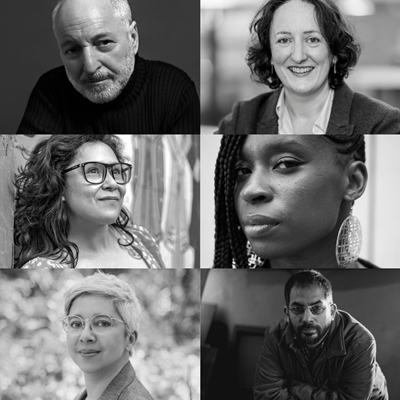
Maps are never neutral. They define borders, reflect power relations, record conflicts, and reveal how societies imagine and organize the world. At a time of profound geopolitical transformations, marked by territorial disputes, migrations, climate crises and new configurations of global power, cartographies take on renewed significance. Elma Correa(Mexico), Catherine Fletcher(United Kingdom), Vidya Narine (France) and Irenosen Okojie (Nigeria/United Kingdom) will share different ways of reading and narrating the world. Each will choose their own physical, cultural, linguistic or emotional map and discuss how these shape our understanding of identity, memory, territory and belonging.
Simultaneous interpretation from English to Spanish available
This event has taken place
SURA Invites and with the support of the British Council