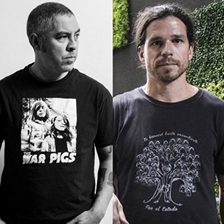
What does it mean to live untethered from a homeland, caught between departure and return, belonging and estrangement? In his work, Cuban writer Carlos Manuel Álvarez explores the fractures of migration, the disorientation of exile, and the intimate human moments —tenderness, joy, loss— that emerge from lives lived in constant motion. His writing captures the weight of displacement and the quiet battles waged by those who can neither fully leave nor truly remain.
In his latest novel, False War, he draws these themes into a sweeping, multivoiced narrative that moves from Havana to Mexico City, Miami, New York, Paris, and Berlin. Shifting between noir, autofiction, and lyrical portraiture, he weaves together the stories of ordinary people —barbers, émigrés, dissidents, wanderers— each immersed in their own private struggle. At once fractured and profoundly humane, False War confirms Álvarez as one of the essential voices of contemporary Latin American literature.