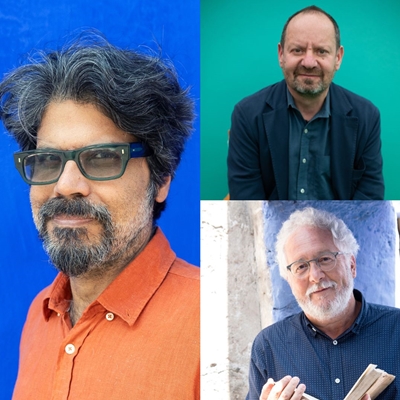
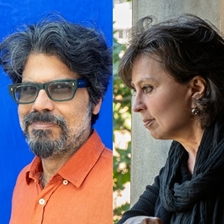
Omri Boehm, Pankaj Mishra, and Philippe Sands join Mario Arriagada to explore how the Holocaust and colonial memory collide with current legal and moral crises, and what it means to uphold humanistic universalism amid polarizing debates about genocide, xenophobia, and international law. Boehm is an Israeli philosopher and author of Radical Universalism: Beyond Identity, a philosophical critique that draws on Kant to reclaim the radical potential of Enlightenment humanism; in his earlier book Haifa Republic: A Democratic Future for Israel he proposed a binational federal model for Israel and Palestine. Sands (United Kingdom) is an international lawyer and acclaimed writer known for works such as East West Street, in which he examines the Holocaust, justice, and the legacies of the darkest chapters of the twentieth century. The Indian essayist and novelist Mishra is the author of The Age of Anger: A History of the Present, tracing links between contemporary violence and the rise of individualism and capitalism, and the recent The World After Gaza: A Short History, which analyzes Western complicity, colonial legacies, and moral fault lines in the aftermath of the Gaza conflict.
Simultaneous interpretation from English to Spanish available