2026 Michael Jacobs Travel Writing Grant
I think every good travel book should be the product of an internal need and often of an unexpected intuition. Michael Jacobs
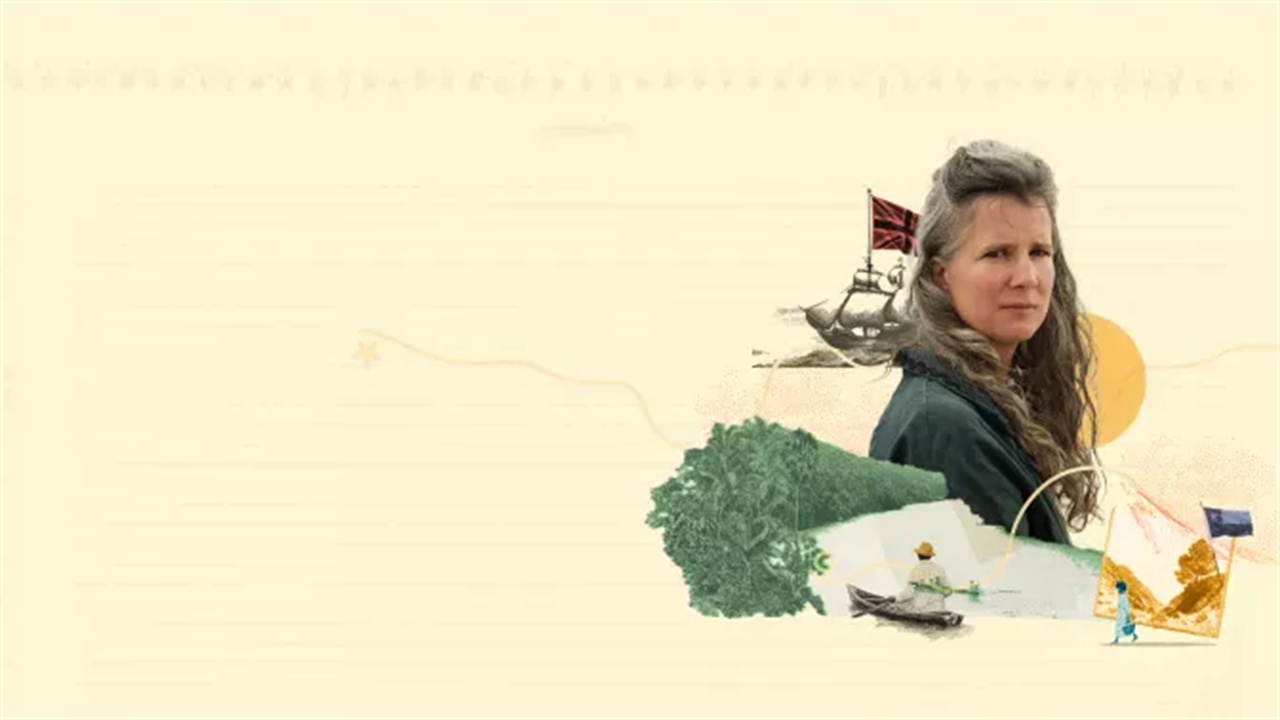
British journalist and writer Alice Albinia has been selected as the winner of the 2026 Michael Jacobs Travel Writing Fellowship, awarded by the Gabo Foundation, the Hay Festival, and The Michael Jacobs Foundation for Travel Writing. Albinia becomes the second woman to receive the fellowship, which this year recognizes only the second English-language project in its history.
Albinia's proposal, titled Wánu , was unanimously chosen by the jury made up of Jon Lee Anderson (United States), Mar Abad (Spain), Teresita Goyeneche (Colombia), Joseph Zárate (Peru) —winner of the scholarship in 2025—, JS Tennant (United Kingdom) —winner of the scholarship in 2020— and Sabrina Duque (Ecuador) —winner of the scholarship in 2018—.
This twelfth edition of the call for proposals received 390 submissions from 38 countries. Since 2014, this initiative has provided $10,000 in funding for a book or article project in Spanish or English about Latin America or Spain.
Albinia proposes a book that connects the accumulation of European wealth during the Victorian era with the exploitation of natural and human resources in Bolivia, Chile, and Peru, drawing on the history of the guano and saltpeter trade in the 19th century. Albinia's critical approach, which questions how to heal the colonial wound—and proposes doing so by telling the story from the perspectives of exploitation omitted from traditional accounts of the continent—brings a distinct tone and greater diversity to the body of work supported by the grant.
The jury highlighted in its judgment report the author's ability to intertwine her own family memory with economic and colonial history and the contemporary environmental crisis in a coherent and clearly articulated proposal.
The jury's decision to choose Alice Albinia's project was motivated by "its literary power that demonstrates a unique and experienced voice."
To date, the author has undertaken extensive research combining academic training, archival work, and fieldwork. Since the serendipitous discovery of her maternal family's Peruvian history in 2017, she has delved deeper into the legacy of guano mining thanks to a grant from the Eccles Centre (2022), which enabled her to conduct research at the British Library and collaborate with the Chilean feminist artivism collective Hilanderas on the creation of La Voz de la Tierra (The Voice of the Earth). In 2023, she was a writer-in-residence at the Custom House in Exeter, the port from which her ancestors traded, and in 2025 she began a fully funded PhD in creative writing at King's College London, under the supervision of specialists in 19th-century Peruvian history. As part of this research, he traveled to territories marked by extraction such as Rapa Nui, the Chincha Islands in Peru, and Angamos and Antofagasta in the Atacama Desert in Chile, where he visited old guano and saltpeter extraction sites and interviewed miners, administrators, and their families.
According to the jury, Albinia's proposed work has a personal component that gives it a differentiating value, making it endearing and akin to the tradition of travel writing that Michael Jacobs helped to consolidate, due to his ability to move through foreign territories to tell stories with a profoundly human approach.
The jury also highlighted its "potential to become a magnificent work that functions as a cultural and historical bridge of great relevance."
The $10,000 grant will allow Albinia to continue her research on what she describes as the racial dimensions of capitalism and the exploitation of indigenous peoples, following the historical and cultural trajectories of five Andean plants: copihue, araucaria, chilco, potato and cinchona (quinine), in territories marked by extraction, such as Rapa Nui, the Chincha Islands in Peru, Angamos and the Atacama Desert in Chile.
Honorable Mentions
The jury awarded honorable mentions, for the fourth consecutive edition, to two projects of great narrative and journalistic value:
Ana Lucía Martínez (Peru/United Kingdom) is the author of * The Memory of a Huayco* , an autobiographical chronicle that begins in the ruins of her childhood home in Áncash, destroyed by the 1970 earthquake and mudslide in the Peruvian Andes. Her rhythmic and beautiful writing combines magical realism, intrigue, and mystery to explore family memory and the landscape, while also showing how the deadliest avalanche in history continues to shape life in the region.
Juan José Martínez D'Aubuisson (El Salvador), for The Paths of the Cursed People of Latin America , a long-term investigation into the Haitian exodus and its historical roots. His intensive fieldwork and narrative power articulate contemporary scenes with centuries-old historical processes, from slavery to current diasporas, contributing to a better understanding of the historical and social dynamics that continue to shape Latin America.
The jury agreed that the overall quality of the submissions was exceptionally high. They also highlighted a substantial improvement over previous editions, with ambitious, thoroughly researched projects demonstrating remarkable attention to language. In the jury's words, reading the proposals was stimulating and generated high expectations for the books that might emerge from them.
Since its first edition in 2015, the Michael Jacobs Scholarship has been won by journalists and writers Joseph Zárate (Peru), Miguel Velárdez (Argentina), Abraham Jiménez Enoa (Cuba), Federico Guzmán (Mexico), Santiago Wills (Colombia), JS Tennant (United Kingdom), Ernesto Picco (Argentina), Sabrina Duque (Ecuador), Diego Cobo (Spain), Federico Bianchini (Argentina) and Álex Ayala Ugarte (Spain).
About Alice Albinia
Alice is an award-winning author of fiction and non-fiction. To write her first two books, which explore overlapping cultural and geographical territories in Pakistan, India, Afghanistan, and Tibet, she worked for two years as a journalist and editor in Delhi, learned Urdu, earned a master's degree in SOAS, and traveled along the Indus Valley—experiences that intertwined in her works * Empires of the Indus: The Story of a River* and *Leela's Book* , a novel. She then spent nine years traveling the fringes of Britain, collecting ancient, medieval, and modern myths of islands ruled by women, while researching Britain's island histories and female-centric epics, writing * The Britannias : And the Islands of Women* and a novel, *Cwen *. Her first children's book, *Once Upon an Island *, an atlas of twenty islands beginning in Chiloé, Chile, and ending in Baffin Island, Canada, is due for publication in March 2026.
Partner for Latin America
Principal Sponsors
Government Partners