Lviv BookForum 2023
Event 1
Events taking place live online 11–13 September 2026
Words at war – the responsibility of literature
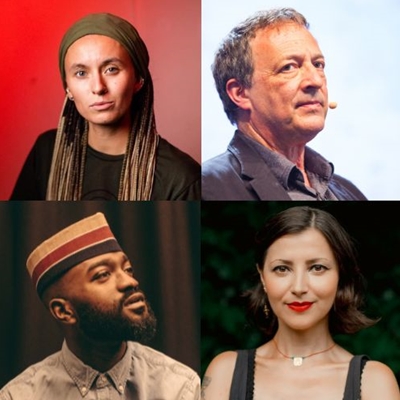
Yaryna Chornohuz, Inua Ellams and Olesya Khromeychuk talk to Misha Glenny
Read moreWhat can literature do in a world shaped by war? Can words bear witness, document crimes, offer a form of justice when legal systems fall short, and help us imagine different futures? Drawing on their own experiences, the speakers will explore literature's responsibilities in times of conflict.
Ukrainian poet and servicewoman Yaryna Chornohuz brings to her poetry the lived experience of serving on the front line as a marine and combat medic. Nigerian poet Inua Ellams reflects on literature as a collective art form capable of bringing together communities of African origin living in the post-colonial continent. Historian and writer Olesya Khromeychuk interweaves history and personal experience to examine the global consequences of Russia’s war against Ukraine.
Join this trio of acclaimed writers and journalist Misha Glenny in an evening of fiction, poetry, and reflections at The Conduit as we welcome old friends and new faces to our stage for this timely conversation. This event is part of Lviv BookForum 2026, run in partnership with Hay Festival Global and the Ukrainian Institute London.
Event schedule
6:30pm: Doors open, Pre event socialising and networking
A cash bar will be available for refreshments.
7:00pm: Event begins
8:00pm: Event ends
Post event book signing, socialising and networking
Speakers:
Yaryna Chornohuz is a Ukrainian writer and poet, and since 2020 has served as a marine in the Armed Forces of Ukraine. She is the author of three poetry collections and the recipient of the Taras Shevchenko National Prize of Ukraine in literature (2024) as well as the Women in Arts. Literature Award (2024). For her military service, she has been awarded the Medal “For a Saved Life” (2022), the Honorary Badge of the Ministry of Defense of Ukraine, and the Medal “For Military Service to Ukraine.”
Inua Ellams is a writer and curator. He is a cross disciplinary artist, an internationally touring performer, a poet, playwright, screenwriter, graphic artist & designer. His published books of poetry include Candy Coated Unicorns and Converse All Stars, Thirteen Fairy Negro Tales, The Wire-Headed Heathen, #Afterhours, and The Actual. His first play The 14th Tale was awarded a Fringe First at the Edinburgh International Theatre Festival. His plays include Barber Shop Chronicles, Three Sisters and The Half-God of Rainfall. He is currently touring Search Party, An Evening With An Immigrant and working on several commissions across stage and screen.
Olesya Khromeychuk is a historian and writer. She is the author of The Death of a Soldier Told by His Sister (2022) and Undetermined Ukrainians (2013). Khromeychuk has written for The New York Times, The New York Review of Books, The Guardian, Der Spiegel, Prospect and The New Statesman, and has delivered a TED talk on ‘What the World Can Learn From Ukraine's Fight for Democracy’. She has taught the history of East-Central Europe at several British universities and is currently the Director of the Ukrainian Institute London.
Misha Glenny is an award-winning journalist, author, and public intellectual. A former BBC Central Europe Correspondent who covered the revolutions in Eastern Europe and the wars in the former Yugoslavia, he is a sought-after keynote speaker on the geopolitics of cybersecurity and organized crime. His best-selling non-fiction book McMafia (Bodley Head, 2008), about the globalization of organized crime, was adapted into a major TV drama series on BBC1 and AMC. Glenny is also the author of an acclaimed single-volume history of the modern Balkans.
General admission
Register to watch onlineThis event is part of Lviv BookForum 2026, run in partnership with Hay Festival Global and the Ukrainian Institute London with the support of the British Council.
Event 2
Events taking place live online 11–13 September 2026
Geopolitics to Understand the World
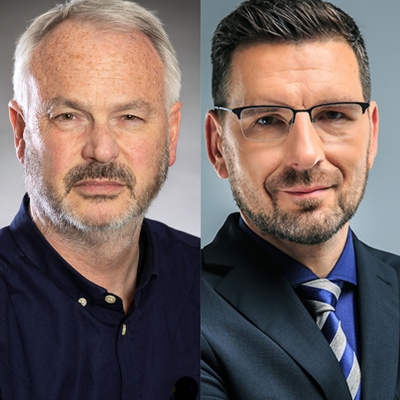
Tim Marshall in conversation with Volodymyr Biehlov
Read moreTim Marshall is a British journalist and author specialising in foreign affairs and international diplomacy, with three decades of experience covering conflicts such as the Balkan Wars, Afghanistan, Iraq, and the Arab Spring. The author of several books that explain global affairs through the lens of geopolitics, Prisoners of Geography—in which he examines how geography shapes the reality of countries and regions—became a bestseller in 2015. Written a year after Russia’s annexation of Crimea, it offered insights into the forces driving the conflict. Eleven years later, Marshall has published a revised edition of the book, incorporating the events that have unfolded since then, from Russia’s full-scale invasion of Ukraine to its growing alignment with authoritarian regimes. In conversation with Volodymyr Biehlov.
Event 3
Events taking place live online 11–13 September 2026
Art in a Time of War
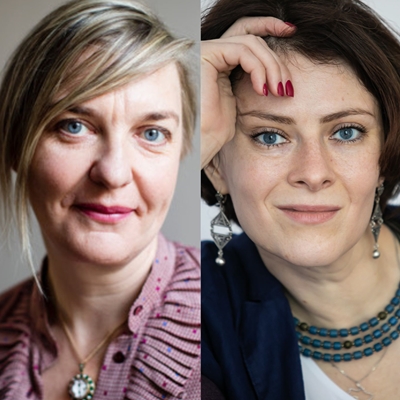
Charlotte Higgins in conversation with Sasha Dovzhyk
Read moreCharlotte Higgins is not a war correspondent but the chief culture writer of The Guardian. Yet in the autumn of 2022, seven months after Russia’s full-scale invasion of Ukraine, she travelled to the country to understand how artists, writers, curators, and musicians were responding to the war. After several further visits, Higgins reflects on those experiences in Ukrainian Lessons, a book about a society defending not only its cities and borders, but also its memory, language, and cultural heritage. In conversation with Sasha Dovzhyk, she will discuss the artists documenting the conflict and the role of culture in preserving a sense of identity when a nation is forced to fight for its future.
Event 4
Events taking place live online 11–13 September 2026
Freedom, inequality, indignity
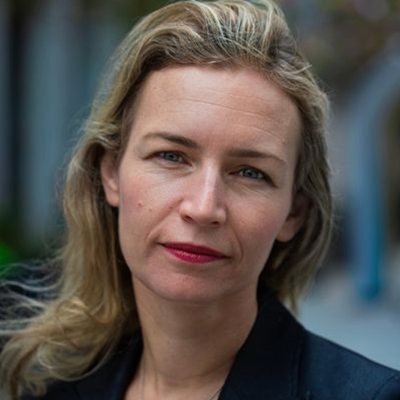
Lea Ypi in conversation with Oksana Forostyna
Read moreLea Ypi (Albania) grew up during the final years of a communist regime and the transition that followed its collapse. In Free, winner of the Royal Society of Literature’s Ondaatje Prize and the Slightly Foxed First Biography Prize, she reconstructs that childhood as a lived experience of political change, where authority shifts form and freedom is learned through its absence. Indignity extends this inquiry into family history and state archives, tracing her grandfather’s life under secret police surveillance and showing how public systems of power shape private memory; together, both books form a reflection on how lives are narrated across rupture, and what remains of freedom and dignity once it becomes history. In conversation with Oksana Forostyna.
Event 5
Events taking place live online 11–13 September 2026
Who Gets to Tell the Story?
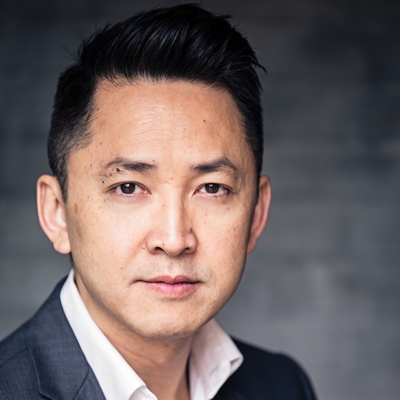
Viet Thanh Nguyen in conversation with Bogdana Romantsova
Read moreViet Thanh Nguyen’s work combines powerful storytelling with sharp reflections on war, exile, and cultural identity. A Pulitzer Prize-winning author and former child refugee, he has helped reshape the way we understand the Vietnam War and its aftermath, as well as the experiences of the Vietnamese diaspora. Across fiction and non-fiction alike, Nguyen explores questions of memory, belonging, and displacement in books such as The Sympathizer, The Refugees, The Committed, A Man of Two Faces, and his most recent work, To Save and to Destroy: Writing as an Other.
Event 6
Events taking place live online 11–13 September 2026
After departures
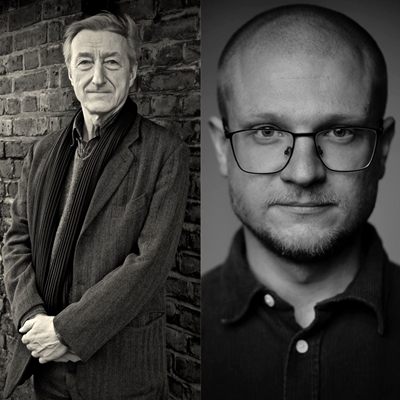
Julian Barnes in conversation with Oleksandr Mykhed
Read moreJulian Barnes (United Kingdom) has suggested that Departure(s), published earlier this year, will be his final book. With this novel about love, happiness and farewells, he brings a long literary career into focus, one that established him as a central figure in contemporary English fiction with works such as Flaubert’s Parrot and The Sense of an Ending. Recently awarded the Princess of Asturias Award for Literature, he is a writer with a distinctly European outlook, whose work moves between fiction and reality, irony and melancholy, and a sustained attention to how stories are constructed, remembered, and revised. One of the most important writers of contemporary fiction will be in conversation with Oleksandr Mykhed.
Event 7
Events taking place live online 11–13 September 2026
The Deserters
Mathias Énard in conversation with Bohdana Romantsova
Read moreMathias Énard (France) has built his work around the circulation of people, languages, and wars across overlapping historical and geographical spaces. In Zone, a single train journey becomes an inventory of modern violence from the Mediterranean to the Middle East, while Compass —winner of the Prix Goncourt— traces centuries of cultural exchange between Europe and the East through music, literature, and travel. His most recent novel, The Deserters, returns to war through two separated timelines, following figures who step away from systems of violence and the structures that sustain them.