Hay Festival Jericó 2027
Event 9
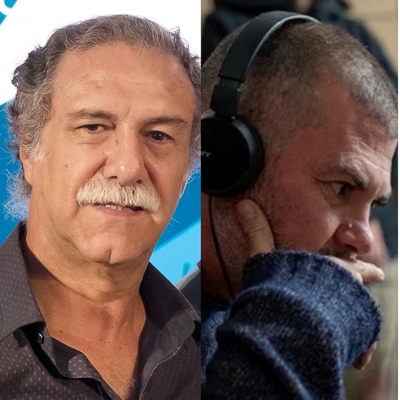
Victor Gaviria in conversation with Andrés Burgos
Dialogues on film chronicles
Teatro Santamaría de Jericó
Read moreAn invitation into the narrative universe of Víctor Gaviria (Colombia)—to his writings and reflections on cinema, as well as his approach to filmmaking and his understanding of the medium. "My films have sought to be a space for dialogue, where there are neither 'good guys' nor 'bad guys,'" says the director from Antioquia. "The truth—the kind that serves us all—does not stem from finger-pointing or prejudice; rather, it emerges from a dialogue that arises when all preconceived 'truths' are set aside." In this conversation with Andrés Burgos, we explore his method of crafting screenplays, his work with non-professional actors, and the profound awareness that permeates every minute of his footage and mise-en-scène.
Event 10
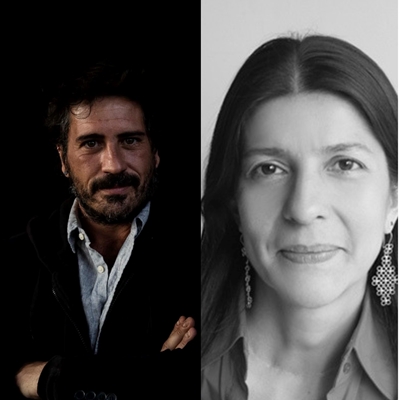
Jacobo García in conversation with Patricia Nieto
Light years: two decades covering Latin America
Museo de Arte Religioso - auditorio
Read moreOver the two decades he has spent reporting in Latin America, the Spanish journalist Jacobo García has covered more than 30 elections, two coups d’état, and numerous natural disasters. His extensive experience is captured in Años luz —winner of the Anagrama Non-fiction/Giangiacomo Feltrinelli Foundation Prize— in which he revisits unpublished notes from his journals to explore recurring themes: violence, authoritarianism, the climate emergency, the courage of women and the power of culture. In conversation with Patricia Nieto, he will reflect on the realities of Latin America over the last twenty years —as seen through his own eyes and recorded by his pen— and share stories of the people he has encountered along the way.
With the support of Acción Cultural Española, AC/E
Event 11
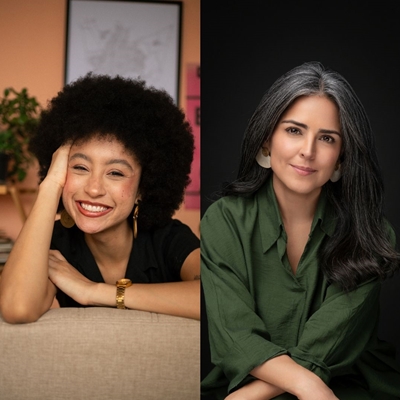
Irina Petro de León in conversation with Claudia Palacios
Last light I dreamed that my body was a channel.
Museo de Antropología y Artes de Jericó, MAJA - auditorio
Read moreAnoche soñé que mi cuerpo era un caudal speaks to the difficult experience of living with fibromyalgia and other conditions that are hard to diagnose. It also explores the search for a language to articulate this experience — and the pain that comes with it. Irina Petro de León (Colombia) offers an intimate, collective exploration of what remains invisible, even when it causes pain. As fluid as water, her poetic work —at once fragile and resilient— shifts between poetry, prose, family memory and the lived experience of illness. The author will be in conversation with Claudia Palacios, discussing the cartographies of pain and the use of language as a form of resistance.
Event C3
Performance by a local artist winner of regional auditions
Parque Principal - tarima
Read moreEvent 12
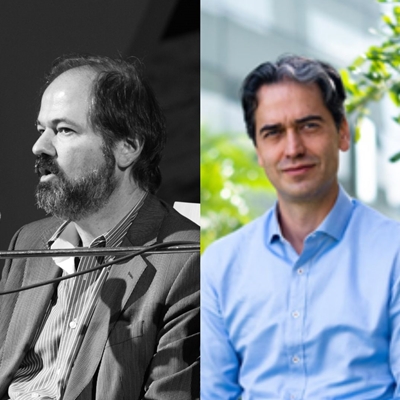
Juan Villoro in conversation with David Escobar
You’ll be eating paper
Teatro Santamaría
Read moreIt is said that when Gabriel García Márquez told his father he had decided to give up his law studies to become a writer and journalist, his father rebuked him with a blunt remark: ‘You’ll be eating paper’. Drawing on this family anecdote, fellow journalist and writer Juan Villoro (Mexico) weaves together the threads of Gabo’s two creative strands in Comerás papel, Gabriel García Márquez: del periodismo a la ficción. In conversation with David Escobar, he explores how the Colombian’s journalistic perspective was always fertile ground for the fiction of his narrative universe, particularly that of One Hundred Years of Solitude. Indeed, some of his most memorable books emerged from his observation of reality.
Event P2
Screening of Short Films by Laura Mora and Víctor Gaviria
Two perspectives, one city
Parque Principal - tarima
Read more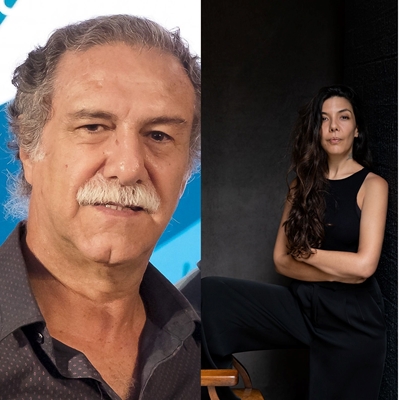
Event 13
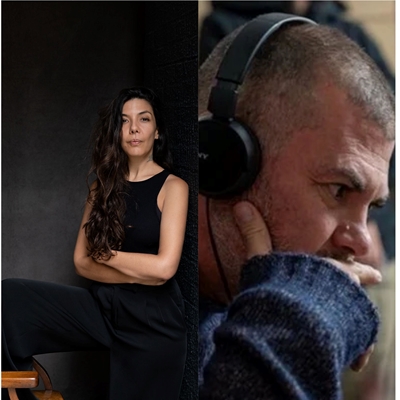
Laura Mora in conversation with Andrés Burgos
From literature to the screen
Parque Principal - tarima
Read moreFilm director Laura Mora (Colombia) has been in charge of adapting One Hundred Years of Solitude, the iconic novel by Gabriel García Márquez, to the small screen. Before undertaking the challenge of adapting Colombia's most universal literary work, the creator of Matar a Jesús and The Kings of the World, who will speak with Andrés Burgos, already had a long career as a filmmaker, which included prestigious awards. After portraying the most social and marginal reality of Medellin in her previous films, in One Hundred Years of Solitude she has accentuated the political and social background of this masterpiece of magic realism, bringing great creativity to bear on the differences between the languages of film and literature.
Event C4
Corraleros de Majagual in Concert
Parque Principal - tarima
Read moreOne of the most iconic groups in Colombian popular and folk music. With a career spanning more than six decades, they have brought rhythms such as cumbia, porro, vallenato, and guaracha to stages both in Colombia and abroad. Their festive spirit and a repertoire etched into the memories of several generations have established them as a benchmark for the traditional music of the Caribbean and for Colombia’s sonic identity.
Event 14
Carlos Cortés Castillo in conversation with Daniel Rivera Marín
Social media: attention and distraction
Teatro Santamaría
Read moreWe spend between seven and nine hours a day online, mainly connected to the social media, anxious to see what the algorithm will show us next. To say that digital technologies shape our habits and decisions is, quite simply, stating the obvious — like saying that water is wet. The problem is that we are not always aware of just how drenched we truly are. Carlos Cortés Castillo (Colombia) is the author of La zona de la máquina, an essay in which he proposes solutions for building healthier connections with our screens. It is possible to break free from the "infinite scroll" and the digital noise that degrades public discourse and in conversation with Daniel Rivera Marín he will give us some guidance on seeking new habits that can break with our digital automatism.
Event 15
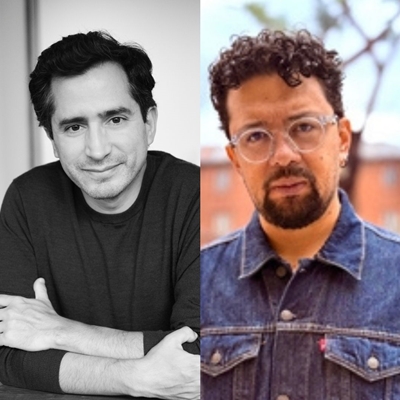
Héctor Abad Faciolince, Laura Mora and Juan Villoro in conversation with Adriana Villegas Botero
Celebrating Gabo
Museo de Arte Religioso - auditorio
Read moreGabriel García Márquez turns 100, and his body of work remains a territory to which we return and from which we observe. Laura Mora (Colombia) has engaged with it through her ambitious adaptation of One Hundred Years of Solitude; Juan Villoro (Mexico) has spent years tracing the journalist behind the novelist — as we can read for ourselves in his book Comerás papel, Gabriel García Márquez: del periodismo a la ficción; and Héctor Abad Faciolince (Colombia) worked alongside Gabo at the magazine Cambio, becoming a great admirer of his. Together with Adriana Villegas Botero, they will discuss a body of work that is a legacy and an integral part of our collective memory, ensuring that it continues to be read, recounted and experienced for at least another hundred years.

Event HFC21
Ringo, la historia de un perro que volvió a nacer
Novedades Lecturas Comfama
Parque principal - pabellón central
Read moreEvent HFC22
What happens when we stop drinking coffee and start painting with it?
Coffee Ink
Parque principal - pabellón central
Read moreEvent P3
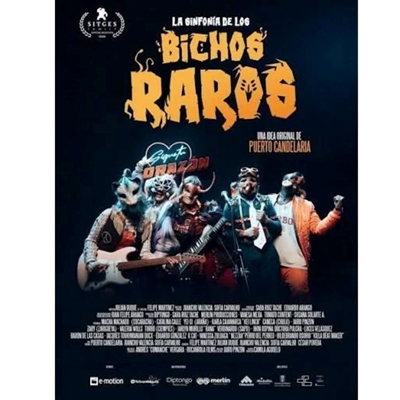
Screening of La Sinfonía de los Bichos Raros
Parque Principal - tarima
Read moreMacha is a teenage cockroach who dreams of becoming a singer. When her father’s shop is on the verge of closing, she forms a band of “misfits” with her friends—a spider, a centipede, a beetle, and an opossum—to compete in a human talent reality show. Through music, humor, and adventure, they discover the value of friendship and self-acceptance. This musical fantasy adventure, created by Puerto Candelaria, shows that being different has a charm all its own.
Duration: 90 minutes
Director: Julián Duque
Country: Colombia
Event 16
Jacobo García, Patricio Pron, Margarita Serje and Adriana Villegas in conversation with Cristina Fuentes La Roche
Mapas to understand ourselves
Teatro Santamaría
Read moreMaps are never neutral. They define borders, reflect power dynamics, document conflicts, and reveal the ways in which societies imagine and organize the world. In a time of profound transformation, cartography takes on renewed significance. Patricio Pron (Argentina), Jacobo García (Spain), Margarita Serje (Colombia), and Adriana Villegas (Colombia)—in conversation with Cristina Fuentes—will share different ways of interpreting and narrating the world. Each will select a map—whether physical, cultural, linguistic, or emotional—and discuss how these maps shape our understanding of identity, memory, territory, and belonging.
Event 17
Claudia Palacios in conversation with Daniel Rivera Marín
Hola, mami, quiubo, mija
Museo de Arte Religioso - auditorio
Read moreThe mother of the writer and journalist Claudia Palacios (Colombia) passed away in 2025, after thirteen years of suffering from Alzheimer’s. Hola, mami, quiubo, mija is her daughter’s way of honouring her mother’s memory, offering encouragement to carers and raising awareness of a disease that dehumanises those affected and takes its toll on their families. The book features conversations between mother and daughter and brings together advice from specialists. She will be speaking with Daniel Rivera Marín about the importance of discussing ageing, vulnerability, grief, mother-daughter relationships, the right of people with cognitive impairment to die with dignity, and the wellbeing of those who care for them.

Principal Sponsor