All Events for this artist
Arequipa 2024
Gabriela Wiener in conversation with Liliana Colanzi, with the participation of Renata Flores
South to south conversations
Arequipa 2024,
With the support of Open Society Foundations

Hay Festival 2026
Liliana Colanzi and Hanna Limulja talk to Polly Russell
Dreaming of Resistance: Indigenous Cultures in the Face of Collapse
Hay Festival 2026,
How can ancient cultures open up our senses and help us dream of a better collective future? Bringing together ideas, traditions and perspectives from indigenous cultures, Brazilian anthropologist Hanna Limulja considers how dreaming is a form of indigenous resistance and hope while Bolivian writer Liliana Colanzi reflects on how environmental devastation and neoliberal violence threaten to create a dreamless future. They talk to British Library curator Polly Russell.
In You Glow in the Dark, Colanzi imagines eerie, post-nuclear futures where survival and postcolonial revolution are the norm, while Limulja’s work focuses on how dreams have been part of the territorial and cultural struggle of the Yanomami people.
Co-curated with FLIP festival. Part of the UK/Brazil Season of Culture 2025–26
Querétaro 2023
Liliana Colanzi and Socorro Venegas in conversation with Lola Larumbe
My friends the bookshops. Stories of love (and one or two about falling out)
Querétaro 2023,
Spaces for buying and selling, socialisation and discovery, bookshops are also the subjects of literature and for interpretation. Often readers create strong links with their local bookshops, and these links develop into relationships that can last a lifetime. From this personal, almost intimate, perspective, three writers and a bookseller will talk about the love created, as well as the fallings out that can also happen on the way. With Liliana Colanzi and Socorro Venegas in conversation with Lola Larumbe.
With the support of AECID
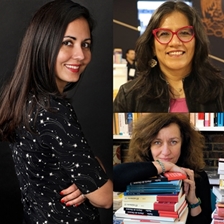
Querétaro 2023
Liliana Colanzi in conversation with Dahlia de la Cerda
Querétaro 2023,
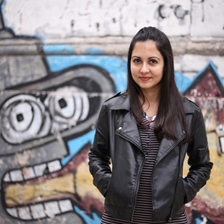
Liliana Colanzi (Bolivia) has a doctorate in Comparative Literature from Cornell University, where she now lectures. In 2015 she won the Aura Estrada Prize and in 2017 she was selected for the Bogotá39 list of 39 of the best Latin American fiction writers aged under 40. She has a publishing project in Bolivia called Dum Dum, is the author of the books of short stories Vacaciones permanentes and Nuestro mundo muerto. Her last work is Ustedes brillan en lo oscuro, a collection of stories that explore narratives through time and space on the exuberant historical and geographical riches of Latin America, a book that won the Ribera del Duero Prize. In conversation with the fiction writer and essayist Dahlia de la Cerda.
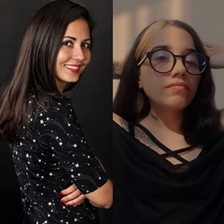
Arequipa 2024
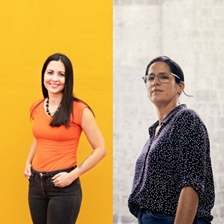
Hay Festival 2026
Liliana Colanzi talks to Ángel Gurría-Quintana
South to North Conversations: Language, Memory and Community in the Face of Disaster
Hay Festival 2026,
Bolivian writer Liliana Colanzi discusses the ideas of collapse, language, kinship and memory that show up in her works, with literary journalist and translator Ángel Gurría-Quintana.
Colanzi’s short stories (You Glow in the Dark, Our Dead World) build eerie dystopian landscapes out of the decimated ruins of post-nuclear Latin America, in a style that feels both very real and completely otherworldly.
Supported by Open Society Foundations
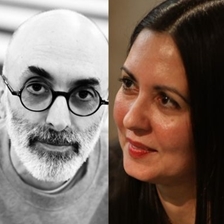
Hay Festival 2018
This is the first of two sessions introducing the most exciting voices of Latin American fiction, stars of the 2018 selection for Bogotà 39 and launching the English-language edition of a globally published anthology. Colanzi is a Bolivian short story writer and editor whose work includes the collection Our Dead World. Restrepo Pombo is the editor of Gatopardo magazine and of the anthology The Sorrows of Mexico. His fiction appears in the Bogotà 39 Anthology. Fonseca was born in Costa Rica and grew up in Puerto Rico. His novel Colonel Lagrimas is available in English. They read and talk to Daniel Hahn.
Felipe Restrepo Pombo is the British Council writer in residence at Hay


Cartagena 2018
Liliana Colanzi, Lola Copacabana, Eduardo Rabasa, Mariana Torres and Diego Zúñiga in conversation with José Hamad
Bogotá39-2017. Amphibious writers II
Cartagena 2018,
Four authors who combine writing with other occupations, in this case publishing, journalism and academia, talk about what it means to move between the different worlds in which they live and work. They will also talk about their latest books with the publisher José Hamad. Liliana Colanzi (Bolivia), Eduardo Rabasa (Mexico), Mariana Torres (Brazil) and Diego Zúñiga (Chile).
With the support of the Mexican Embassy
With the support of Womarts
Dallas 2026
Yásnaya Elena A. Gil, Liliana Colanzi and Edmundo Paz Soldán in conversation with María Ramos Pacheco
South to North conversations: Writers & the Archive of the Indies
Dallas 2026,
Writers Liliana Colanzi, Edmundo Paz Soldán, and Yásnaya Elena A. Gil come together for a conversation around Archivo de Indias, a special project developed by Hay Festival and Anagrama, in collaboration with Charco Press, and in connection with the General Archive of the Indies in Seville. The project invited contemporary Latin American writers to explore the Archive and its extraordinary collection of documents related to the history of Spain and the Americas, using that encounter as the starting point for new writing.
Moderated by María Ramos Pacheco of The Dallas Morning News, the conversation will explore what it means for Latin American writers to return to these historical records today, what they discovered in the Archive, and how literature can question, reinterpret, and give new life to the stories preserved there. A conversation about history, colonialism, memory, and the complex relationship between Spain and the Americas seen through contemporary Latin American voices.
Simultaneous interpretation between Spanish and English will be available
With the support of Open Society Foundations