Hay Festival Querétaro 2023 – Hay Festival Joven Querétaro
Welcome to the Hay Festival Querétaro 2023 programme. The festival took place from 7 to 10 September, with 105 activities with 151 international guests from 20 countries, and with Hay Joven, Hay Festivalito, Hay Delegaciones and Talento Editorial events, as well as two activities in Cadereyta.
Event HJ1
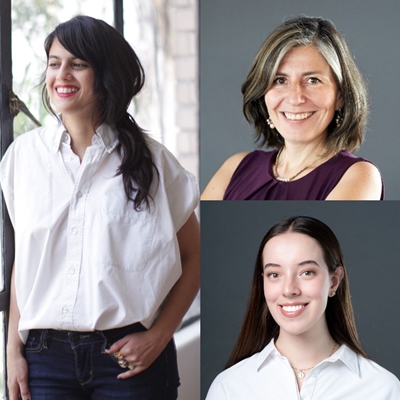
Brenda Lozano in conversation with María Concepción Castillo González and Mariana Oliveros Trujillo
Tec de Monterrey, Punto Blanco
Read moreBrenda Lozano (Mexico) is a fiction writer, essayist and publisher. In 2017 she featured on the Bogotá39 list as one of the best Latin American fiction writers under the age of 40. She is the author of the novels Todo nada (2009), Loop (2019), Witches (2022) and the recent Soñar como sueñan los árboles (2024), which tells the story of two women whose lives cross after the kidnapping of a girl, in the Mexico City of the 1940s; this is a story full of suspense, but also of humour, which portrays a period of splendour for the capital and Mexican culture. It also focuses on matters of contemporary interest, such as motherhood, and women’s place in society. In conversation with María Concepción Castillo González and Mariana Oliveros Trujillo.
Event HJ2
BBC Mundo workshop with Valentina Oropeza and Daniel Pardo
Auditorio Fernando Díaz Ramírez de la UAQ
Read more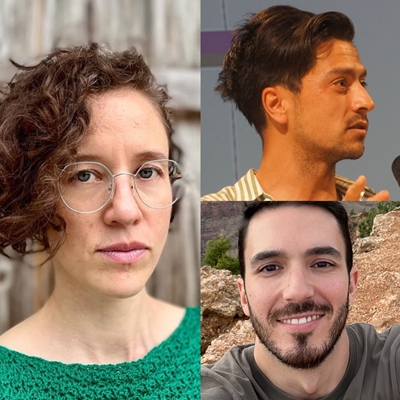
Event HJ3
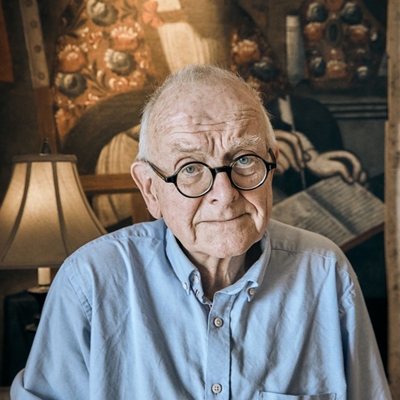
Henry Marsh in conversation with José Luis Copado Gutiérrez
Universidad Anáhuac, Aula Magna Edificio C
Read moreHenry Marsh is a renowned British writer and retired neurosurgeon. He is the author of, among other books, And Finally. Matters of Life and Death, which tells of his own experience as a cancer patient. At this event he will talk about the principles and goals of palliative care, and about the challenges and opportunities that currently exist in terms of a dignified death, offering advice and recommendations to help patients and their loved ones face this difficult stage of life with dignity and compassion. In conversation with José Luis Copado Gutiérrez.
In English
With the support of British Council
Event HJ4
Angela Saini in conversation with Eduardo Becerra
UNAM ENES
Read moreAngela Saini is a British scientific journalist and radio presenter, as well as a writer whose work has been acclaimed and translated into 14 languages. Her penultimate book, Superior: The Return of Race Science, was shortlisted for the Los Angeles Times Book Prize and named Book of the Year by Nature, the Financial Times and the NPR programme Science Friday. On this occasion she presents The Patriarchs, an audacious, radical book that unearths the roots and history of how this system of domination arose for the first time in societies and spread around the world, from prehistory to the present. Saini offers a hopeful narrative bringing to bear the many possible human agreements that question the old stories of inevitable male supremacy, and reveals that these stories are an element that is constantly changing within systems of control. She will talk to Eduardo Becerra.
Event in English
With the support of Open Society Foundations and the British Council
Event HJ5
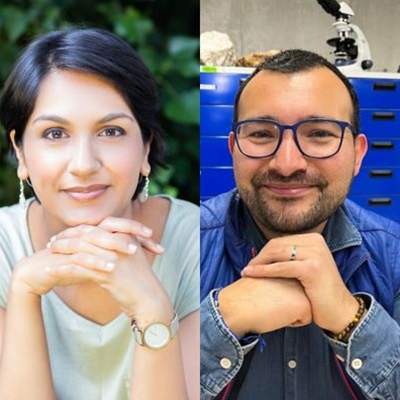
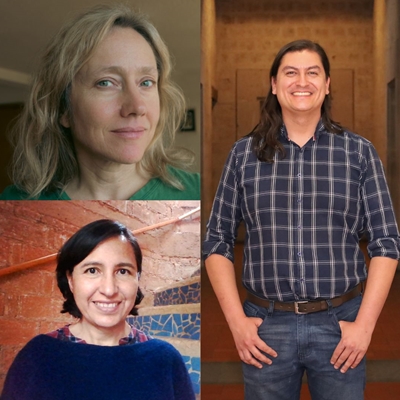
Guiomar Rovira and Rosaluz Pérez Espinosa in conversation with Kevyn Simón Delgado
South to south conversations: Thirty years of the Zapatista movement
Auditorio del Campus Amealco de la UAQ
Read moreWith the support of Acción Cultural Española, AC/E
Event HJ6
Naief Yehya in conversation with Abel Martínez Hernández
Planet of mushrooms
Biblioteca Central - Dirección General de Bibliotecas UAQ
Read moreNaief Yehya (Mexico) is an industrial engineer, fiction writer, essayist and cultural critic. The author a various novels and works of non-fiction, his work has been translated into Italian, English, Arabic and French. He contributes regularly to the Mexican newspaper La Razón. El planeta de los hongos is a cultural and social history of mushrooms, particularly hallucinogenics, and LSD. His approach is not only scientific, but also based on experience and literary non-fiction. Not quite a manual for consumption or a guide for collectors, this is an exploration of the relationship between “magic” mushrooms and humanity, and their potential to open the mind. In conversation with Abel Martínez Hernández.
Event HJ7
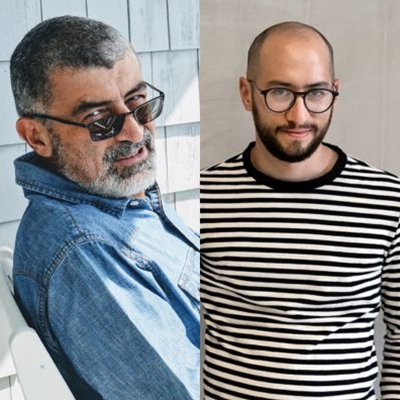
Mohamed El Morabet in conversation with Saúl Crespo and Rogelio Haces Gil Martínez
Tec de Monterrey, Punto Blanco
Read moreMohamed El Morabet (Morocco/Spain), a Politics graduate, presents his second novel, El invierno de los jilgueros, a story about Brahim, who has lived with death, illness and war from a young age. Years later, Brahim studies Fine Art and meets Olga, a woman immersed in her role as an art teacher, but who also wants to see new horizons, other realities. The link created between teacher and pupil will change their lives forever. In conversation with Saúl Crespo and Rogelio Haces Gil Martínez.
With the support of Acción Cultural Española, AC/E
Event HJ8
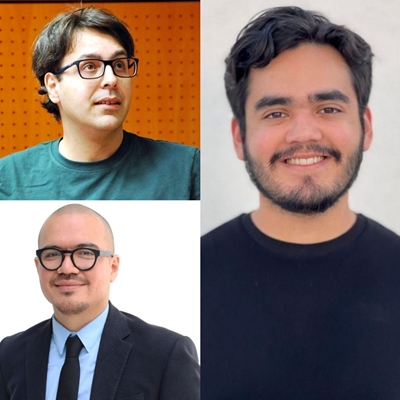
Sara Barquinero in conversation with Julieta Díaz Barrón and Montserrat Michelle Rivera Ruiz
Tec de Monterrey, Punto Blanco
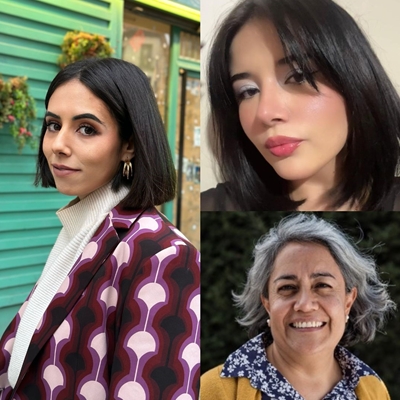
Read moreThe writer, essayist, and thinker Sara Barquinero (Spain)has published one of the most acclaimed novels of the year in her country, Los Escorpiones (2024),where the two main characters investigate a dangerous conspiracy spanning several decades and reflect on the meaning of life. A PhD in Philosophy, Barquinero received a creative scholarship at the Residencia de Estudiantes in Madrid and has obtained numerous prizes, such as the Virginia Woolf Short Story Prize in the English Language (2017) and the Voces Nuevas Poetry Prize of the Torremozas Publishing House in 2019. In conversation with Julieta Díaz Barrón and Montserrat Michelle Rivera Ruiz.
Event HJ9
Antonio Ortuño in conversation with Abdiel Hernández
UNAM ENES
Read moreAntonio Ortuño is a major voice in Mexican contemporary literature, and his fascinating body of work challenges conventions in forms of exploring social and political matters. In conversation with Abdiel Hernández, Ortuño will talk about his novels, which tackle themes such as violence and corruption, satire of the corporate world, the migration routes of Central America, and dystopian perspectives on his country. Ortuño will also talk about the project Verdades compartidas, an anthology which, thanks to the Hay Festival and the Colombian International Centre for Transitional Justice, reimagines and tells the story of Colombia after the peace process, through the writings of ten Latin American figures.

Event HJ10
Garry Gottfriedson and Luz María Lepe in conversation with Ingrid Bejerman
Decolonising verse: challenges for the literary translation of native poetry
Biblioteca Campus Centro Histórico - Dirección General de Bibliotecas UAQ
Read moreBased on the challenges of taking the verse of Garry Gottfriedson (Canada) from English into Spanish for Tierra y lenguaje, a collection of some of his most representative work, we present a conversation between the Secwépecm poet and the indigenous literature specialist, Luz María Lepe (Mexico), about the attention and care needed to translate poetry by native authors from one colonial language into another, moderated by the journalist and educator Ingrid Bejerman (Brazil-Canada).
With the support of Blue Metropolis/Metropolis bleu, the literary festival of Montreal

Event HJ11
Reinaldo Mijares and Israel Nieves in conversation
Community is culture
Auditorio de la Facultad de Artes UAQ
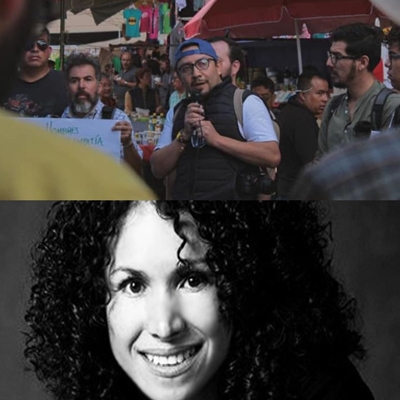
Read moreThe cultural activities that arise from community ties feed back into a strengthening of these communities, creating a positive impact on their inhabitants and facilitating the work of creators and artists. At this event, we will find out about two artistic community projects from two countries, which can help to create a route map for initiatives that have such positive effects on our communities. With Reinaldo Mijares from 100% San Agustín (Venezuela) and Israel Nieves from La Otra Banda (Mexico).
Co-organized with CAF
Event HJ12
Amalia Andrade in conversation with Perla Holguín
Universidad Anáhuac, Aula Magna Edificio C
Read moreAmalia Andrade, the Colombian author of works such as Uno siempre cambia al amor de su vida (Por otro amor o por otra vida) and Cosas que piensas cuando te muerdes las uñas, has sold over a million books and is a social media phenomenon. In her most recent book, No sé cómo mostrar dónde me duele, Andrade returns to the theme of mental health and the body-mind relationship, writing about matters such as poetry, music and the cultivation of good habits to work on our emotional education and balance the internal world of the feelings. In conversation with Perla Holguín.
Event HJ13
Rebecca Solnit in conversation with Iliana Padilla
UNAM ENES
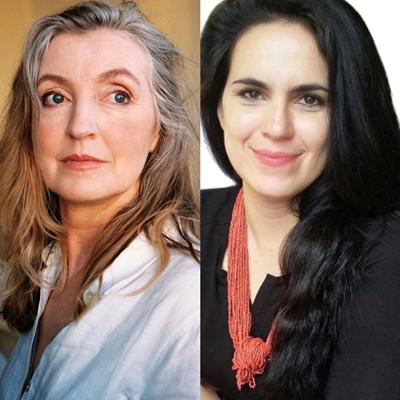
Read moreThe writer, historian and activist Rebecca Solnit is an important voice when it comes to matters such as feminism, environmental and urban history, popular power, social change and insurrection, walking and wandering, hope and catastrophe. She is the author of over 25 books, including the anthology she co-edited in 2023, Not Too Late: Changing the Climate Story from Despair to Possibility, as well as Orwell’s Roses, Hope in the Dark, Men Explain Things to Me, A Paradise Built in Hell and A Field Guide to Getting Lost. She writes regularly for The Guardian and is on the board of the climate group Oil Change International. In conversation with Iliana Padilla.
Event in English
Event HJ14
César Rendueles in conversation with César Andrés García Sánchez
Centro Cultural Aurelio Olvera Montaño UAQ
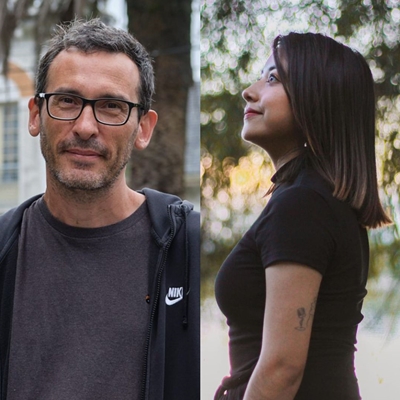
Read moreThe Spanish thinker and writer César Rendueles presents his work Comuntopía: Comunes, postcapitalismo y transición ecosocial. Rendueles, recognised for his social analyses and critical thinking, describes our current situation of urgency, characterised by ecological, political and technological crises, and goes further to advocate the importance of “common goods”, collaborative systems that manage resources (such as public goods and services), which are growing more scarce for millions of people. His book offers a hopeful message, proposing a global "politics of the commons", aimed at social forces that seek democratic, progressive and emancipatory strategies in the context of post-capitalism. In conversation with César Andrés García Sánchez, Director of University Communication at the Autonomous University of Queretaro.
Event HJ15
Petina Gappah in conversation with Felipe Bohórquez
Universidad Anáhuac, Aula Magna Edficio C
Read moreThe lawyer and writer Petina Gappah (Zimbabwe) is the author of two books of short stories and two novels. Out of Darkness, Shining Light tells the story of those who carried the body of the doctor and explorer David Livingstone through African lands so that he could be buried in England. Gappah turns the spotlight on two particular characters, the cook, Halima, and the servant, Jacob Wainwright. The novel explores the collision of Europe and Africa, questions hegemonic historical discourses, and portrays the hypocrisy and deception linked to the colonisation of Africa. The author will talk about her novel with Felipe Bohórquez.
Event in English

Event HJ16
Nimmi Gowrinathan in conversation with Carla Alicia Suárez Félix
Biblioteca Campus Centro Histórico - Dirección General de Bibliotecas UAQ
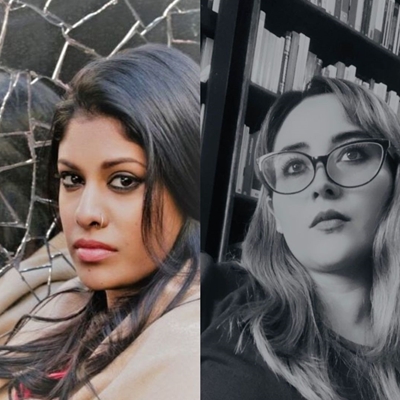
Read moreNimmi Gowrinathan (Sri Lanka/United States) is a thinker, academic and activist, and author of Radicalizing Her. Why Women Choose Violence, a fascinating study of women active in guerrilla movements, including the FARC (Colombia), the Tamil Tigers (Sri Lanka), the Syrians who have fought against the Asad government, the EZLN in Mexico and the PLO in Palestine. The book dismantles beliefs about gender and analyses the many reasons that lead these women to armed struggle. Gowrinathwan is a professor at City College in New York, where she has founded the Politics of Sexual Violence initiative, and works regularly with media outlets such as CNN, MSNBC, Al Jazeera and the BBC. In conversation with Carla Alicia Suárez Félix.
Event in English
With the support of Open Society Foundations

Principal Sponsor
Partner for Latin America