Online events
Event 67
Poetic gazes
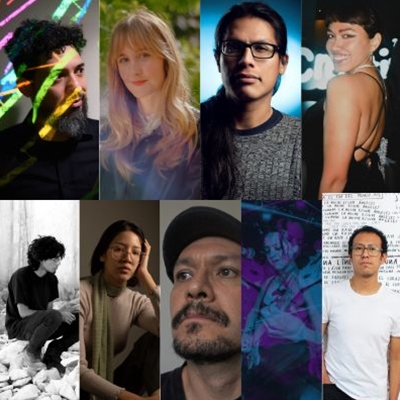
José Aburto, Jessica Andrews, Vanessa Begazo, Esteban Couto, Moisés Jiménez, Maritza Mejía, Heiner Valdivia and Majo Villegas
Casa Tristán del Pozo - Fundación BBVA
Poetry reading with the participation of six young highly promising authors based in Arequipa and three programme participantes: José Aburto, Jessica Andrews, Esteban Couto, Vanessa Begazo, Moisés Jiménez, Maritza Mejía, Heiner Valdivia and Majo Villegas. Presented by Augusto Carrasco.
Sponsored by Cerro Verde and with the support of the British Council
Event 2
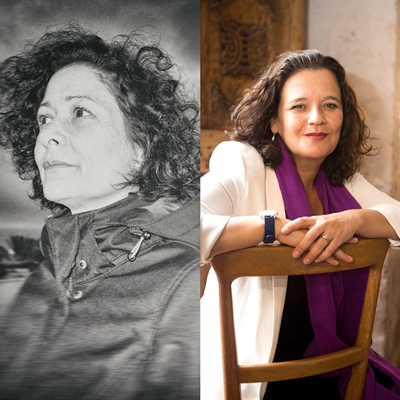
In Noche negra, Pilar Quintana (Colombia) returns to the untamed and exuberant Colombian Pacific that she portrayed so convincingly in the acclaimed novel La perra. In her latest book, the protagonist finds herself alone for four days in a setting that is both terrifying and fascinating. She feels threatened not only by nature, but by the people around her. As well as her work as a writer, Quintana has recently edited the second issue of the Biblioteca de Escritoras Colombianas. In conversation with Cristina Fuentes La Roche.
Event 4
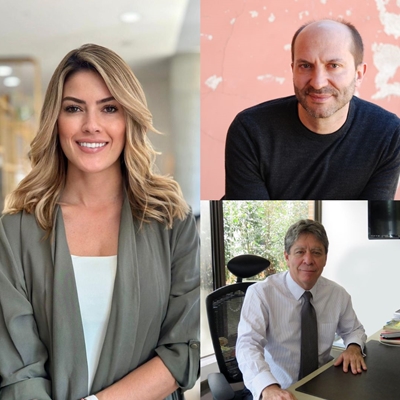
Carlos Granés and Bruce Mac Master in conversation with Tatiana Vásquez
Roaring and destabilization
Teatro Santamaría
Both the essayist Carlos Granés and the economist Bruce Mac Master have taken on the responsibility of analysing our time and our continent. With El rugido de nuestro tiempo, Granés continues his work of scrutinising the present, and comes to the conclusion, one shared with other commentators, that we live at a time of ideological and geopolitical disorder. In his more recent book, La agenda de la desestabilización. Colombia en la mira, Mac Master takes on one of the most pressing problems of our times: destabilisation, looking at the matter through the Colombian lens. Although these two authors perhaps do not have all the answers, their questions nonetheless open the way to a conscious reflection on the times in which we live. They talk to Tatiana Vásquez
Event 6
Virginia Petro De León in conversation with Lu Beccassino
Loving, healing, and loving once again
Teatro Santamaría
First comes love, then falling out of love, and then after a necessary process, healing; after that one is ready to love again. Después del amor, nosotras is the first book by Virginia Petro De León, a collection of poems illustrated by Eloísa Castro, in which the words live a life worn down by pain, while healing comes on slowly. She will talk about the scars of a heart that has healed with Lu Beccassino, author of the work of non-fiction Si nos enseñaran a amar.

Event 9
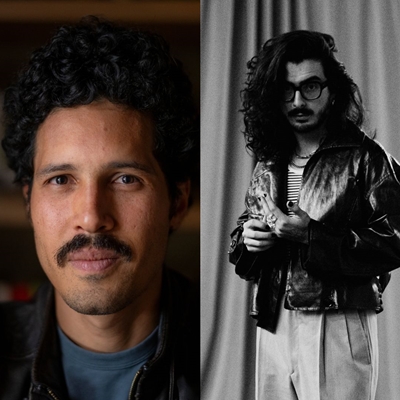
Simón Vargas in conversation with Jorge Caraballo
From Morat to ‘A la orilla de la luz’
Teatro Santamaría
Event 12
Event 15
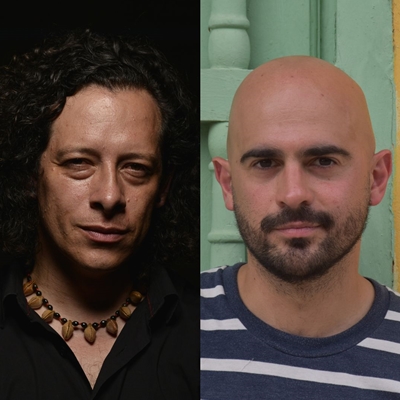
Juan Esteban Constaín in conversation with María del Pilar Valencia
El hijo del hombre
Teatro Santamaría
El hijo del hombre, by Juan Esteban Constaín, is a literary and historical essay in which the author examines early Christianity and its profound impact. This writer, whose very personal style is full of anecdotes, will talk to María del Pilar Valencia, about this book on classical antiquity and how Christianity became the official religion of the Roman Empire.
Event 17
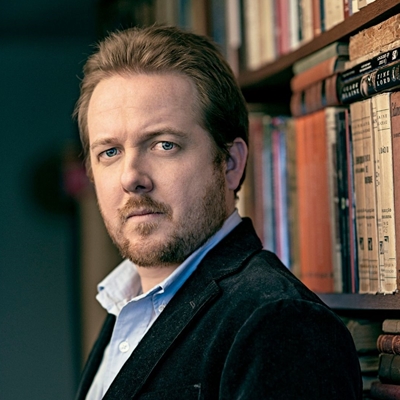
Javier Peña in conversation with David Escobar
From ‘Grandes infelices’ to ‘Tinta invisible’
Teatro Santamaría
With the support of Acción Cultural Española, AC/E
Event 1
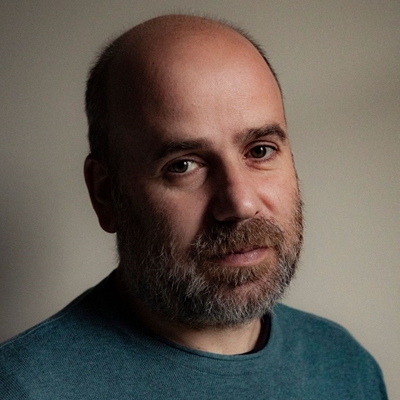
Andrés Cota Hiriart in conversation with Andrés Roldán
The science behind creativity
Biblioteca Pública Piloto de Medellín (Sala general)
With the support of Alcaldía de Medellín
Event 3
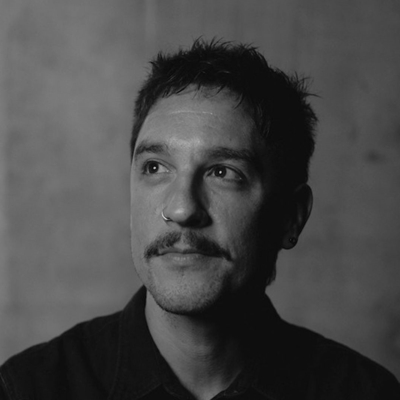
Andrés Burgos and Yesenia Valencia in conversation with Robinson Meneses
New ways of narrating the world
Biblioteca Pública Piloto de Medellín (Sala general)
With the support of Alcaldía de Medellín

Event 5
Juan Esteban Constaín in conversation with Juan Luis Mejía
The son of man
Biblioteca Pública Piloto de Medellín (Sala general)
El hijo del hombre, by Juan Esteban Constaín, is a literary and historical essay in which the author examines early Christianity and its profound impact. This writer, whose very personal style is full of anecdotes, will talk to Juan Luis Mejía about this book on classical antiquity and how Christianity became the official religion of the Roman Empire.
With the support of the Alcaldía de Medellín
Event 6
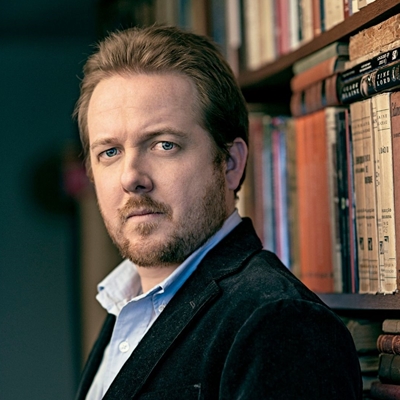
Federico Ángel, Franki Franco and Laura Franco in conversation with Rafael Tamayo
Medellin and the revolution of the creative industries.
Biblioteca Pública Piloto de Medellín (Sala general)
Medellín has become the capital of the creative industry and the place where the big names in the business carry out their projects. Three creatives will talk about the positives and the benefits of the city when it comes to turning their ideas into reality: Federico Ángel, co-founder of Forward Music, a record label and artists’ agency; Franki Franco, co-founder of the Breakfast Club, the company that has created the La Solar, Ritvales and La Verbena festivals, among other events and Laura Franco, producer and executive producer with over 18 years of experience, known for leading high-impact international productions for platforms such as Netflix and Paramount+. In conversation with Rafael Tamayo, the new director of the MAMM.
With the support of the Alcaldía de Medellín
Event 8
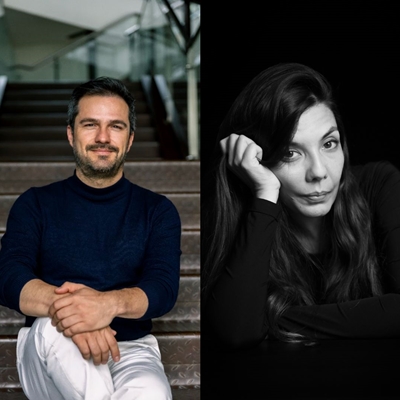
Javier Cercas in conversation with Sara Jaramillo Klinkert
Biblioteca Pública Piloto de Medellín (Sala general)
With the support of the Alcaldía de Medellín
Event 10
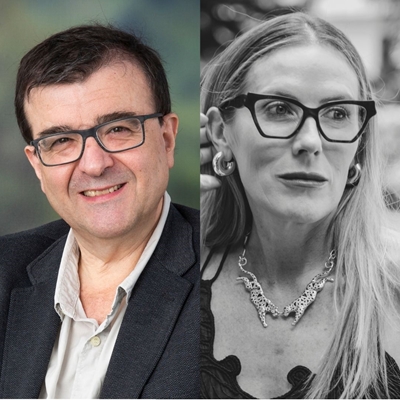
Santiago Posteguillo in conversation with Santiago Silva
Biblioteca Pública Piloto de Medellín (Sala general)
Los tres mundos. La conquista de las Galias por Julio César is the highly awaited continuation of the series dedicated to Julius Caesar by Santiago Posteguillo (Spain). After the great success of the last two books in the saga, Roma soy yo and Maldita Roma, which told the story of his origins and rise, we now read about the conquest of a territory that is hostile to Roman interests. This historical novel also visits Egypt, and covers the exile of the Pharaoh Ptolemy XII, the father of Cleopatra. Rome, Gaul and Egypt, three worlds in which Posteguillo brings an end to his Julius Caesar cycle. He will talk toSantiago Silva, Medellin’s Secretary of Citizen Culture.
With the support of the Alcaldía de Medellín
Event 1
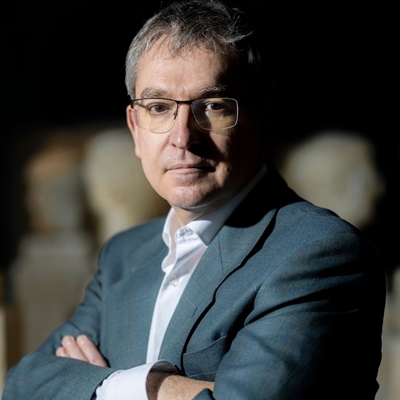
The actor, director and producer Diego Luna has balanced the galaxies of Hollywood and the vibrant Mexico City like no one else in the business. His activism, which has been channelled in the field of social causes, as well as in projects such as the documentary film festival Ambulante, demonstrates his conviction that telling stories can also transform realities. His next film, Ceniza en la boca, an adaptation of the novel by Brenda Navarro, explores the fate of those who are still seeking their place in the world. He will talk to Andrés Mompotes, Editor of El Tiempo.
Sponsored by El Tiempo and Teatro Colsubsidio
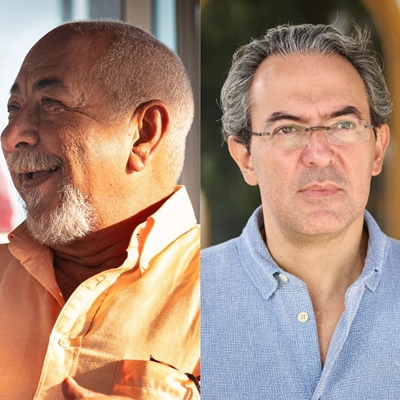
Event 11
Leila Guerriero, Leonardo Padura and Juan Gabriel Vásquez in conversation with Javier Moreno
The world of El País in it’s first 50 years
Centro de Convenciones (Auditorio Getsemaní)
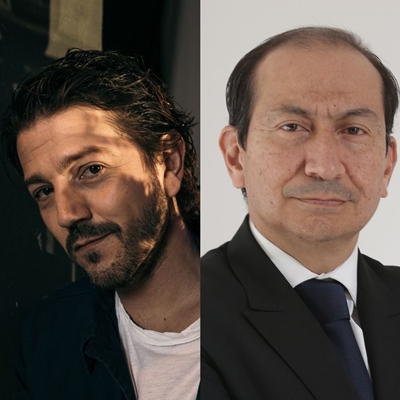
As well as being three of Latin America’s most renowned writers, Leila Guerriero Argentina), Leonardo Padura (Cuba) and Juan Gabriel Vásquez (Colombia) are all El País columnists. They will talk to Javier Moreno Barber, exdirector of the Spanish newspaper, about how they tackle writing, why it is so important for the reputation of a newspaper to have high profile columnists, and how they contribute to maintaining the narrative, cultural and social bridge between Latin America and Spain.
Coorganized with EP América
Event 13
Fernando Arancón in conversation with Claudia Gurisatti
The forces that move the world
Teatro Adolfo Mejía
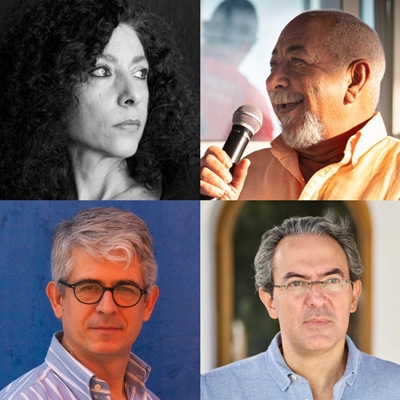
Fernando Arancón (Spain) is the Editor of El orden mundial, the most read Spanish-language outlet covering international affairs and analysis. Its goal is not just to say what is happening, but why, and it has just published the book Las fuerzas que mueven el mundo, an illustrated work that uses maps, graphs and accessible language to explain 21st-century geopolitics and global economics. He talks to Claudia Gurisatti..
Sponsored by SURA and Bancolombia and with the support of Acción Cultural Española, AC/E
Event 16
Leonardo Padura in conversation with Juan Gabriel Vásquez
Dying in the sand
Centro de Convenciones (Auditorio Getsemaní)
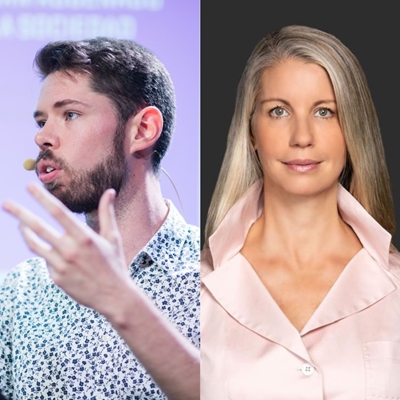
With Morir en la arena Leonardo Padura returns with another masterful description of his native Cuba. He is the chronicler of a lost generation, one that has endured half a century of difficulties, and in his book Havana becomes another character, a witness to the passage of time and wasted promises. Rodolfo, marked by the patricide committed by his brother and reminders of the war in Angola, has recently retired, and intimacy with his sister-in-law, an old love, begins. With his brother, terminally ill, leaving prison and returning home, echoes of the past, long buried, haunt the present. Padura will talk about the book with the writer Juan Gabriel Vásquez (Colombia).
Sponsored by RCN and Postobón
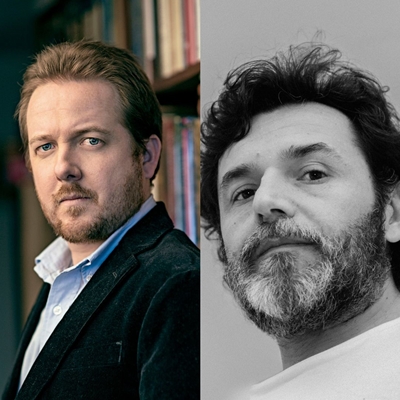
Event 18
Juan Esteban Constaín in conversation with Pablo Arango
From the beginnings of Christianity
Teatro Adolfo Mejía
El hijo del hombre, by Juan Esteban Constaín, is a literary and historical essay in which the author examines early Christianity and its profound impact. This writer, whose very personal style is full of anecdotes, will talk to Pablo Arango, Philosophy lecturer at the University of Caldas, about this book on classical antiquity and how Christianity became the official religion of the Roman Empire.
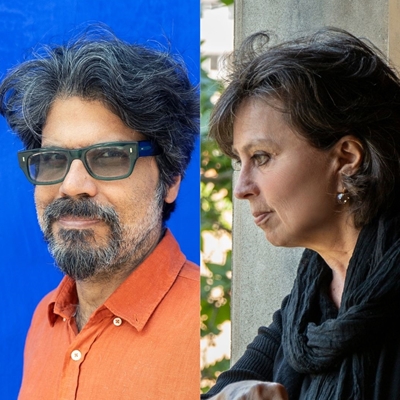
Event 20
Pankaj Mishra in conversation with Javier Lafuente
El País talk: The world after Gaza
Centro de Convenciones (Auditorio Getsemaní)
When writers from the global South take their pens to the topic of the West, it rarely comes out looking good. On this topic, the essayist and novelist Pankaj Mishra (India) is one of the most lucid and incisive voices of our times. In Age of Anger he traces the links between contemporary violence and the rise of individualism and capitalism; while in The World After Gaza, he criticises the global racial order imposed by the West.
Simultaneous interpretation from English to Spanish available
With the support of EP América
Explore All Genres
- Afrodescendencias
- Latin America
- South to North
- Art
- Arts & Culture
- Children
- Culture
- Design
- Drawing
- Economics
- Equality
- Fashion
- Film
- Food
- Gender
- History
- Human Rights
- Indigenous Cultures
- Journalism
- Language
- Law
- Literature
- Music
- Nature & Environment
- Philosophy
- Photography
- Podcast
- Poetry
- Politics
- Psychology
- Religion
- Science
- Sport
- Technology
- Theatre
- Workshops
- World Affairs

Partner for Latin America

Principal Sponsors


Government Partners