Online events
Event 22
Richard McGuire in conversation with Elvira Liceaga
Here, from the corner of the room
Teatro Adolfo Mejía
Here, by Richard McGuire (USA), is one of the most iconic works in the contemporary graphic novel, thanks to the originality of its narrative scheme. It tells the story of the corner of a room, and things that have happened and will happen in that space, from prehistoric times to a far future. The novel proceeds without a chronological order, and many panels contain insets with scenes from different years. Its French translation won an award at the Angouleme Comic Festival in 2016, and in 2024 it was made into a film, starring Tom Hanks, by Robert Zemeckis.
Simultaneous interpretation from English to Spanish available
Event 24
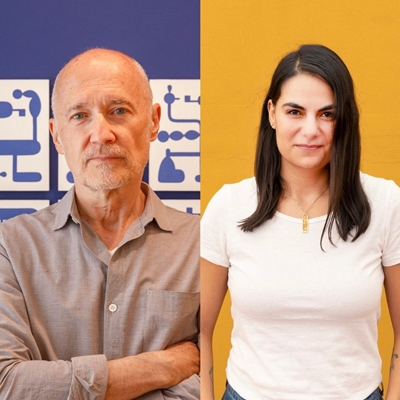
Santiago Posteguillo in conversation with Juan Lozano
Centro de Convenciones (Auditorio Getsemaní)
Los tres mundos. La conquista de las Galias por Julio César is the highly awaited continuation of the series dedicated to Julius Caesar by Santiago Posteguillo (Spain). After the great success of the last two books in the saga, Roma soy yo and Maldita Roma, which told the story of the origins and rise of the great dictator, we now read about the conquest of a territory that is hostile to Roman interests. This historical novel also visits Egypt, and covers the exile of the Pharaoh Ptolemy XII, the father of Cleopatra. Rome, Gaul and Egypt, three worlds in which Posteguillo brings an end to his Julius Caesar cycle.
Sponsored by RCN and Postobón and with the support of the Spanish Embassy in Colombia
Event 53
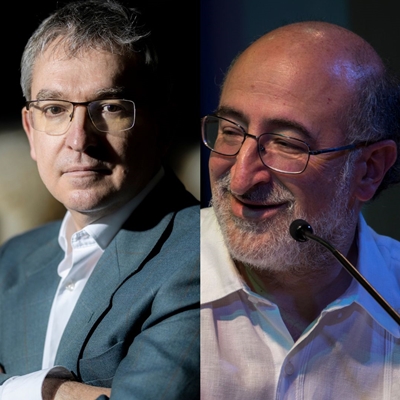
Karen Hao in conversation with José Carlos Cueto
What AI doesn’t want you to know
Teatro Adolfo Mejía
After listening to Karen Hao (USA), our view of artificial intelligence will never be the same. AI has come to stay, and nobody doubts that it can make certain tasks easier. Even this text could be generated by ChatGPT and few would notice. But nothing ever comes for free. First, because of the huge quantities of energy that this process consumes; and second, because the dark side of AI’s creators and the technological race is being revealed by researchers such as Hao, author of Empire of AI. In it, she examines the companies that act like empires, the exploitation of resources, the underpaid workers from the global South who compile and filter data... In conversation with José Carlos Cueto.
Simultaneous interpretation from English to Spanish available
Sponsored by RCN and Postobón
Event 30
Let's talk about Venezuela
María Corina Machado (virtually) in conversation with Michael Stott + Venezuela Today and Possible Scenarios debate
Centro de Convenciones (Auditorio Getsemaní)
Part I
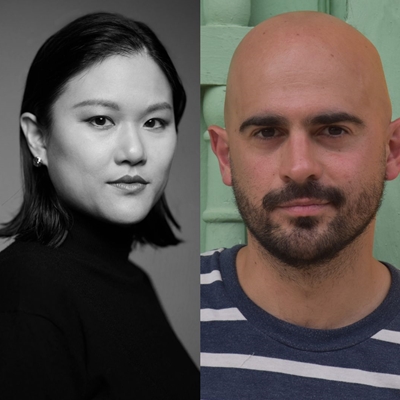
María Corina Machado in conversation with Michael Stott
María Corina Machado (Venezuela) won the 2025 Nobel Peace Prize. Since becoming a member of parliament in 2010, Machado has become the main figure in opposition to Nicolás Maduro, and she is currently the leader of the Venezuelan democratic movement. This conversation will last 20 minutes, followed by 20 minutes of questions from the audience.
María Corina Machado will participate virtually
Part II
Debate: Venezuela Today and Possible Senarios
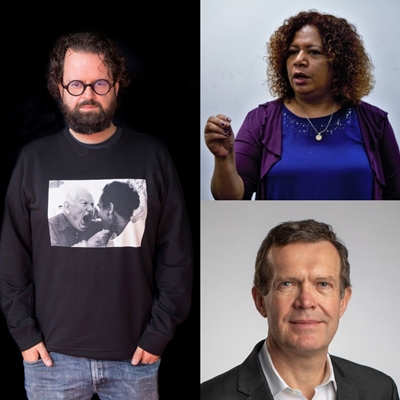
A 40 minute debate will take place on the current situation of Venezuela and the region and it's possible future scenarios, with the participation of: Javier Lafuente (Spain), director of the Américas for El País; Daniel Lozano (España), ccorrespondent for El Mundo en las Américas; Luz Mely Reyes (Venezuela), journalist, writer, analyst and the director and cofounder of the digital media outlet Efecto Cocuyo. Moderated by Michael Stott (United Kingdom), editor for Latin America for The Financial Times.
Sponsored by RCN and Postobón

Event 37
Javier Cercas in conversation with Juan Gabriel Vásquez
The atheist who spoke to the Pope
Centro de Convenciones (Auditorio Getsemaní)
The publication of El loco de Dios en el fin del mundo coincided with the death of Pope Francis. Before this, Javier Cercas (Spain) —an atheist, anti-clerical and militant secularist— travelled to Mongolia with him: “a madman without God following God’s fool to the end of the world”. With unprecedented access, he has written a novel without the fiction, a spiritual thriller. This is Cercas at his most personal, one that resonates with successes such as The Impostor and The Anatomy of a Moment.
All events on Saturday, January 31st will be free for people with ID from the department of Bolívar. Complimentary tickets can be requested —up to capacity— at the box office of the Hay Festival (Centro de Convenciones) showing your identification on the same day the event is taking place.
Sponsored by Promigas, Surtigas and Spec and with the support of the Spanish Embassy in Colombia
Event 39
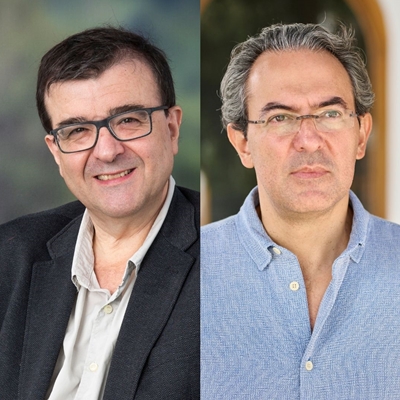
Catalina Gómez Ángel and Janne Teller in conversation with José Manuel Acevedo
South to North Conversations: The world is different after Gaza
Teatro Adolfo Mejía
After the ceasifre agreement between Israel and Hamas, a new era has opened up for the people of Gaza: to build a peace amidst the rubble of war and barbarism, all in a context of the most powerful uncertainty. What the future will bring will be the subject of a discussion among journalist Catalina Gómez Ángel and Janne Teller, whose most recent novel, Justicia, is set against the backdrop of the Palestinian-Israeli conflict. With the moderator José Manuel Acevedo.
Simultaneous interpretation from English to Spanish available
All events on Saturday, January 31st will be free for people with ID from the department of Bolívar. Complimentary tickets can be requested —up to capacity— at the box office of the Hay Festival (Centro de Convenciones) showing your identification on the same day the event is taking place.
With the support of Open Society Foundations
Event 44
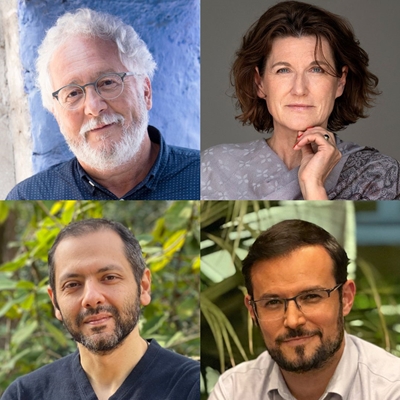
Karen Hao, Chao Tayiana and Carissa Véliz in conversation with Luhan Gabel
The hidden side of artificial intelligence
Centro de Convenciones (Salón Barahona)
All that glitters in the world of artificial intelligence is not gold. The friendly side of the tools that in principle make our lives easier have an unknown dark side, as explained by Karen Hao ((USA), Chao Tayiana (Kenya) and Carissa Véliz (UK). It is not a matter of sounding the alarm, more a matter of bringing to light what we do not know about these new technologies: a massive and unprecedented consumption of energy resources, exploited workers in the global South, algorithmic manipulation, loss of privacy when we give over our data, and other problems that we, as users, are rarely aware of. They talk to Luhan Gabel.
Simultaneous interpretation from English to Spanish available
All events on Saturday, January 31st will be free for people with ID from the department of Bolívar. Complimentary tickets can be requested —up to capacity— at the box office of the Hay Festival (Centro de Convenciones) showing your identification on the same day the event is taking place.
Sponsored by SURA and Protección and with the support of Open Society Foundations and Acción Cultural Española, AC/E

Event 38
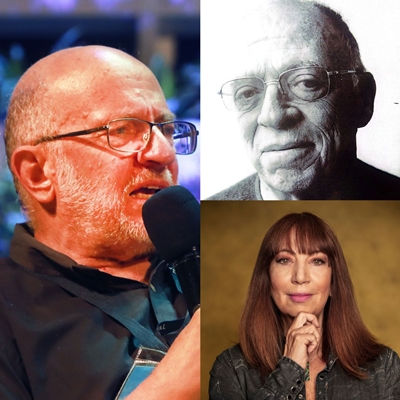
Daniel Samper Pizano and Enrique Santos in conversation with María Jimena Duzán
Conversations among friends
Centro de Convenciones (Auditorio Getsemaní)
Daniel Samper Pizano and Enrique Santos are two of the sharpest commentators and analysts of Colombian current affairs. Whether via the digital platform Los Danieles, columns, analysis or memoires, they have spent over four decades closely following the national political panorama — sometimes at first hand. Sometimes offering shared perspectives, at other times their views have been opposing. They are in the process of finishing a book that tells the story of both voices. With the provisional title of Memorias charladas, it will gather their journalistic memories, full of humor, anecdotes and reflections around the practice of the profession in Colombia. Accompanied on stage by María Jimena Duzán.
All events on Saturday, January 31st will be free for people with ID from the department of Bolívar. Complimentary tickets can be requested —up to capacity— at the box office of the Hay Festival (Centro de Convenciones) showing your identification on the same day the event is taking place.
Event 42
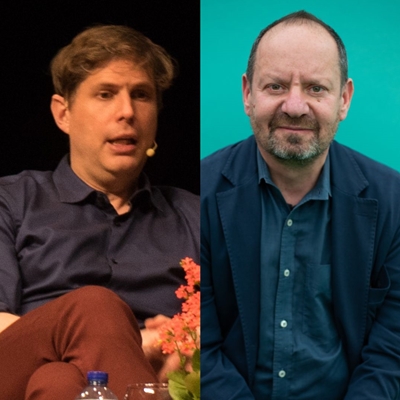
Daniel Kehlmann in conversation with Philippe Sands
The director’s ethical dilemma
Teatro Adolfo Mejía
How did one of the greatest film directors of his time come to be working for Joseph Goebbels? G. W. Pabst fled the rise of Nazism, taking refuge in Hollywood, where he was a failure. His mother’s illness brought him back to his native Austria, now under the yoke of the Third Reich, where the Nazis attempted to entice him into their propaganda apparatus. After captivating us with novels such as F and Tyll —shortlisted for the Booker Prize—, Daniel Kehlmann (Germany) tells the story of this director, who faced the moral and artistic dilemma of collaborating with the Nazi regime in exchange for saving himself and being able to continue making films. He talks to Philippe Sands.
Simultaneous interpretation from English to Spanish available
All events on Saturday, January 31st will be free for people with ID from the department of Bolívar. Complimentary tickets can be requested —up to capacity— at the box office of the Hay Festival (Centro de Convenciones) showing your identification on the same day the event is taking place.
With the support of the Goethe-Institut
Event 45
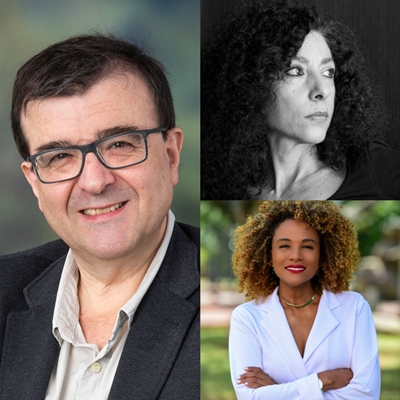
Javier Cercas and Leila Guerriero in conversation with Mábel Lara
Memory, truth and history
Centro de Convenciones (Salón Barahona)
Between fiction and non-fiction there is a fertile land where memory, truth and history mingle. Javier Cercas (Spain) and Leila Guerriero (Argentina) have made this space their field of exploration with novels that are living testimonies and chronicles bursting with narrative. In conversation with Mábel Lara (Colombia), they will talk about these three themes, constants in their work, and about how to pick which path when it comes to telling stories.
All events on Saturday, January 31st will be free for people with ID from the department of Bolívar. Complimentary tickets can be requested —up to capacity— at the box office of the Hay Festival (Centro de Convenciones) showing your identification on the same day the event is taking place.
With the support of the Spanish Embassy in Colombia
Event 46
Amor Towles in conversation with Santiago Ángel
Table for two
Centro de Convenciones (Auditorio Getsemaní)
Table for Two, by Amor Towles (USA), includes six tales that take place around the year 2000, as well as a novella set during the Golden Age of Hollywood. There is apparently no connection among the stories, but they deal with universal themes, including the search for happiness, the power of money, and the subversion of social conventions. The author of the memorable A Gentleman in Moscow once again creates fascinating characters who talk about relationships, family, trust, ambition, guilt and the value of friendship. He talks to Santiago Ángel.
Simultaneous interpretation from English to Spanish available
All events on Saturday, January 31st will be free for people with ID from the department of Bolívar. Complimentary tickets can be requested —up to capacity— at the box office of the Hay Festival (Centro de Convenciones) showing your identification on the same day the event is taking place.
Sponsored by Sura and Bancolombia
Event 47
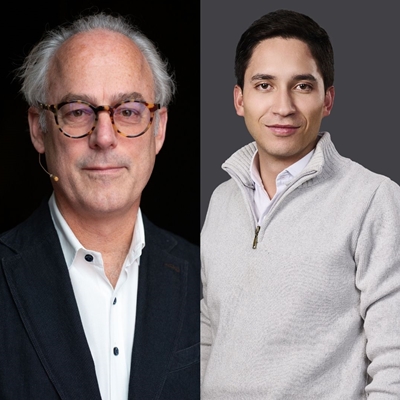
Fernando Arancón, Marcela Meléndez and Carlos Alberto Patiño in conversation with María Martín
Getting up to speed with geopolitics
Centro de Convenciones (Salón Barahona)
About a quarter of a century ago, Zygmunt Bauman defined our time as one of “liquidity”. Since then, our structures have only continued to change, with a geopolitical spectrum that is more volatile than ever: the rise of autocratic politics, the invasion of Ukraine, the future of Gaza after the ceasefire, the US incursions in Colombian and Venezuelan waters… Talking about all this will be Fernando Arancón, Director of the digital media outlet El orden mundial; Marcela Meléndez, a World Bank economist; and Carlos Alberto Patiño, author of La Guerra Global Invisible. Ucrania, el mundo y el retorno de los imperios, together with journalist María Martín.
All events on Saturday, January 31st will be free for people with ID from the department of Bolívar. Complimentary tickets can be requested —up to capacity— at the box office of the Hay Festival (Centro de Convenciones) showing your identification on the same day the event is taking place.
With the support of Acción Cultural Española, AC/E
Event 48
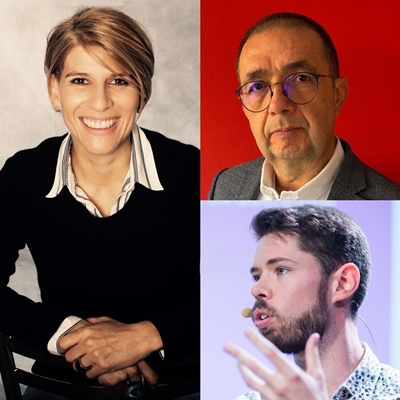
Yasmina Reza in conversation with Philippe Sands
Teatro Adolfo Mejía
With plays such as Art and God of Carnage, which have played in over 30 countries, Yasmina Reza (France) has created a position for herself as one of the most respected and interesting of contemporary playwrights. She is also an actor (Lejos, Hasta mañana…), filmmaker (Chicas), novelist (Babylone, Serge…) and screenwriter (Jusqu’à la nuit, la noche, Le pique-nique de Lulu Kreutz). In her latest book, Récits de certains faits, she brings together personal memories and trial reports in order to investigate moral fragility and everyday imperfection. A biting, psychological observation of the human, using concise and incisive texts.
Simultaneous interpretation from French to Spanish available
All events on Saturday, January 31st will be free for people with ID from the department of Bolívar. Complimentary tickets can be requested —up to capacity— at the box office of the Hay Festival (Centro de Convenciones) showing your identification on the same day the event is taking place.
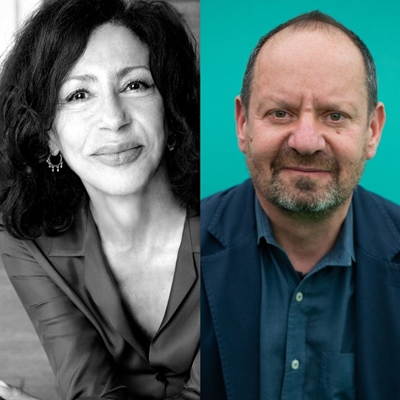
Event 26
Carissa Véliz in conversation with Daniel Marquínez
The importance of our privacy
Teatro Adolfo Mejía
We pass on data every time we browse the Internet and use the social media, without concern for the value our privacy has. We feel we are making our everyday lives easier, but we are not aware of the power we are giving to private companies. Carissa Véliz is the author of Privacy is Power: Why and How You Should Take Back Control of Your Data and The Ethics of Privacy and Surveillance in which she talks of the practical and philosophical risks of losing our privacy in such a digital society. She will talk to the Fundación Gabo Projects Director Daniel Marquínez.
All events on Saturday, January 31st will be free for people with ID from the department of Bolívar. Complimentary tickets can be requested —up to capacity— at the box office of the Hay Festival (Centro de Convenciones) showing your identification on the same day the event is taking place.
With the support of the Ford Foundation and Acción Cultural Española, AC/E
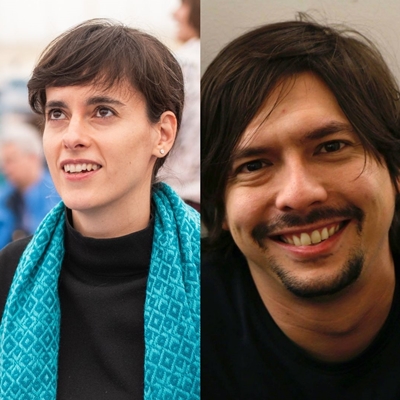
Event 51
Annie Jacobsen in conversation with Michael Stott
How a nuclear war would unfold
Centro de Convenciones (Auditorio Getsemaní)
Annie Jacobsen (USA) was a Pulitzer Prize finalist with The Pentagon’s Brain, which was a detailed look into the US military and intelligence apparatus, a field that she has also dealt with in Area 51 and Operation Paperclip. Her latest book, Nuclear War: a Scenario, describes —using realistic events, actions and protocols— how exactly the nuclear war that would bring about the end of humanity might unfold. She will be in conversation with Michael Stott, Latin American editor of the Financial Times.
Simultaneous interpretation from English to Spanish available
All events on Saturday, January 31st will be free for people with ID from the department of Bolívar. Complimentary tickets can be requested —up to capacity— at the box office of the Hay Festival (Centro de Convenciones) showing your identification on the same day the event is taking place.
Sponsored by Promigas, Surtigas and Spec
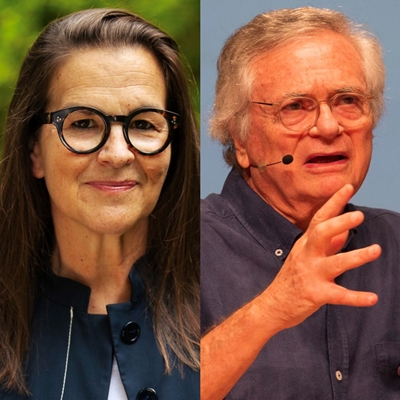
Event 52
Janne Teller in conversation with Marianne Ponsford
Centro de Convenciones (Salón Barahona)
Justicia is Janne Teller’s first novel in eleven years. She is known around the world for works such as Nothing, and the Danish writer has needed two decades to complete this book, whose origins lie in a time when she worked as a UN diplomat. Set against the backdrop of the Palestinian-Israeli conflict —“the mother of all conflicts” according to the author—, she traces the complex relationship between a father, a UN representative, and his activist daughter, whose killing he must try to come to terms with. In conversation with Marianne Ponsford.
Simultaneous interpretation from English to Spanish available
All events on Saturday, January 31st will be free for people with ID from the department of Bolívar. Complimentary tickets can be requested —up to capacity— at the box office of the Hay Festival (Centro de Convenciones) showing your identification on the same day the event is taking place.
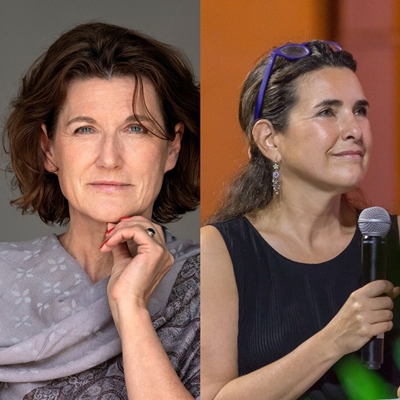
Event 57
León Valencia in conversation with Mábel Lara
Centro de Convenciones (Salón Barahona)
The writer and political analyst León Valencia has created a work of fiction about friendship and love in La vida infausta del negro Apolinar. In this conversation, he will talk to Mábel Lara about a novel that tells the story of the protagonist’s last adventure. In it, Apolinar Mosquera, aged and infirm, asks an old friend to keep a promise: that he tell his story. So begins an exchange of letters that open up memories and revisit a shared pain whose wound was never healed.
All events on Saturday, January 31st will be free for people with ID from the department of Bolívar. Complimentary tickets can be requested —up to capacity— at the box office of the Hay Festival (Centro de Convenciones) showing your identification on the same day the event is taking place.
Event 58
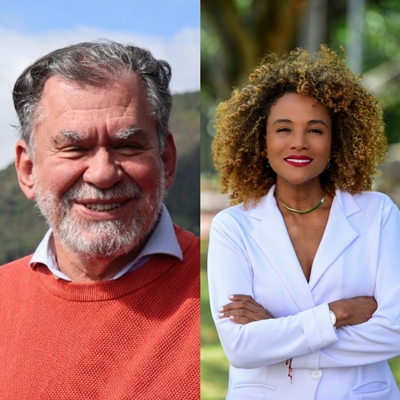
With El rugido de nuestro tiempo, the Colombian essayist Carlos Granés continues his work of understanding and analysing the present that he began in Salvajes de una nueva época. We live at a time of ideological and geopolitical disorder, in which we live surrounded by decolonial debates as well as pan-Hispanic nostalgias; this is a time of incendiary speeches and artists who sacrifice transgression in favour of the latest moral requirements. To understand all this roaring, there is nothing better than turning to Granés, who is also part of the “Otras historias del Archivo de Indias” project run by the Hay Festival and CAF, commemorating the 500th anniversary of the founding of the Spanish city of Santa Marta.
All events on Saturday, January 31st will be free for people with ID from the department of Bolívar. Complimentary tickets can be requested —up to capacity— at the box office of the Hay Festival (Centro de Convenciones) showing your identification on the same day the event is taking place.
Sponsored by SURA and Bancolombia
Event 63
Carlos Chamorro, Denise Maerker and Jan Martínez Ahrens in conversation with Diana Calderón
Journalism and its challenges
Teatro Adolfo Mejía
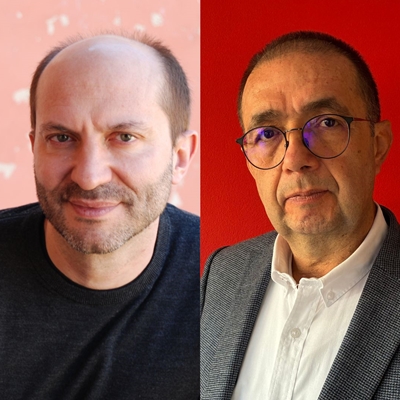
All the indicators are telling us that journalism is in crisis. Those who run the most important media organisations face a host of challenges: politicians at war with the media, fake news and post-truth, falling readerships, the delegitimisation of the profession, workers’ conditions in the industry, the killings of journalists in Latin America… However, despite it all, the major media organisations are still our fourth estate. To celebrate 50 years of El País, Jan Martínez Ahrens, the newspaper’s Editor-in-Chief will talk to Carlos Fernando Chamorro, founder and director of the Nicaraguan outlet Confidencial –currently operating from exile in Costa Rica–; and Denise Maerker, one of Mexico’s most respected voices, who currently presents N+ and writes for Milenio. The three will discuss these matters, and will talk to a colleague in the profession, the Colombian Diana Calderón (Caracol Radio).
All events on Sunday, February 1st will be free for people with ID from the department of Bolívar. Complimentary tickets can be requested —up to capacity— at the box office of the Hay Festival (Centro de Convenciones) showing your identification on the same day the event is taking place.
Coorganised with EP America
Event 77B
Javier Moreno, Almudena Bernabéu, Érika Rodriguez Pinzón and Ana María Salazar in conversation with Fernando Carrillo
Who is in charge here?
Centro de Convenciones (Auditorio Getsemaní)
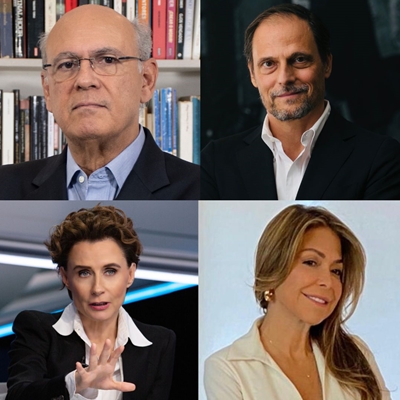
Journalist and former editor-in-chief of El País, Javier Moreno has published ¿Quién manda aquí? La impotencia ante la espiral de violencia en América Latina, a major analysis of the tentacles of state and criminal power in Latin America and of the reach of criminal governance that is now taking hold across the region. Taking part will Moreno, alongside Ana María Salazar, former Assistant Secretary of Defense during President Bill Clinton’s administration and now a security analyst and commentator in Mexico; Érika Rodríguez Pinzón, university professor, security expert, and Director of the Carolina Foundation in Spain; and Almudena Bernabéu, International lawyer with a long career in the fields of transitional justice, international criminal law and human rights, and Executive Director of the Guernica 37 Centre. The conversation will be moderated by Fernando Carrillo, former Minister of Justice and former Attorney General of Colombia, now Vice President of PRISA Group.
All events on Sunday, February 1st will be free for people with ID from the department of Bolívar. Complimentary tickets can be requested —up to capacity— at the box office of the Hay Festival (Centro de Convenciones) showing your identification on the same day the event is taking place.
Explore All Genres
- Afrodescendencias
- Latin America
- South to North
- Art
- Arts & Culture
- Children
- Culture
- Design
- Drawing
- Economics
- Equality
- Fashion
- Film
- Food
- Gender
- History
- Human Rights
- Indigenous Cultures
- Journalism
- Language
- Law
- Literature
- Music
- Nature & Environment
- Philosophy
- Photography
- Podcast
- Poetry
- Politics
- Psychology
- Religion
- Science
- Sport
- Technology
- Theatre
- Workshops
- World Affairs

Partner for Latin America
Principal Sponsors


Government Partners