Online events
Event 9
Claudia Rankine in conversation with Janelle Gray
Author of 'Citizen', a genre-defying meditation on race and American life
The Texas Theatre
What does it mean to live in a racialized society that refuses to name itself as such?
Poet, playwright, and cultural critic Claudia Rankine joins us for a conversation on race, visibility, and the emotional landscape of American life. Her landmark book Citizen: An American Lyric fused poetry, essay, and visual image to capture the intimacies and aggressions of everyday racism —becoming one of the most talked-about and taught books of the last decade. Her follow-up, Just Us: An American Conversation, continues that interrogation through essays, dialogues, and reflections on whiteness, privilege, and accountability.
Rankine’s work resists easy categorization. Whether writing for the stage, publishing in literary journals, or founding The Racial Imaginary Institute, she creates spaces for difficult and necessary conversations around power, visibility, and the structures that shape our lives.
This conversation will explore the evolving role of the artist as a public intellectual, and the ways in which she continues to expand what literature can do in our time.
Event 15
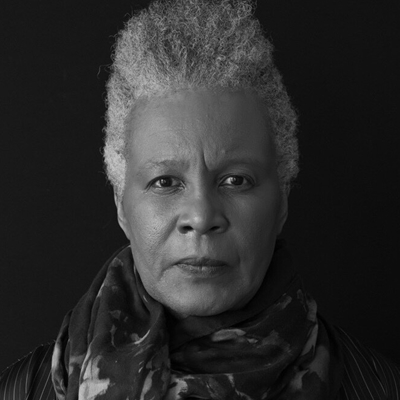
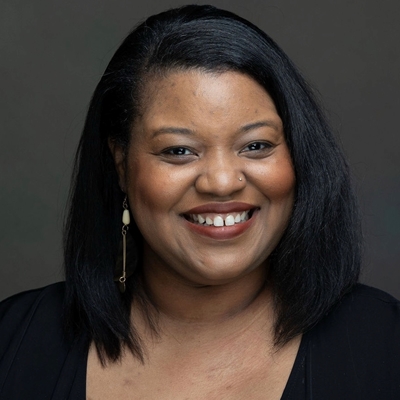
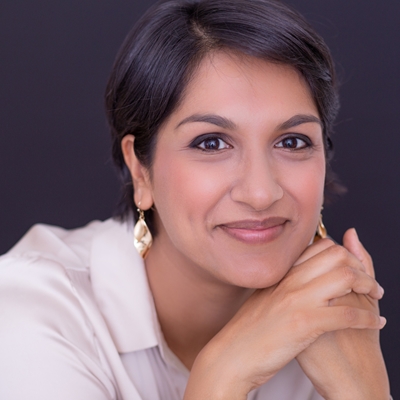
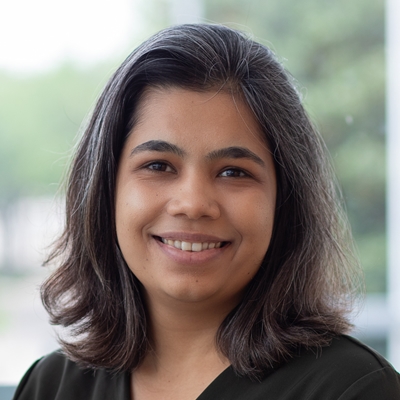
Angela Saini in conversation with Nishanshi Shukla
Author of 'The Patriarchs on how male dominance was built—and how it can be dismantled'
The Texas Theatre
Angela Saini is an award-winning science journalist whose work exposes how deeply ingrained ideas about race, gender, and hierarchy have been shaped—not just by culture and politics—but by science itself. Her latest book, The Patriarchs: How Men Came to Rule, is a sweeping and deeply researched investigation into the historical construction of patriarchy—revealing that male dominance is not inevitable, but the result of specific political decisions, power struggles, and cultural reinforcements over time.
Across her body of work—including Inferior, Superior, and The Patriarchs—Saini has become one of the most trusted and courageous voices challenging how we think about human difference. She brings a rare combination of scientific literacy, journalistic clarity, and social critique to some of the most urgent debates of our time.
In this conversation, Saini will discuss how we unlearn dominant narratives, how science can both harm and heal, and why reexamining the roots of patriarchy is essential to imagining a more just future.
Event 18
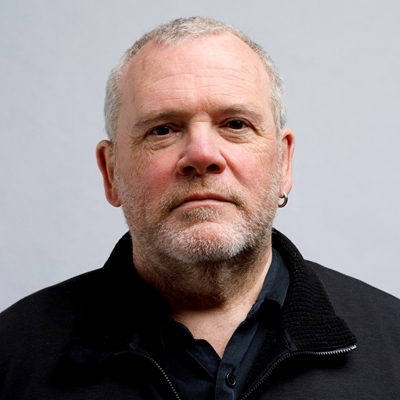
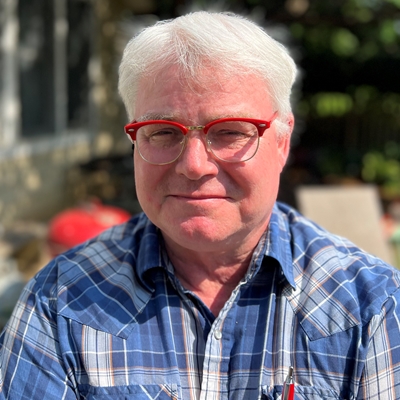
Hugo Burnham and Brendan Canty in conversation with David A. Ensminger
Fugazi meets Gang of Four—two legendary drummers on rhythm, politics, and the sound of defiance
The Texas Theatre
What happens when two of post-punk’s most iconic drummers —each from opposite sides of the Atlantic— sit down to talk rhythm, rebellion, and the sound of resistance?
Brendan Canty (Fugazi) and Hugo Burnham (Gang of Four) helped define not just the sound of their bands, but the urgency of their eras. Their drumming wasn't just timekeeping —it was structural, confrontational, and deeply political. Both Gang of Four and Fugazi pushed the limits of what a band could be: musically experimental, fiercely independent, and unapologetically critical of the systems they moved through.
In this rare conversation, Canty and Burnham reflect on what it meant to build music from the margins —one from Washington, D.C.’s DIY punk scene, the other from Leeds’ art school revolution. They’ll discuss how percussion became a form of protest, how band dynamics mirrored political struggle, and how sound continues to serve as a tool for cultural disruption.
This event offers a unique chance to hear from two musicians whose work shaped generations of artists and fans. More than just drummers, they are architects of a movement —still asking what art can do in a world that demands resistance.
Event 1
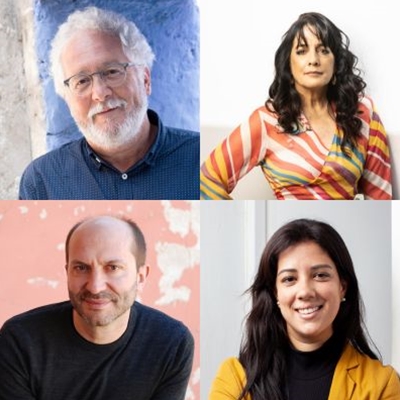
Héctor Abad Faciolince, Patricia del Río and Carlos Granés in conversation with María Gracia Ríos
Homage to Mario Vargas Llosa
Teatro Municipal
The 2025 Hay Festival Arequipa gets underway with a homage to Mario Vargas Llosa in the year of his death. The Colombians Héctor Abad Faciolince and Carlos Granés and the Peruvian journalist Patricia del Río will talk about his work and the legacy left by the city’s greatest writer. In conversation with María Gracia Ríos.
LSP Peruvian Sign Language interpretation available
Sponsored by SURA
Event 7
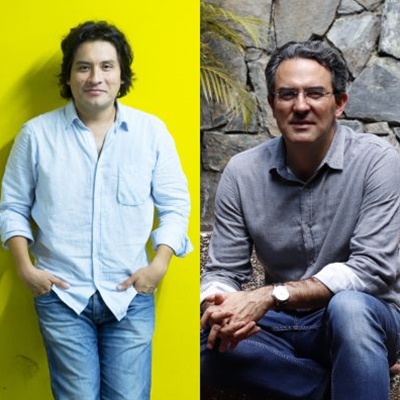
With a style that is reminiscent of Miguel Gutiérrez and Leon Tolstoy, Jeremías Gamboa (Peru) has recently published El principio del mundo. Manuel, the main character, aims to find his true identity, while he travels through a Peru that is characterised by a mixture of cultures and all the contradictions this brings with it. After the success of Animales luminosos, he returns, more ambitious than ever, with a bildungsroman. In conversation with Juan Gabriel Vásquez.
LSP Peruvian Sign Language interpretation available
Event 12
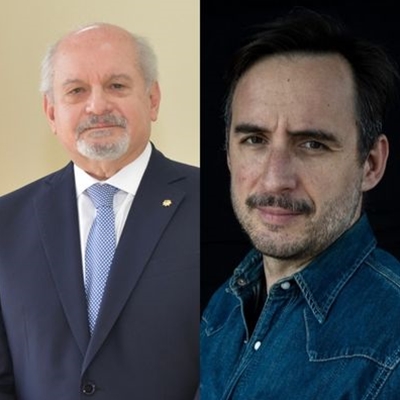
Pedro Cateriano in conversation with David Marcial Pérez
El País lecture: Vargas Llosa, political biography
Teatro Municipal
Vargas Llosa, su otra gran pasión is the first political biography of Mario Vargas Llosa. Pedro Cateriano offers a detailed reconstruction of the ideological background of the Arequipan intellectual: from his Communist youth, through his rupture with the Cuban Revolution, to his transition to liberalism and failed bid for the presidency. This portrait offers a political life of one of the Spanish-speaking world’s most influential thinkers. In conversation with David Marcial Pérez.
LSP Peruvian Sign Language interpretation available
Event 17
Roxana Barrantes, Luis Carranza and Pedro Francke in conversation with Fernando Carvallo
Can the free market promote social equity?
Teatro Municipal
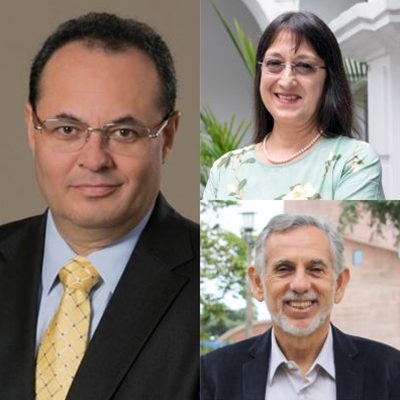
The polarization of Peruvian society is clear in many spheres, including the economy. Given this situation it is appropriate to wonder whether a right-wing political economy can integrate social policies for the most disadvantaged. Can social equity be promoted with free-market basis? With a general election coming next year, two former Economic ministers —Luis Carranza and Pedro Francke—, and one of the directors of the Central Reserve Bank of Peru, Roxana Barrantes, will talk about these matters together with the journalist Fernando Carvallo.
LSP Peruvian Sign Language interpretation available
Event 22
Héctor Abad Faciolince in conversation with Jeremías Gamboa
Sensitivity in the face of barbarism
Teatro Municipal
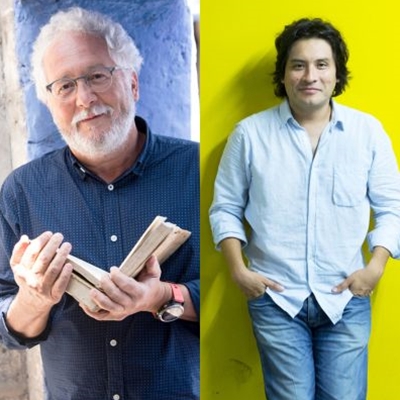
Héctor Abad Faciolince (Colombia) has been captivating readers for almost 20 years with the book Oblivion, the moving homage to his murdered father. Now his writings bring to us an even more personal event, the 2023 missile attack on a pizzeria in Kramatorsk, in the Donetsk region of the Ukraine. Abad Faciolince was unharmed, but Victoria Amelina (Ucrania), his travel companion and guide, died in the Russian attack. Ahora y en la hora is his report of the events, and a meditation on life, aging, death, war, violence and guilt. In conversatio with Jeremías Gamboa.
LSP Peruvian Sign Language interpretation available
Sponsored by the BBVA Foundation
Event 28
Rodrigo Quian Quiroga in conversation with María Fernández Flecha
Understanding the brain
Teatro Municipal
Rodrigo Quian Quiroga (Argentina) is the discoverer of “concept neurones”, sometimes known as “Grandmother cells”, which activate the recognition of specific concepts, people or images. The neuroscientist explores the human brain in Cosas que nunca creeríais. De la ciencia ficción a la neurociencia, and tells us how the human brain turns scientific advances that once seemed impossible into reality. In conversation with María Fernández Flecha.
LSP Peruvian Sign Language interpretation available
With the support of PUCP
Event 34
Laura G. de Rivera and Rodrigo Quian Quiroga in conversation with Layla Hirsh
Talking about artificial intelligence
Teatro Municipal
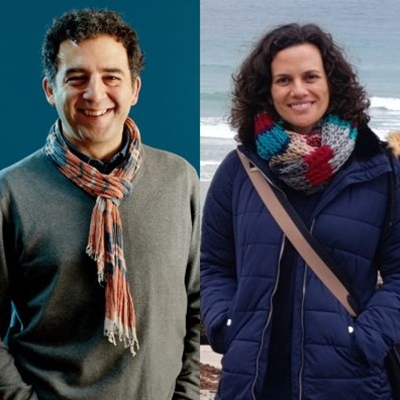
Artificial intelligence has come into our vocabularies and our lives, and is here to stay. Yet when we talk about it, what exactly are we talking about? AI goes beyond algorithms, robotics and promises of utopian and/or dystopian futures. Laura G. de Rivera (Spain), author of Esclavos del algoritmo, and Rodrigo Quian Quiroga (Argentina), neuroscientist and the discover of “concept neurones” talk to Layla Hirsh.
LSP Peruvian Sign Language interpretation available
Sponsored by SURA and with the support of AC/E Acción Cultural Española
Event 36
Sonia Cunliffe, Enrique Planas and Zoila Vega Salvatierra with Jorge Malpartida
A salve against forgetting
Casa Tristán del Pozo - Fundación BBVA
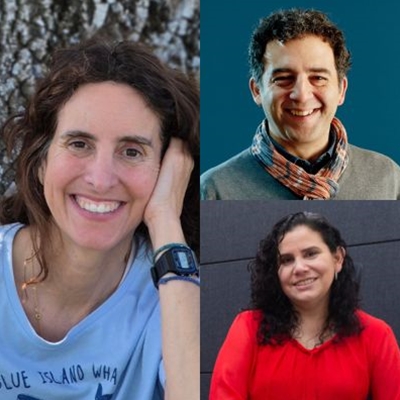
With its love of memory, literature can be a good remedy against forgetting. Zoila Vega Salvatierra reconstructs the history of Arequipa through the voice of six forgotten pianos in Cantan al hablar. Sonia Cunliffe traces a history of migrations, losses and grief in El tropiezo del sol, which tells the story of two women whose lives are brought together by two separate earthquakes. In El álbum de las cosas olvidadas, Enrique Planas explores the emotional links we have with the objects that time has left behind, and examines our own obsolescence. In convrsation with Jorge Malpartida.
LSP Peruvian Sign Language interpretation available
Sponsored by Cerro Verde
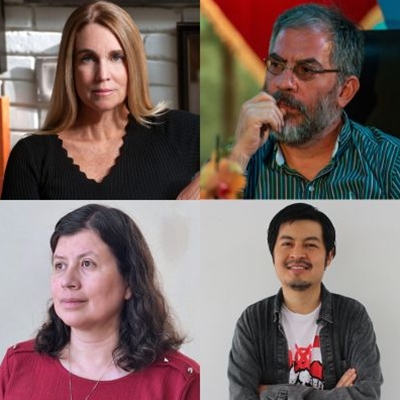
Event 41
Darío Sztajnszrajber (Argentina) has brought philosophy to thousands of people, filling venues and appearing on television and radio. He has captivated non-specialist audiences by dealing with the big philosophical questions of history and contemporary ideas. In the eight theses of El amor es imposible, he dismantles the myth of normative romantic love. The philosopher questions ideas such as the perfect partner and invites us to rethink the notion of falling out of love as part of the desire for the impossible. In conversation with the BBC Mundo journalist Ana País.
LSP Peruvian Sign Language interpretation available
Sponsored by Fundación BBVA
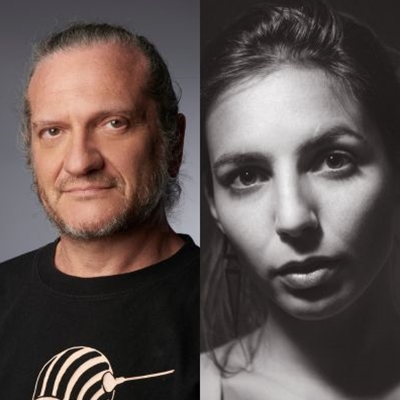
Event 46
The Archivo General de Indias, or Indies Archive, is one of the world’s most important documentary funds. Created in 1785 with the goal of keeping at a single site all the documents related to the Indies, it was the Spanish government’s main archive covering the New World. Its director, Esther Cruces, will talk about its history, its role in the construction of memory, and the challenges of rereading the bundles, maps, plans and documents held there. Presented by Santiago Rojas, Northern Regional Manager and Representative of CAF Peru.
LSP Peruvian Sign Language interpretation available
With the support of CAF
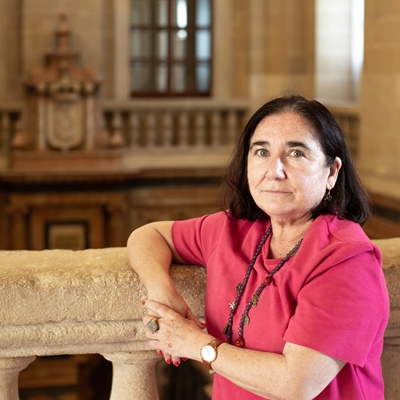
Event 48
Guillermo Arriaga (Mexico) is a master of building work through different voices. From 21 Grams, to El salvaje and Babel, his fiction is created through intertwined stories, revealing the many facets of the human identity. In El Hombre, his most recent novel, he brings this style to bear once again: six characters, speaking from different times, all related to Henry Lloyd. Human brutality, that other very Arriaga ingredient, is also present in its pages. He will talk to the BBC Mundo journalist Santiago Vanegas.
LSP Peruvian Sign Language interpretation available
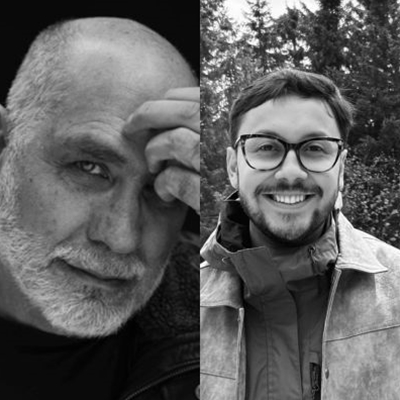
Event 50
Héctor Abad Faciolince and Alonso Cueto in conversation with Camila Osorio
Private diaries
Casa Tristán del Pozo - Fundación BBVA
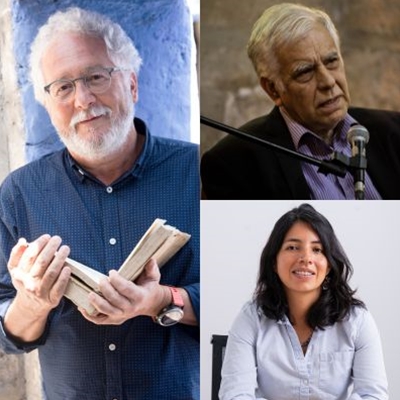
Although it is one of the most forgotten literary genres, the diary form is nonetheless a window onto the inner and personal world of its author. Héctor Abad Faciolince and Alonso Cueto are two examples of writers who share their privacy in this way: with Lo que fue presente. Diarios 1985-2006 in the case of the Colombian, and with the recent Los años. Diario personal, by the Peruvian author. They will talk to the El País journalist Camila Osorio.
LSP Peruvian Sign Language interpretation available
Sponsored by Grupo Gloria
Event 51
Fabian Drenkhan and Jhan Carlo Espinoza in conversation with Santiago Rojas
Climate change: water and ecosystems
Teatro Municipal
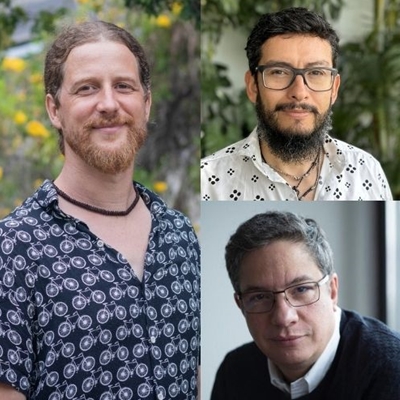
From the ecohydrology of the Andes and the Amazon, Fabian Drenkhan and Jhan Carlo Espinoza are direct witnesses of the climate change that our planet is suffering from. The two experts will talk to Santiago Rojas, Northern Regional Manager and Representative of CAF Peru, about a reality that is becoming ever more urgent and dangerous. Climate change is not a future possibility, it is a truth that is already here.
LSP Peruvian Sign Language interpretation available
With the support of CAF and the Swiss Embassy
Event 55
Alonso Cueto, Verónica Ramírez and Juan Gabriel Vásquez in conversation with Ainaí Morales
Homage to Mario Vargas Llosa
Casa Tristán del Pozo - Fundación BBVA
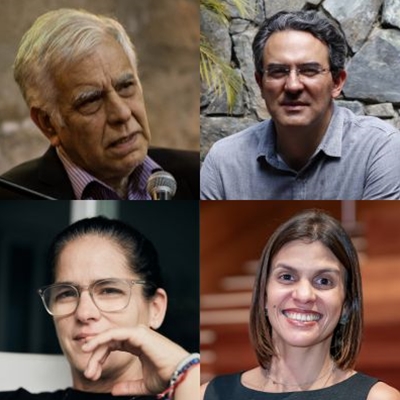
The death of Mario Vargas Llosa in April, aged 89, has brought an irreparable loss to literature, not only the literature of Peru, but of the world. We pay homage to Arequipa’s Nobel laureate with Alonso Cueto (Peru), friend of the writer and author of Mario Vargas Llosa. Palabras en el mundo; Verónica Ramírez (Peru), who worked with Vargas Llosa for years; and Juan Gabriel Vásquez, the Colombian author who some literary critics have seen as the literary heir of the great writer. In conversation with Ainai Morales.
LSP Peruvian Sign Language interpretation available
With the support of PUCP
Event 57
Alonso Cueto in conversation with Carlos Granés
Homage to Mario Vargas Llosa by a friend
Teatro Municipal
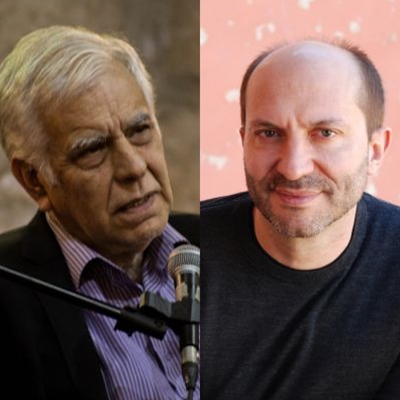
Alonso Cueto met Mario Vargas Llosa aged three, at a Christmas Dinner organised in France by his mother. Almost seven decades later he published Mario Vargas Llosa. Palabras en el mundo, his homage to Arequipa’s Nobel prizewinner, written before the death of the famous writer on 13 April this year. More than an academic essay, this is a personal text, an ode to the work and influence of Vargas Llosa, who has become more important than ever after his passing. In conversation with Carlos Granés.
LSP Peruvian Sign Language interpretation available
Event 61
Andrés Barba and Fernanda Trías in conversation with María Gracia Ríos
Cuadernos hispanoamericanos: conversations
Casa Tristán del Pozo - Fundación BBVA
The magazine Cuadernos hispanoamericanos foments knowledge and exchange between writers of different generations and nationalities, united by a single language and a literary tradition enriched by authors of diverse origins. At this special event, Andrés Barba (Spain) and Fernanda Trías (Uruguay) will talk about her work and literary world with María Gracia Ríos.
LSP Peruvian Sign Language interpretation available
With the support of AECID, Acción Cultural Española, AC/E and PUCP
Event 63
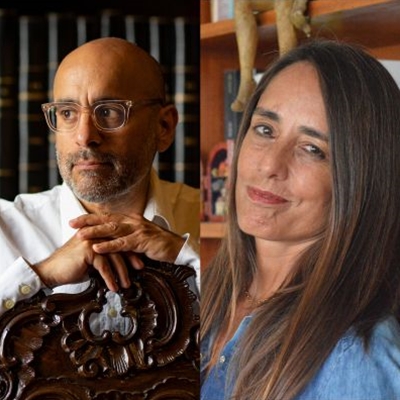
Gustavo Rodríguez (Peru), Alfaguara Novel prizewinner, pays homage to his mother and grandparents in Mamita, in which family ties take us to the Amazon region in the 20th century and the social and cultural tensions of that time. A “delayed family duty”, that has become one of the most personal and reflective of this Peruvian writer’s novels. In conversation with María Luisa del Río.
LSP Peruvian Sign Language interpretation available
Sponsored by Grupo Gloria
Explore All Genres
- Afrodescendencias
- Latin America
- South to North
- Art
- Arts & Culture
- Children
- Culture
- Design
- Drawing
- Economics
- Equality
- Fashion
- Film
- Food
- Gender
- History
- Human Rights
- Indigenous Cultures
- Journalism
- Language
- Law
- Literature
- Music
- Nature & Environment
- Philosophy
- Photography
- Podcast
- Poetry
- Politics
- Psychology
- Religion
- Science
- Sport
- Technology
- Theatre
- Workshops
- World Affairs

Partner for Latin America

Principal Sponsors


Government Partners