Hay Festival Digital Querétaro 2020
Hay Festival Digital Queretaro 2020 has finished. You can see all the events on the Hay Player, our online archive containing the audio and video of the events from all the Hay Festivals.
Event 11
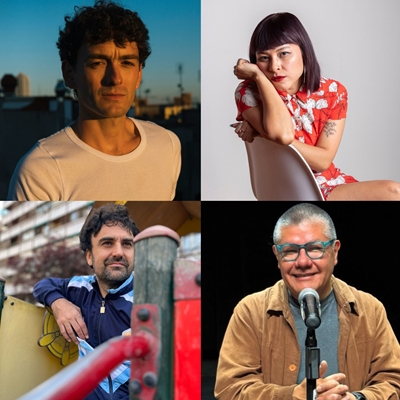
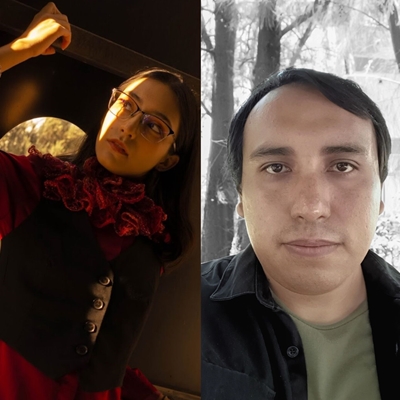
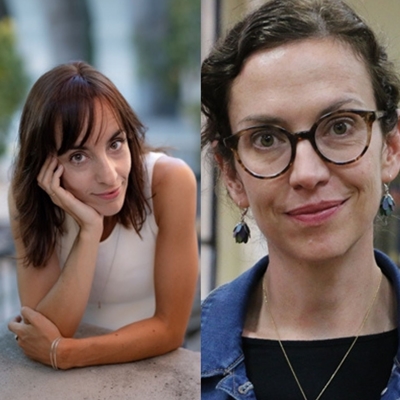
Pol Guasch, Iveth Luna Flores and Manuel Marsol in conversation with Miguel de la Cruz
Memories of a father
Teatro de la Ciudad
Read moreThere are stories best told in the first person. From memory, from the wound. Such as Reliquia by Pol Guasch (Spain), a non-fiction account of the absence of a father who chose to take his own life; Neblina Afuera by Iveth Luna Flores (Mexico), a work that explores family, work and writing as forms of resistance; and El cielo en casa by Manuel Marsol (Spain), where a photograph of a penalty kick taken by his father sets off an inward journey through unexpected paths and celestial bodies. And so, when one looks back, one realises that memories are often linked to the bond with one’s father, and to everything that surrounds it.
With the support of the Ramon Llull Institute and Acción Cultural Española, AC/E
Event HFC12
Letra Capital presents the 'Cajas de Agua' collection
Alameda Hidalgo
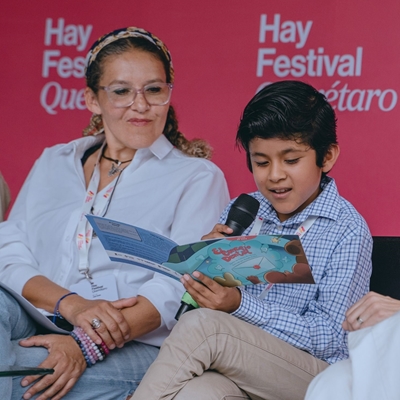
Read moreLetra Capital, the Querétaro Municipal Publishing Fund, presents Cajas de agua, its children's book collection. Proudly created in Querétaro, these books will also be distributed free to everyone attending the event. This year, alongside the beauty of literature and the magic of illustration, there is a new element: the bond between mothers and their children, who have written and illustrated several of the books in the collection together. Taking part are Ana Barrios, author of El dragón que le tenía miedo al fuego, illustrated by Bernardo Barrios; Ofelia Muñoz, creator of María y Marcelino, illustrated by Kiara Aguilar; and María Alejandra Gutiérrez Salazar and Genoveva Salazar, creators of Mañana sí quiero ir; Presented by Margarita Ladrón de Guevara.
Event CL2
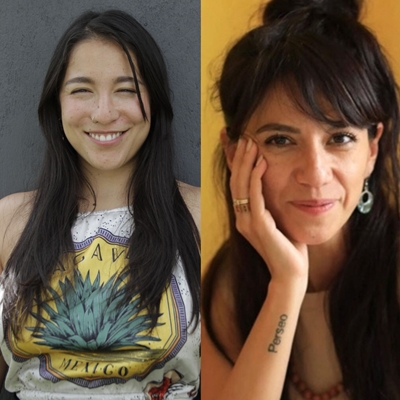
Book Club with Julia Didriksson and Paula Astorga
Talking about love
Casa Hay Festival — SURA (salón lateral)
Read moreThe Hay Festival Querétaro book clubs offer intimate gatherings with a selection of festival guests and they provide a space for in-depth discussion of writers’ most recent works. At this event, Julia Didriksson (Mexico) will talk about Cuando hablamos de amor with Paula Astorga.
Book to be read before attending
Event HFC13
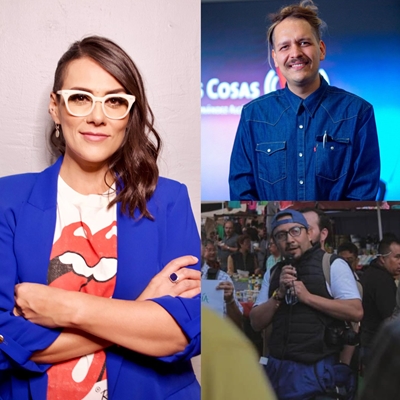
Paulina Chavira Mendoza and Juan Jesús Garza Onofre in conversation with Israel Nieves
Another football is possible
La Otra Bandita
Read moreThe 2026 Men’s World Cup has now come to an end. Spain won the title in what may well have been Messi and Ronaldo’s swansong; Mexico made us dream again… But let’s pause for a moment and take a critical look at football: racism and homophobia on the pitch and in the stands; violence cloaked in the guise of passion; and blatant structural corruption. In Otro futbol es posible, Paulina Chavira Mendoza and Juan Jesús Garza Onofre not only highlight these failings, but also propose alternatives —many inspired by women’s football— for a fairer and more humane game. In conversation with Israel Nieves.
Event HFC15
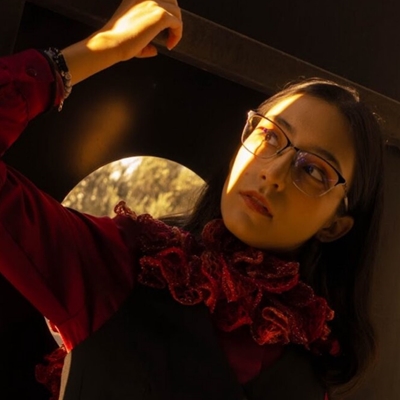
Illustration workshop with Sofía Romo Saavedra
We tell a story
Alameda Hidalgo
Read moreIn the world of comics and graphic novels, there is a term known as a “one-shot” or “mini-comic”, which refers to short, self-contained stories. In this illustration workshop, we’ll learn how to create our own mini-comic under the guidance of Sofía Romo Saavedra (Mexico), a children’s art teacher and illustrator of numerous children’s stories. We will design the main characters and structure the beginning, middle and end of the story. What adventure will you create?
Event HFC14
Puppetry performance by Abrazo de Letras
Stories from the heart
Alameda Hidalgo
Read moreUsing glove puppets, mouth puppets and props, the play Historias que se guardan en el corazón is a visual, sensory and auditory journey in which the stories teach us that we all have a place here. The Abrazo de Letras theatre company explores fear, laughter and friendship, and its characters tell us that each of us holds stories close to our hearts. This is an accessible and inclusive production, featuring a sign language interpreter integrated into the performance who interacts with the puppets. It also includes audio description for blind people and sensory stimulation. It will be a relaxed performance.
Accesibility: interpretation into Mexican Sign Language. Audio description. Sensory stimulation. Relaxed performance.
Event HFC16
Illustration workshop with Sofía Romo Saavedra and Sam Sama
Come and draw with illustrators from the city
Alameda Hidalgo
Read moreGet your paper, brushes, paints and felt-tip pens ready —although we’ll have all the materials ready for you— because Queretaro’s most special illustration workshop is here! Sofía Romo Saavedra and Sam Sama will be running a workshop for children where we will learn the basics of drawing and painting. A unique opportunity to learn from the best and improve our skills!
Event 7
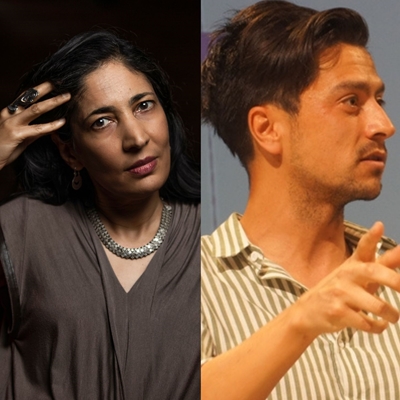
Kiran Desai in conversation with Daniel Pardo
South to North Conversations: between memory and identity
Cineteca Rosalío Solano
Read moreAfter becoming the youngest author to win the prestigious Booker Prize for The Inheritance of Loss, Kiran Desai (India) went on to publish her next novel straight away. However, The Solitude of Sonia and Sunny comes after two decades of letting her memories of India simmer. As in her previous novel, the story is set in both the United States and India, but also in Mexico, where she lived for a time, which helped her to understand American influence from a different perspective. Sonia and Sunny’s story is one of love, migration and rootlessness and, above all, of the different kinds of loneliness that emerge on the periphery.
Simultaneous interpretation from English to Spanish available
With the support of Open Society Foundations
Event 10
Poetry recital by Gilraen Eärfalas
On the anatomy of poetry
Teatro de la Ciudad
Read moreWe welcome you to a very special evening, during which the Teatro de la Ciudad de Querétaro will be transformed into a sort of makeshift operating theatre, and every verse by Gilraen Eärfalas (Mexico) will serve as the thread that stitches up the wounded heart. Behind this name with elvish overtones lies an unconventional writer, who is also a clinical laboratory technician and a general practitioner by training. This expertise resonates deeply in her recent collection of poems, De anatomía poética, from which she will recite, present and explain selected poems. Where there is a wound, there was blood; and if it flowed, it is because something made it pulse. A warm, intimate and cosy evening to delve into the gigiverse.

Event 12
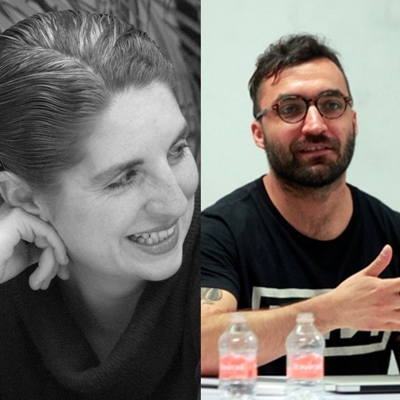
Liliana Blum in conversation with Eduardo Rabasa
The monstrous in the human
Jardín Guerrero
Read moreIn a country where literature often tackles the most horrific forms of violence in society, Liliana Blum (Mexico) has surprised everyone by doing the same with the most sordid aspects of human nature. Pandora explored sexual paraphilias, perversions and relationships rife with abuse, fatphobia and social complicity. She has since continued to delve into the macabre with El monstruo pentápodo and Cara de liebre. A decade later, she has just reissued Pandora, with a foreword written by her and previously unpublished chapters. An unmissable opportunity to reopen the box of the monstrously human.
Event 13
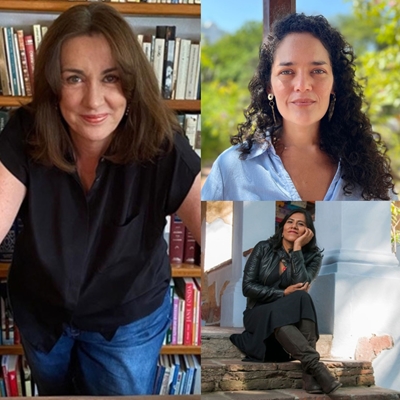
Rosa Beltrán, Cristina Bendek and Socorro Venegas in conversation
Anti-colonial readings: Don’t give up!
Patio de la Delegación del Centro Histórico
Read moreNo Give Up Maan! ¡No te rindas! by Hazel Robinson Abrahams, forms part of UNAM’s Vindictas collection. A novel about the Colombian Caribbean set in the archipelago of San Andrés, Providencia and Santa Catalina. A forthright critique of institutions and conventions. Cristina Bendek, also from San Andrés and author of the introduction to this edition; Rosa Beltrán, Coordinator of Cultural Outreach at UNAM; and Socorro Venegas, Head of the Directorate-General for Publications and Publishing Promotion, discuss this work, seminal in the literature of the Caribbean southwest.
Organised together with the UNAM
Event 14
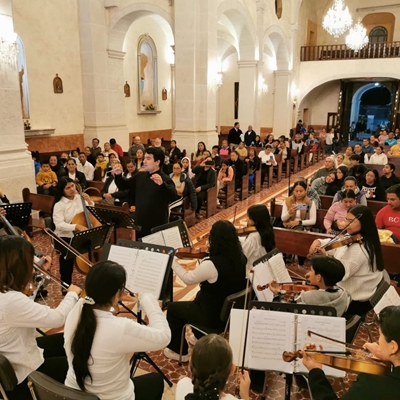
Colón Community String Orchestra in concert
Jardín Héroes de la Revolución, Municipio de Colón
Read moreThe Colón Community String Orchestra will offer a one-hour recital in the municipality. Founded in 2019, it is one of the community music education projects supported by the Queretaro State Secretariat of Culture, which promotes the artistic, human and social development of children and young people. Under the conductor Jorge Valencia, the orchestra has created a training process based on perseverance, discipline and a love of music, allowing its members to discover and develop their potential within a collaborative and enriching environment.
Event HFC17
DIF Carmelita Ballesteros Community String Orchestra in concert
Alameda Hidalgo
Read moreThe DIF Carmelita Ballesteros Community String Orchestra will offer a one-hour recital. Founded in 2018, it is one of the community music education projects supported by the Queretaro State Secretariat of Culture, which promotes the artistic, human, and social development of children and young people. Under the conductor Roberto Morales, the orchestra has participated in various performances and cultural activities, representing the efforts of a community that finds in music a tool for integration and growth.
Event HFC18
Presentation of stories and illustrations at En el Semáforo se Aprende
Imagining Donxu’s child
Alameda Hidalgo
Read more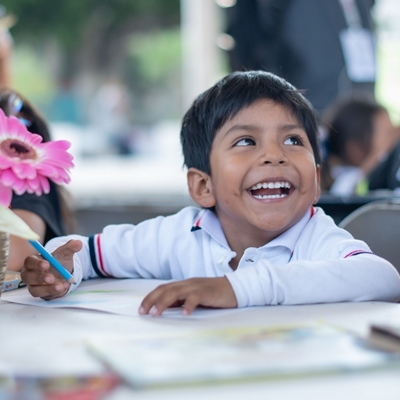
Event 15
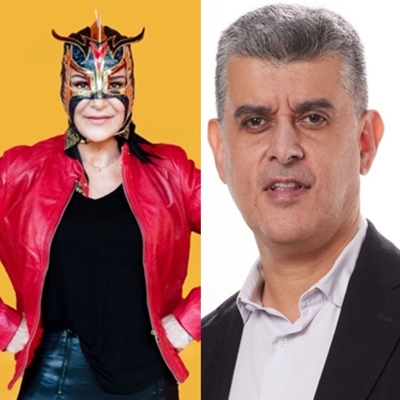
Lydia Cacho in conversation with Primitivo Olvera
A hawk under my window
Jardín Héroes de la Revolución, Municipio de Colón
Read moreUn halcón bajo mi ventana marks journalist and writer Lydia Cacho’s (Mexico) first foray into fiction for adults. A coming-of-age novel about the power of tenderness and friendship, it pays tribute to the voices of the girls and women who paved the way in the struggle for a fairer world. Julieta is a fourteen-year-old girl searching for meaning in her life in 1960s Mexico. Everything changes when she attends the 1968 marches and the Halconazo of 1971 alongside her mother; historic moments that lead her to become involved in clandestine meetings, revolutionary movements and a decade of thrilling revelations.
With the support of Open Society Foundations
Event 16
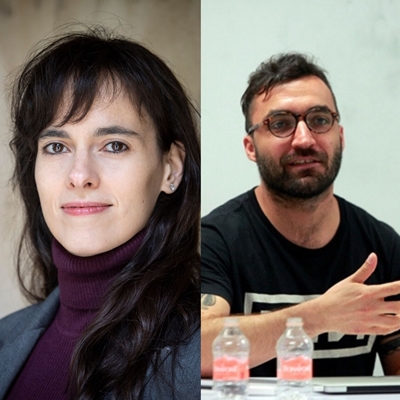
Carissa Véliz in conversation with Eduardo Rabasa
Not believing blindly in AI
Teatro de la Ciudad
Read moreWhile in books such as Privacy is Power the philosopher and Oxford University lecturer Carissa Véliz focused on the dangers of handing over our personal data to large corporations without understanding the consequences of doing so, she now tackles a more unsettling issue: the future that lies ahead. Once again, she warns us that blindly trusting technology leaves us vulnerable. In Prophecy, Véliz focuses on the history and ethics of predictions, analyses how artificial intelligence and surveillance are redefining our concept of humanity, and warns of the risk of taking everything AI says at face value. She reaches an inevitable conclusion: a free society does not need more predictions, but better preparation. In conversation with Eduardo Rabasa, editor at Sexto Piso.
With the support of CAF
Event 17
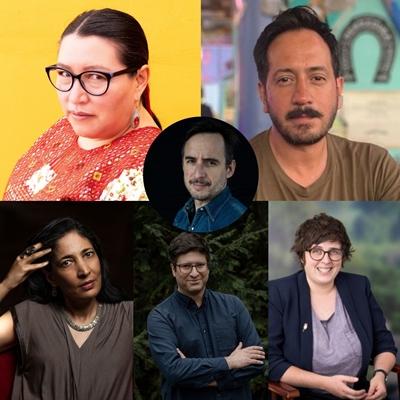
Yásnaya Elena A. Gil, Mario Arriagada, Kiran Desai, Shaun Walker and Eley Williams in conversation with Beatriz Guillén
Maps for ourselves
Cineteca Rosalío Solano
Read moreMaps are never neutral. They define borders, reflect power relations, record conflicts, and reveal the ways societies imagine and organise the world. At a time of profound geopolitical change, shaped by territorial disputes, migration, the climate crisis, and shifting global power dynamics, maps have taken on renewed significance. Yasnaya Elena A. Gil (Mexico), Mario Arriagada (México), Kiran Desai (India), Shaun Walker (UK), and Eley Williams (UK) will each offer a different way of reading and narrating the world. Each will choose a map—physical, cultural, linguistic, or emotional—and discuss how these maps shape our understanding of identity, memory, territory, and belonging.
Simultaneous interpretation from English to Spanish available
With the support of Open Society Foundations and the British Council
Event 18
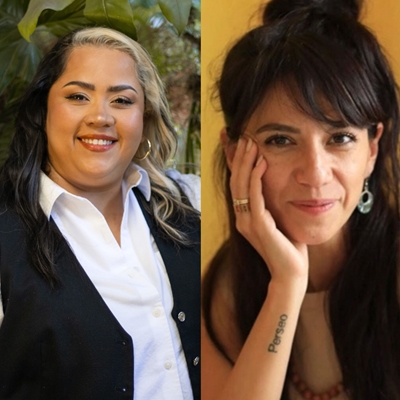
Vivir Quintana in conversation with Felipe Restrepo Pombo
Living for music
Jardín Guerrero
Read moreThe resounding success of the honest and frank Canción sin miedo turned Vivir Quintana (Mexico) into a feminist icon throughout Latin America. But behind every icon there is always a person: a life made up of stories, acts of resistance and a heritage. Sobre-vivir para la música is exactly that: a personal diary, a celebration of everything that is Vivir Quintana – her words, notes, songs, photographs and drawings. It offers an open window into her story and that of the voices that have accompanied her. The conversation will be complemented by several live songs from the artist recently nominated for a Latin Grammy for Best Singer-Songwriter Album.
Accesibility: interpretation into Mexican Sign Language available
Event 19
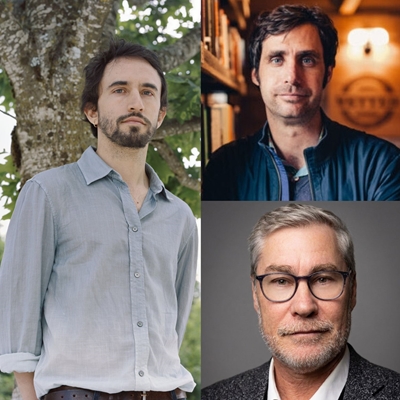
Daniel Saldaña París and Javier Serena in conversation with Darío Alemán
Eccles Institute at the British Library event: inevitable tensions
Patio de la Delegación del Centro Histórico
Read moreWhen you begin reading The Dance and the Fire by the Mexican author Daniel Saldaña París, winner of the 2020 Eccles Institute & Hay Festival Global Literature Prize, and Apuntes para una despedida by the Spanish author Javier Serena, editor of the magazine Cuadernos Hispanoamericanos, there is a tension that emanates from the pages and envelops you like mist. There is a constant sense of menace in the relationship between three friends who are reunited and share a past that remains unresolved (The Dance and the Fire); and the same is true of the final stages of a romantic relationship heading for its end (Apuntes para una despedida).
With the support of the Eccles Institute for the Americas and Oceania at the British Library
Event 20
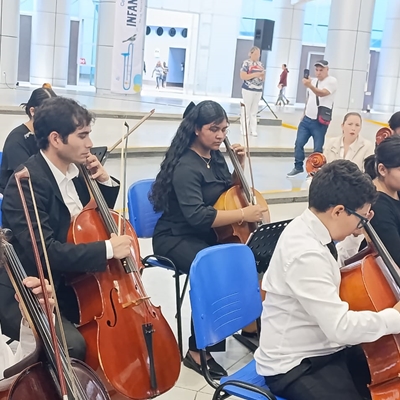
Huimilpan Community String Orchestra in concert
Plaza cívica, frente a la Parroquia San Miguel Arcángel, Municipio de Huimilpan
Read moreThe Huimilpan Community String Orchestra will offer a one-hour recital in the municipality. Founded in 2019, it is one of the community music education projects supported by the Queretaro State Secretariat of Culture, which promotes the artistic, human and social development of children and young people. Under the conductor Mar Domínguez, the orchestra serves children and teenagers from the community of Lagunillas, Huimilpan and the surrounding areas, establishing itself as a space for coming together, learning and musical training. Since its inception, it has contributed to the cultural enrichment of the municipality, demonstrating that music is a way to foster talent, community and the holistic development of new generations.
Event CL3
Leo con Once Book club with Marta Jiménez Serrano and Miguel de la Cruz
Oxygen
Casa Hay Festival — SURA (salón lateral)
Read moreThe Hay Festival Queretaro book clubs offer intimate events with a selection of the festival guests. These are spaces to talk in greater depth about these authors’ most recent works. At this event, Marta Jiménez Serrano (Spain) will talk to Miguel de la Cruz about Oxígeno.
Book to be read before attending
With the support of Acción Cultural Española, AC/E
Event 21
Screening of the documentary 'How to Build a Library'
Cineteca Rosalío Solano
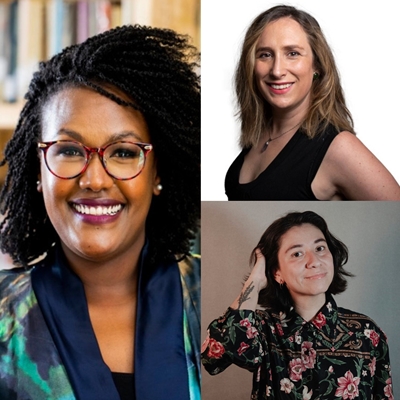
Read morePremiered at the 2025 Sundance Film Festival, How to Build a Library takes us to Nairobi to witness how two black women set about rebuilding what, until 1958, was a library exclusively for white people. The documentary is a fascinating exploration of colonisation and the power of individual and collective action. Event introduced by Blanmi Núñez.
Duration of the documentary: 1 hour, 43 minutes
Consecutive interpretation from English to Spanish available
In collaboration with Nairobi Litfest, with the support of the British Council’s UK/Kenya Season 2026 and Ambulante
Event 22
Rosa Beltrán, Paulina Chavira and Jesús Ramírez-Bermúdez in conversation with Socorro Venegas
Stories from the Pitch
Plaza cívica, frente a la Parroquia San Miguel Arcángel, Municipio de Huimilpan
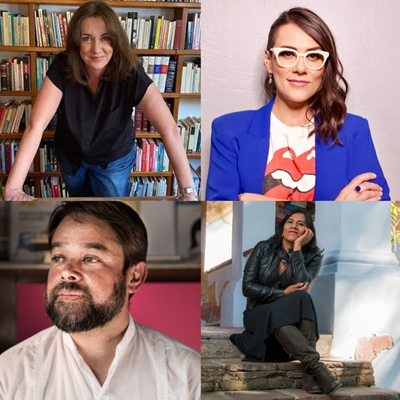
Read moreFootball is much more than 22 men or women chasing a ball. It is a social phenomenon capable of transforming cities and shaping the collective imagination. A breeding ground for epic feats and unparalleled tragedies, it is also a space in which to challenge the symbols of strength, dominance and masculinity upon which it has been built. Rosa Beltrán, Paulina Chavira Mendoza and Jesús Ramírez-Bermúdez, contributors to the anthology Tiro libre. Relatos cancheros sobre futbol, take part in this conversation with Socorro Venegas, in which the ball is nothing more than an excuse to kick off.
Organised together with UNAM
Event 23
Lecture by Carlos Moreno
Queretaro: a 15-minute city?
Teatro de la Ciudad
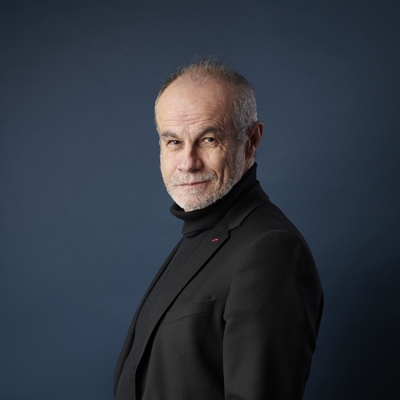
Read moreLeaving home and reaching school, the health centre, the market and work in no time at all. What in some places seems like a utopia is simply an urban planning concept that can transform the way we live: the 15-minute city, an idea conceived by Carlos Moreno (Colombia/France). 2026 is the year that marks three centuries since construction began on the Queretaro aqueduct, the city’s architectural and urban planning icon, and it presents a unique opportunity to view the city with fresh eyes. Queretaro continues to grow and transform; how close or far is it now from becoming a 15-minute city? The renowned urban planner will give a lecture on Queretaro, in which he will discuss the city’s challenges and the opportunities it has to improve the well-being of its citizens.
Sponsored by SURA
Event 24
Cristina Fuentes La Roche, Adriana Martínez Guerrero and Claudia Neira Bermudez in conversation with Mayra Arauco
Cultural management for changing the world
Cineteca Rosalío Solano
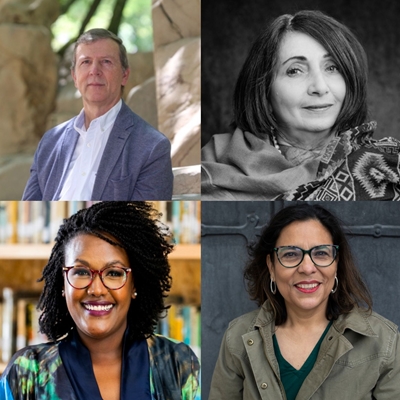
Read moreTwo of the leading figures in the literary and cultural ecosystem will be in conversation with Mayra Arauco, CAF Creative Economies specialist. They will reflect on how to turn festivals into a tool for social transformation, how their curatorial work can promote the emergence of new and diverse voices, and how to democratise access to culture. Cristina Fuentes La Roche (Spain) is the International Director of the Hay Festival, Claudia Neira Bermudez (Nicaragua) is the Director of Centroamérica Cuenta, and Adriana Martínez Guerrero (Colombia) is the founder and director of the LEA festival in Greace.
With the support of CAF
Event 25
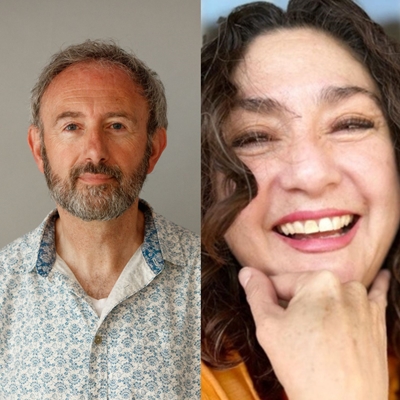
Santiago Beruete in conversation with Claudia Ivonne Hernández
Green philosophy
Patio de la Delegación del Centro Histórico
Read moreFilosíntesis is an invitation to think like a plant, to emulate its photosynthesis and find our spiritual nourishment. The premise is one of philosophy’s most frequently asked questions: how can we live better? The Spanish philosopher Santiago Beruete suggests we look to the plant world to seek the light and thus learn how to think and act in a healthy, sustainable and beneficial way. Returning to nature, through the spirituality and philosophy of the garden. Returning to green, the colour of hope.
Event 26
Vivir Quintana and Gabriela Warkentin in conversation with Juan Carlos Pérez
Enforced disappearances
Jardín Guerrero
Read moreThe reality of enforced disappearances is one of Mexico’s most serious structural crises. In April 2026, it became a topic of debate at the highest political level when the national government dismissed a report by the UN Committee on Enforced Disappearances which classified these acts as “crimes against humanity”. Journalist Gabriela Warkentin and singer and activist Vivir Quintana will speak to the BBC Mundo journalist Juan Carlos Pérez about this recent controversy and analyse what steps need to be taken to end impunity and alleviate the suffering of families.
Event 27
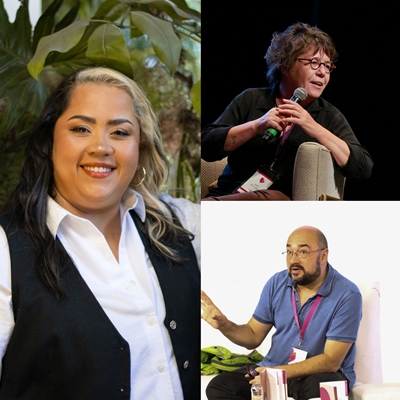
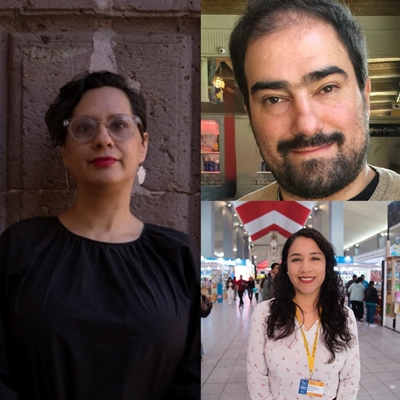
Mara Rahab Bautista López and Gustavo Puerta Leisse in conversation with Melissa Pérez
Publishing Talent: roads to independence
Casa Hay Festival — SURA (salón lateral)
Read moreTwo independent publishing projects, two ways of life. Mara Rahab Bautista López (Mexico) co-manages Originaria, which promotes contemporary literary works written by women in non-hegemonic languages; Gustavo Puerta Leisse (Venezuela) is the co-founder of Editorial Modernas el Embudo, which specialises in children’s and young adult literature. The two will talk to Melissa Pérez (Peru) about their motivations for undertaking such personal projects, the rewards they have reaped and the disappointments they have encountered throughout their publishing careers.
With the support of AECID, Librerías Cálamo and Acción Cultural Española, AC/E
Event HFC19
Illustration workshop with Sam Sama
Create your own character!
Alameda Hidalgo
Read moreSam Sama, an illustrator and graphic designer from Queretaro, will lead this workshop, in which participants can learn the basics of character design. We will start from scratch, with a splash of paint, and move on to combining basic geometric shapes. Then we will discover that the magic of creativity can emerge from this simple combination, as the characters begin to come to life on our canvas.
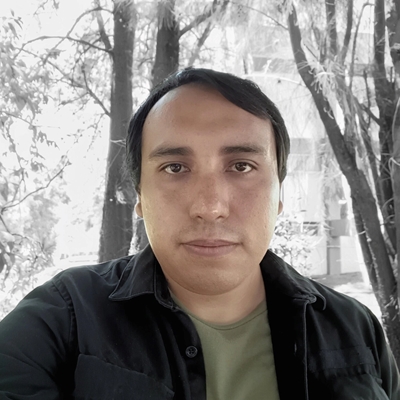
Event 28
Alma Guillermoprieto, Óscar Martínez and Gabriela Warkentin in conversation with Beatriz Guillén
Stories from journalism
Teatro de la Ciudad
Read moreDay after day, hundreds of journalists report on the diverse realities of Mexico and Central America, with countless reports on violence, but also human stories that fill us with optimism. Alma Guillermoprieto (Mexico), Óscar Martínez (El Salvador) and Gabriela Warkentin (Mexico) are responsible for giving a voice to these issues and ensuring they reach the public. They will discuss this and the state of journalism in the region, moderated by Beatriz Guillén, journalist of El País.
With the support of El País América
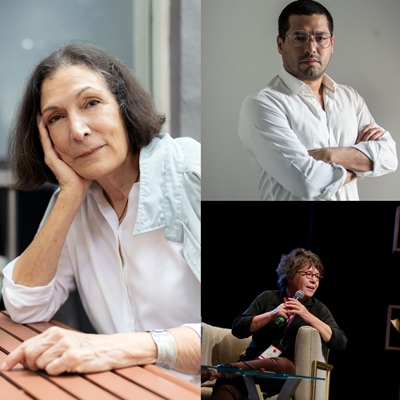
Event 29
Lydia Cacho in conversation with Felipe Restrepo Pombo
A hawk under my window
Cineteca Rosalío Solano
Read moreUn halcón bajo mi ventana marks journalist and writer Lydia Cacho’s (Mexico) first foray into fiction for adults. A coming-of-age novel about the power of tenderness and friendship, it pays tribute to the voices of the girls and women who paved the way in the struggle for a fairer world. Julieta is a fourteen-year-old girl searching for meaning in her life in 1960s Mexico. Everything changes when she attends the 1968 marches and the Halconazo of 1971 alongside her mother; historic moments that lead her to become involved in clandestine meetings, revolutionary movements and a decade of thrilling revelations.
With the support of Open Society Foundations
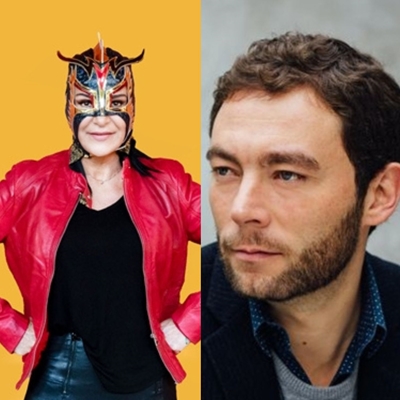
Event 30
Ana Paola López Birlain and Gustavo Fajardo in conversation with Primitivo Olvera
Nearby solutions: politics from the local and the regional
Patio de la Delegación del Centro Histórico
Read moreNo one understands the needs of their citizens better than municipal and regional leaders, who interact with their concerns and ways of life on a daily basis. Their unique position enables them to gain an insider’s understanding of local realities, which is why they play a crucial role in the provision of public services and the implementation of development policies. Ana Paola López Birlain, Secretary of Culture of the State of Querétaro, and Gustavo Fajardo economist from CAF —the organisation that produced the report Soluciones cercanas: el papel de los gobiernos locales y regionales en América Latina y el Caribe— discuss how to engage in grassroots politics with the people in their communities.
With the support of CAF
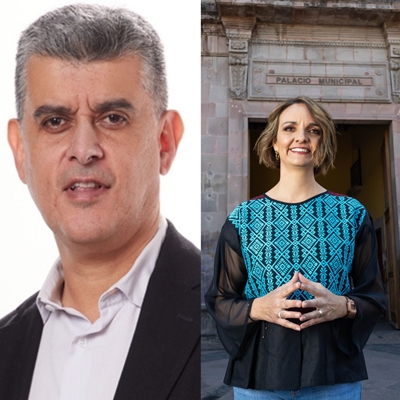
Event 31
Julia Didriksson in conversation with Isabel Posadas
Let’s talk about love
Jardín Guerrero
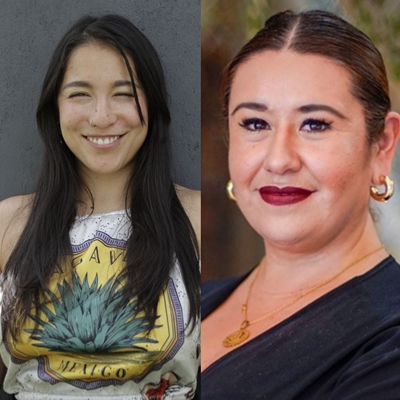
Read moreWhat are we talking about when we talk about love? We are questioning the normative ways of experiencing it, so that we can see it as something many-sided, open to question and with many faces. The non-fiction Cuando hablamos de amor is a collective effort to rethink love and to understand it beyond the romantic couple. The feminist thinker and digital activist Julia Didriksson (Mexico) reflects in the anthology on digital romantic solace, an escape route to evading responsibility for our romantic failures.
Event 32
Enrique Díaz Álvarez and Cristina Monge in conversation with Daniel Pardo
Against the intolerable
Casa Hay Festival — SURA (salón lateral)
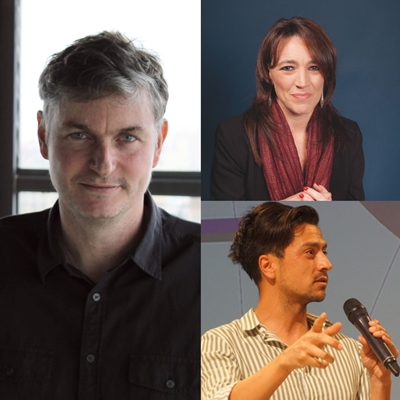
Read moreHas any news story today made you feel uneasy? What is the reason for your disagreement or agreement? Enrique Díaz Álvarez (Mexico) says in Lo intolerable that we have broadened our tolerance threshold so much that we have normalised the unacceptable. And Cristina Monge (Spain) —author of Contra el descontento— says that there is a build-up of social discontent that has led us to question democracy itself. Winners of the 2021 Anagrama Essay Prize and the 2026 Paidós Prize respectively, both thinkers discuss the risks of complacency with the BBC Mundo journalist Daniel Pardo (Colombia) as they seek a way out of this situation.
With the support of Acción Cultural Española, AC/E
Event HFC20
Storytelling with Raquel Torres del Hoyo
Quetzel, guardian of the forest
Alameda Hidalgo
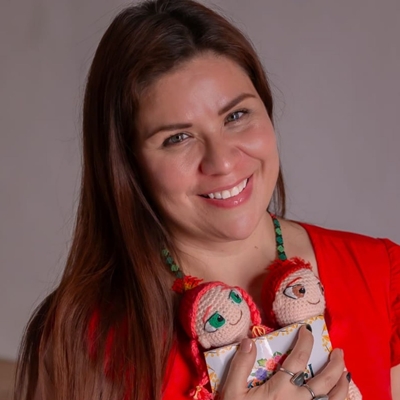
Read moreQuetzel is a little girl who finds it hard to believe in herself, but together with her best friend Dael and a magical fairy called Aila, she sets off on an adventure to save the forest from the evil gnome Ongaro and the witch Carlem. Raquel Torres del Hoyo (Mexico), the author of Quetzel, la guardiana del bosque, will be telling this story, accompanied by the amigurumis – characters made using soft toys. Following the storytelling session and a brief talk on how dreams can be made to come true, those attending will have the chance to draw their favourite character from the story.
Event HFC21
Illustration workshop with Sofía Romo Saavedra and Sam Sama
Come and draw with illustrators from the city
Alameda Hidalgo
Read moreGet your paper, brushes, paints and felt-tip pens ready —although we’ll have all the materials ready for you— because Queretaro’s most special illustration workshop is here! Sofía Romo Saavedra and Sam Sama will run a workshop for children where we will learn the basics of drawing and painting. A unique opportunity to learn from the best and improve our skills!

Principal Sponsor



Partner for Latin America

Sponsor for Colón, Huimilpan and Morelia