Online events
Event 57
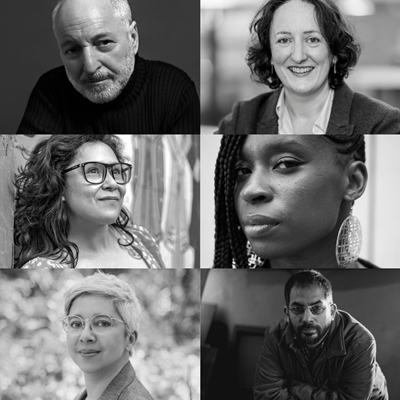
Elma Correa, Catherine Fletcher, Vidya Narine and Irenosen Okojie in conversation with Enrique Planas
Maps for understanding ourselves
Teatro Municipal
Maps are never neutral. They define borders, reflect power relations, record conflicts, and reveal how societies imagine and organize the world. At a time of profound geopolitical transformations, marked by territorial disputes, migrations, climate crises and new configurations of global power, cartographies take on renewed significance. Elma Correa (Mexico), Catherine Fletcher (United Kingdom), Vidya Narine (France) and Irenosen Okojie (Nigeria/United Kingdom) will share different ways of reading and narrating the world. Each will choose their own physical, cultural, linguistic or emotional map and discuss how these shape our understanding of identity, memory, territory and belonging.
Simultaneous interpretation from English to Spanish available
SURA Invites and with the support of the British Council
Event 62
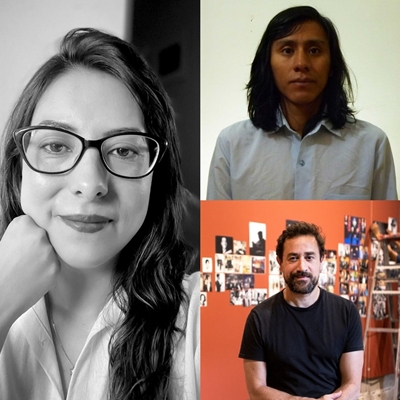
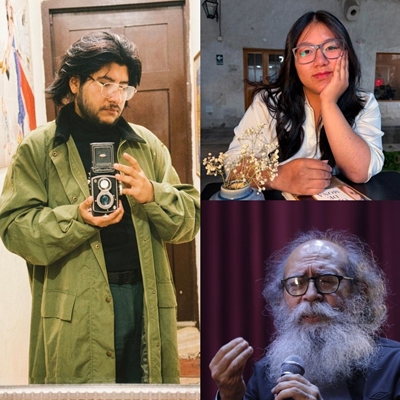
Ros Postigo and Raúl Chuquimia in conversation with Carlos Caamaño
Arequipa–Lima: photography as a meeting place
Casa Tristán del Pozo - Fundación BBVA
In the first half of the 20th century, Arequipa helped shape some of Peru's most memorable images. Today, new generations of photographers, curators and thinkers are once again asking what it means to look at a country in transformation. Photographer Ros Postigo and visual artist Raúl Chuquimia will speak to curator Carlos Caamaño about photography as a tool for creating memory and understanding territory, identity and diversity, and something more essential: photography can teach us to see the country better, and Arequipa, with its history and artistic vitality, can become a space for reflecting on contemporary photography in Peru.
Sponsored by Fundación BBVA
Event 63
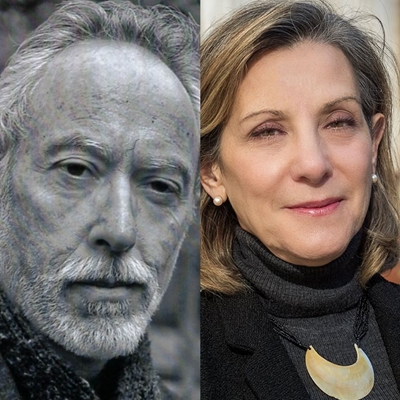
Recital accompanied by music, by J.M. Coetzee and Valerie Miles
Closing event: readings of Mariano Melgar
Teatro Municipal
Sponsored by Credicorp and the support of the Open Society Foundations
Event 64
Mauricio Ambrossio, Claudia Delgado and Andrés Garay in conversation
How Arequipa adopted photography
Casa Tristán del Pozo - Fundación BBVA
The evolution of photography over its two-hundred-year history has transformed our relationship with images. Since 1875, Arequipa has been a major hub of photographic activity, radiating influence across the entire region. Mauricio Ambrossio, Claudia Delgado and Andrés Garay will discuss how shifts in usage and technology have shaped the work and creative output of photographers from Arequipa.
With the support of the French Embassy in Peru
Explore All Genres
- Afrodescendencias
- Latin America
- South to North
- Art
- Arts & Culture
- Children
- Culture
- Design
- Drawing
- Economics
- Equality
- Fashion
- Film
- Food
- Gender
- History
- Human Rights
- Indigenous Cultures
- Journalism
- Language
- Law
- Literature
- Music
- Nature & Environment
- Philosophy
- Photography
- Podcast
- Poetry
- Politics
- Psychology
- Religion
- Science
- Sport
- Technology
- Theatre
- Workshops
- World Affairs

Partner for Latin America

Principal Sponsors

Government Partners