Hay Festival Cartagena 2026
Event 18
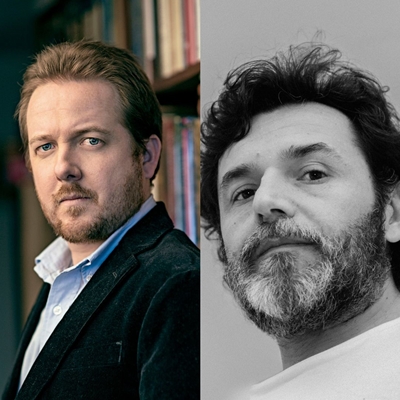
Juan Esteban Constaín in conversation with Pablo Arango
From the beginnings of Christianity
Teatro Adolfo Mejía
Read moreEl hijo del hombre, by Juan Esteban Constaín, is a literary and historical essay in which the author examines early Christianity and its profound impact. This writer, whose very personal style is full of anecdotes, will talk to Pablo Arango, Philosophy lecturer at the University of Caldas, about this book on classical antiquity and how Christianity became the official religion of the Roman Empire.
Event 19
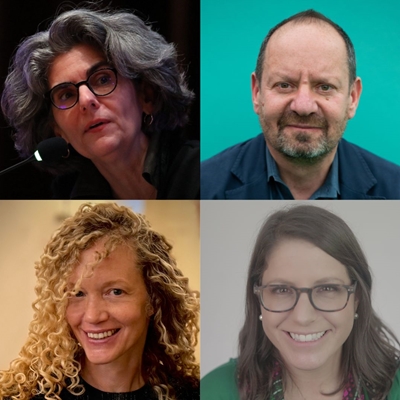
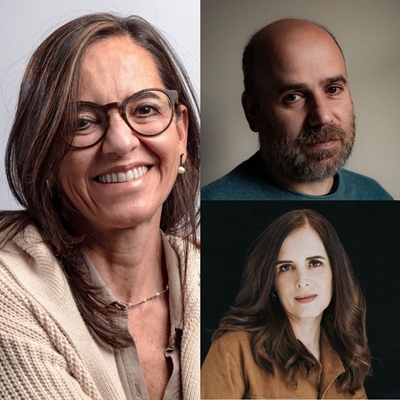
Julieta Lemaitre, Anna Rubesame and Philippe Sands in conversation with Juanita Goebertus
Justice in the face of the irreparable
Palacio de la Proclamación (Auditorio Juan José Nieto)
Read moreThe limits of the law in the face of the most serious crimes are the basis for this conversation involving Philippe Sands (UK), a jurist and promotor of the concept of ecocide as an international crime; Anna Rubesame (USA), expert in transitional justice; and Julieta Lemaitre (Colombia), JEP magistrate. They will talk to the human rights defender Juanita Goebertus. When the legal files are full of horrors, it is time to think about how justice can accompany truth and reconciliation processes; especially in countries such as Colombia, where the law has become a tool for social reconstruction.
Simultaneous interpretation from English to Spanish available
With the support of ICTJ and Swedish Embassy in Colombia
Event CL2
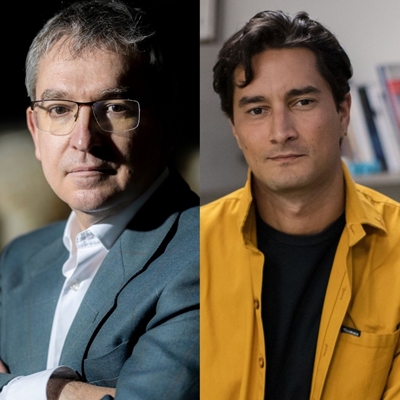
Book Club with Santiago Posteguillo and Toni Celia
The three worlds
Casa Hay Festival SURA / Bancolombia (Centro de Convenciones)
Read moreThe Hay Festival Cartagena de Indias reading clubs offer intimate encounters with a selection of festival guests. These are spaces for an in-depth dialogue about authors’ recent work. At this event, Santiago Posteguillo (Spain) will talk to Toni Celia about Los tres mundos, the third part of his series about Julius Caesar.
Please read the book before attending
With the support of the Spanish Embassy in Colombia
Event HFJ9
Frank Báez in conversation with Graciela Franco
The Caribbean, in another light
Universidad Tecnológica de Bolívar (sede Manga)
Read moreThere is a Caribbean beyond the postcards, beyond the beautiful beaches bathed in sun. This is a region with a colonial history, whose exiles speak, just as those who have remained do. It is a region that is open to new arrivals, but private behind closed doors. Bajo otras luces is the Caribbean as seen by the Dominican Frank Báez: an essay about what it means to write there, and how it is seen from far off. The personal view of an essayist, a poet and a Caribbean. In conversation with Graciela Franco.
With the support of Ford Foundation
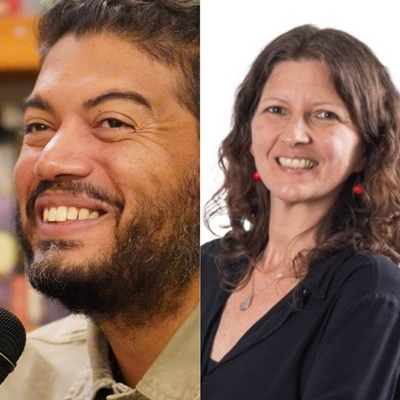
Event HFJ7
Yeniter Poleo in conversation with Lusdary Martínez
Traumas brought to light
Universidad de Cartagena, Claustro de San Agustín (Biblioteca)
Read moreLas costuras invisibles deals with the silenced traumas of a family, one that might stand for many Latin American families: those connected with intra-familial sexual violence. In the novel, Yeniter Poleo (Venezuela/Colombia) tells of the encounter between a granddaughter and grandmother. The domestic becomes the political, and what started as an ordinary weekend becomes a story that links feminism, memory and violence. The journalist and writer is also the author of La ciudad vencida, set during the Caracazo episodes in Venezuela, a time of great repression that left hundreds dead. In conversation with Lusdary Martínez.
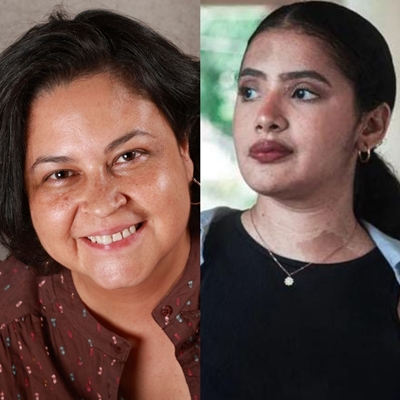
Event TE2
Rosmery Armenteros and Nicole Sánchez Castillo in conversation with Rafael Cantillo Castillo
These are my words
Casa Benkos Biohó
Read moreCo-organised with Librería Cálamo and with the support of AECID
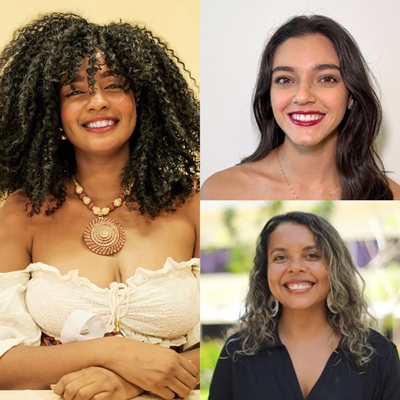
Event 17B
Daniel Alarcón, Sani Ladan and Nesrine Malik in conversation with Mario Arriagada
South to North conversations: XXI century Imperialism
Centro de Convenciones (Salón Barahona)
Read moreThe 21st century is bearing witness to very agressive forms of imperialism that challenge the established order and the limits of international law, from military interventions to hard economic and geopolitical preassures on countries. Analyzing these dynamics is crucial for understanding how the power relations are being reshaped in an increasingly complex global context. With the participation of Daniel Alarcón (Peru/United States), whiter and journalist who addresses issues such as migration, identity and conflict from a narrative perspective in his books and in Radio Ambulante Estudios; Sani Ladan (Cameroon), an expert in international relations and author of the podcast África en 1 click; and Nesrine Malik (Sudan/United Kingdom), journalist and columnist known for her critical essays about global politics and contemporary society. Moderated by Mario Arriagada.
Simultaneous interpretation from English to Spanish will be offered
With the support of Open Society Foundations
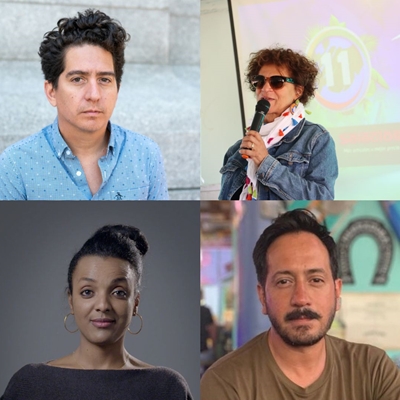
Event HFC15
Encounter with Jhon Narváez
From the neighbourhood and from the screen
Institución Educativa Politécnico del Pozón
Read moreThe actor, director, cultural manager and interpreter of the identity of his region, the Cartagenan Jhon Narváez, understands art as a tool for community transformation. He organises projects that boost citizen participation, such as the Pedro Romero Vive Aquí collective, the Mi Centro es Cartagena initiative, the Tornado Cartagena audiovisual festival, and the creation of the superhero Capitán Cartagena. His work in film is also linked to popular memory, interpreting Joe Arroyo in the film Rebelión.
With the support of the Ford Foundation
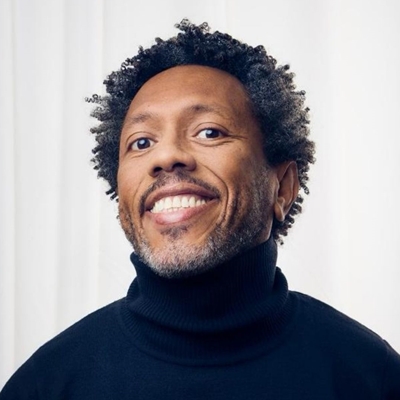
Event HFC16
Book-binding workshop with Rodrigo Paredes
Amphibious binding laboratory
Centro de Formación de la Cooperación Española (Biblioteca)
Read moreA chance to find out about the art of book-binding, based on memories and perceptions of amphibious cultures and those who live in them. Guided by Rodrigo Paredes, each participant will create their own booklet with the aid of folds and stitches, and also design the covers. After this, these mini-projects will be completed by writing the first pages through a creative writing exercise.
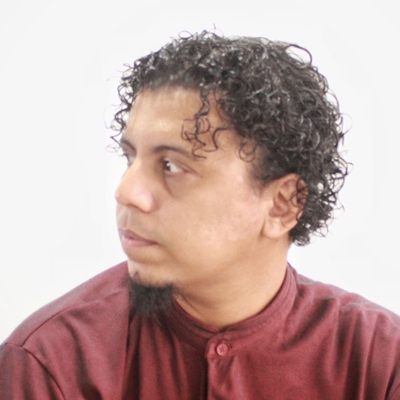
Event HFC17
Workshop with Jairo Ojeda
Catching butterflies
Membrillal, Hogar Infantil Comunitario La Abejita
Read moreA workshop for singing songs, in order to listen to them. A workshop for “catching butterflies” in a playful and poetic sense, using the emotions. Participants will create their own songs together with the coordinator Jairo Ojeda, using the literary strategy of it looks to me. The workshop will include a conversation about the interaction between listening to and singing songs.
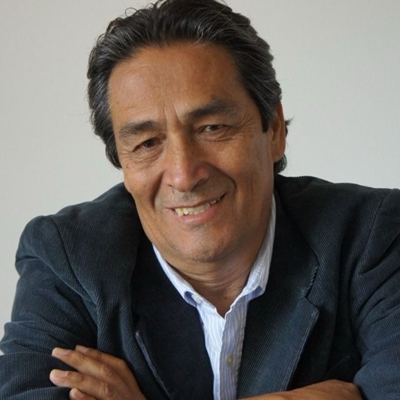
Event HFC18
Workshop with Mónica Diago and Pedro Caballero
Ciencia magnética
Tierra Baja, Biblioteca Pública Tierra Baja
Read moreRespira ciencia is a collection of illustrated stories whose goal is to bring science to children. This is a project run by Ciencia Magnetica, two of whose members are Mónica Diago and Pedro Caballero, which seeks to awaken scientific curiosity among the young. Because often, children are only a story away from discovering the world of science. This session will be on the book La dinosauria que veía solo la mitad del mundo.
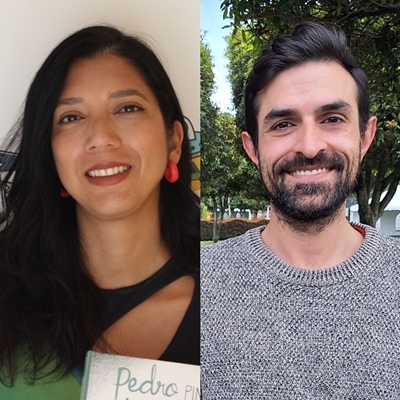
Event HFC11
Art workshop with Dayro Carrasquilla
Reconstructing memory from image and text
Corporación Ruleli
Read moreCulture should be accessible to all and local art deserves a higher profile. This is the thinking behind the work of Colartis, the Corporación Pulso Creativo, which offers artistic education to young people who have limited access to cultural spaces. In this practical workshop, participants will reconstruct the memory of their territories through images and texts, and look at how to preserve local narratives through the arts. Workshop lead by Dayro Carrasquilla.
Event 20
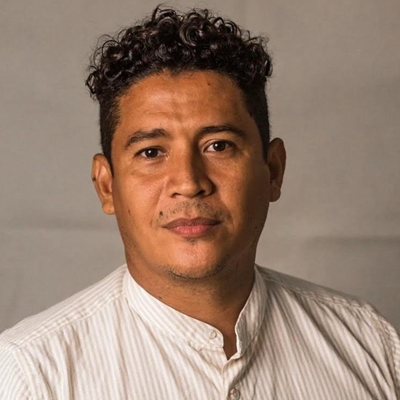
Pankaj Mishra in conversation with Javier Lafuente
El País talk: The world after Gaza
Centro de Convenciones (Auditorio Getsemaní)
Read moreWhen writers from the global South take their pens to the topic of the West, it rarely comes out looking good. On this topic, the essayist and novelist Pankaj Mishra (India) is one of the most lucid and incisive voices of our times. In Age of Anger he traces the links between contemporary violence and the rise of individualism and capitalism; while in The World After Gaza, he criticises the global racial order imposed by the West.
Simultaneous interpretation from English to Spanish available
With the support of EP América
Event 21
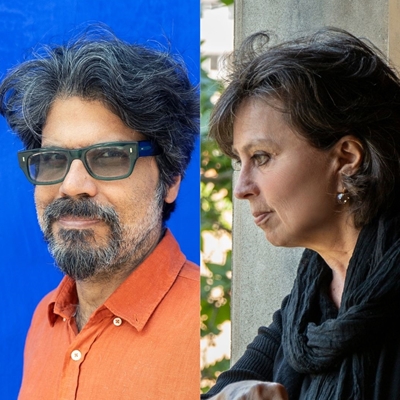
Evelio Rosero in conversation with Nahum Villamil
A shower of priests
Centro de Convenciones (Salón Barahona)
Read more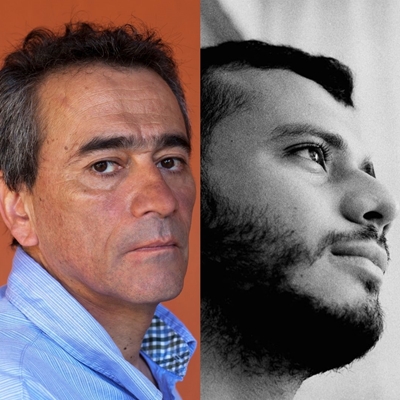
Event 22
Richard McGuire in conversation with Elvira Liceaga
Here, from the corner of the room
Teatro Adolfo Mejía
Read moreHere, by Richard McGuire (USA), is one of the most iconic works in the contemporary graphic novel, thanks to the originality of its narrative scheme. It tells the story of the corner of a room, and things that have happened and will happen in that space, from prehistoric times to a far future. The novel proceeds without a chronological order, and many panels contain insets with scenes from different years. Its French translation won an award at the Angouleme Comic Festival in 2016, and in 2024 it was made into a film, starring Tom Hanks, by Robert Zemeckis.
Simultaneous interpretation from English to Spanish available
Event 23
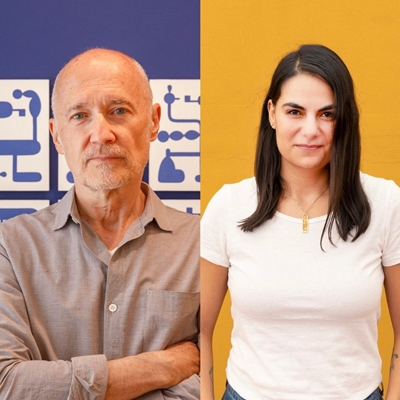
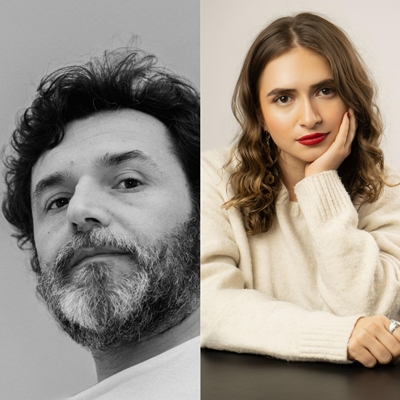
Pablo Arango and Lu Beccassino in conversation with Isabella Atehortúa
Everyday philosophy
Palacio de la Proclamación (Auditorio Juan José Nieto)
Read moreWe live as slaves to algorithms that activate our automatic pilots. An antidote to overcoming this apathy is to return to philosophy; to read the reflections and teachings of those who invite us to be critical and think for ourselves. Pablo R. Arango has done so by giving us portraits of Plato, St Augustine and Descartes in Sirvan la cicuta, crucifiquen al autómata; and Lu Beccassino has covered the Stoics, talking about love and other topics in Si nos enseñaran a amar. They will talk to journalist Isabella Atehortúa.
Event HFC19
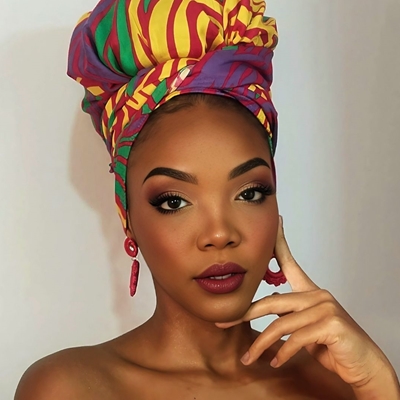
Event with young people from La Esperanza with Brillith Sossa Wilches
Hearing us: the youth of La Esperanza
Children International sede la Esperanza
Read moreThe young adults from the La Esperanza neighbourhood who took part in the Cuentos del barrio: La Esperanza afrodescendiente workshops will share their stories and thoughts about the value of being reflected in a community publication. Together with Brillith Sossa Wilches, who has run the project, they celebrate the voice of their area and their Afro legacy.
Event CL3
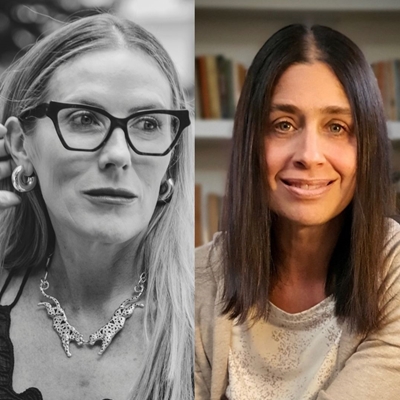
Book Club with Sara Jaramillo Klinkert and Ana María Aponte
The sky is empty
Casa Hay Festival SURA / Bancolombia (Centro de Convenciones)
Read moreThe Hay Festival Cartagena de Indias reading clubs offer intimate encounters with a selection of festival guests. These are spaces for an in-depth dialogue about authors’ recent work. At this event, Sara Jaramillo Klinkert (Colombia) will talk to Ana María Aponte about El cielo está vacío.
Please read the book before attending
Sponsored by Protección
Event HFJ10
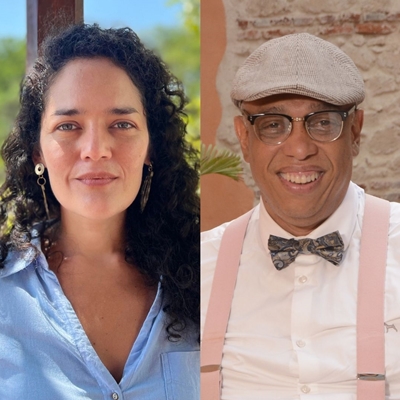
Cristina Bendek in conversation with Ricardo Chica
Salt crystals
Universidad de Cartagena, Claustro de San Agustín (Biblioteca)
Read moreIn Los cristales de la sal, Cristina Bendek (Colombia) shows us an intimate return: a woman leaves her Mexican exile to return to San Andrés, confronting her origins and connecting with the ancestral voice of the island. This novel was the seed of the non-fiction Hilar el ritmo, a notebook about the spiritual space that goes into literary works, and about the rhythms needed for each story, from its origin to its writing.
Event TE3
Mónica Acebedo and Javier Peña in conversation with Elisa Guerra
Strategies for reading (more and better)
Casa Benkos Biohó
Read moreExisten estrategias para leer mejor. Pautas que, si las seguimos, permiten una lectura más profunda y analítica por nuestra parte; algo que enriquece nuestra experiencia lectora. Mónica Acebedo (Colombia), autora de Letras compartidas. Una estrategia de lectura, y Javier Peña (España) artífice del pódcast Grandes infelices y de los libros Agnes y Tinta invisible, ofrecen consejos para que los asistentes aprendan cómo hacerlo.
Coorganized with Librerías Cálamo and with the support of AECID and Acción Cultural Española, AC/E
Explore All Genres
- Afrodescendencias
- Latin America
- South to North
- Art
- Arts & Culture
- Children
- Culture
- Design
- Drawing
- Economics
- Equality
- Fashion
- Film
- Food
- Gender
- History
- Human Rights
- Indigenous Cultures
- Journalism
- Language
- Law
- Literature
- Music
- Nature & Environment
- Philosophy
- Photography
- Podcast
- Poetry
- Politics
- Psychology
- Religion
- Science
- Sport
- Technology
- Theatre
- Workshops
- World Affairs

Partner for Latin America

Principal Sponsors


Government Partners