Hay Festival Cartagena 2026
Event HFC20
Workshop with Edgar Rodríguez
Dulce de Coco
La Canoa Literaria
Read moreThe Cartagena writer, performer and storyteller Edgar Rodríguez offers a workshop about reading, memory and tradition using the book Dulce de Coco. The event brings us the cultural traditions of the Colombian Caribbean through exercises in raising awareness, musical rounds, readings, a discussion and the creation of “recipe huts”.
Event HFJ11
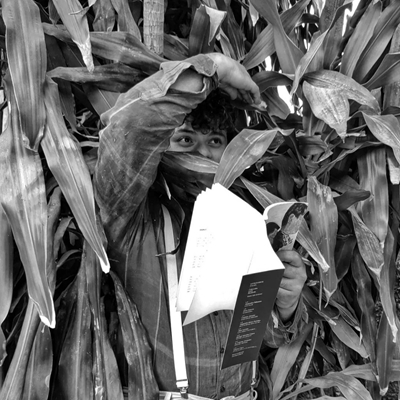
Gustavo Rodríguez in conversation with Joel Samper
Mamita
Universidad Tecnológica de Bolívar (sede Manga, auditorio Jorge Taua)
Read moreGustavo Rodríguez (Peru), winner of the 2023 Alfaguara Novel Prize, pays homage to his mother and grandparents in Mamita, about family ties that reach back to the Amazon region in the 20th century, and about the cultural and social tensions of that time. This is a “postponed family duty” that has become one of the writer’s most personal and reflective novels.
Event 24
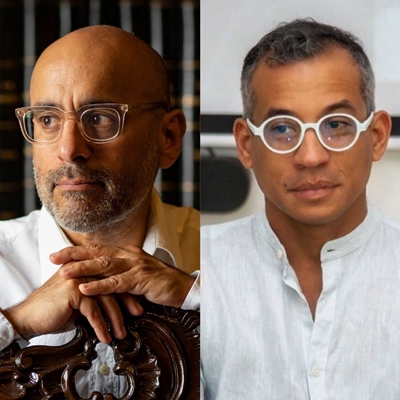
Santiago Posteguillo in conversation with Juan Lozano
Centro de Convenciones (Auditorio Getsemaní)
Read moreLos tres mundos. La conquista de las Galias por Julio César is the highly awaited continuation of the series dedicated to Julius Caesar by Santiago Posteguillo (Spain). After the great success of the last two books in the saga, Roma soy yo and Maldita Roma, which told the story of the origins and rise of the great dictator, we now read about the conquest of a territory that is hostile to Roman interests. This historical novel also visits Egypt, and covers the exile of the Pharaoh Ptolemy XII, the father of Cleopatra. Rome, Gaul and Egypt, three worlds in which Posteguillo brings an end to his Julius Caesar cycle.
Sponsored by RCN and Postobón and with the support of the Spanish Embassy in Colombia
Event 27
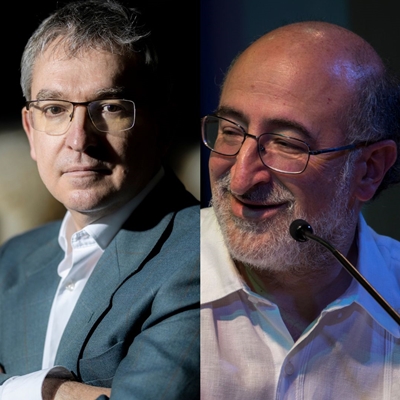
Andrés Cota Hiriart in conversation with Andrés Bermúdez Liévano
The axolotl: the “immortal” amphibian
Centro de Formación de la Cooperación Española (Patio)
Read more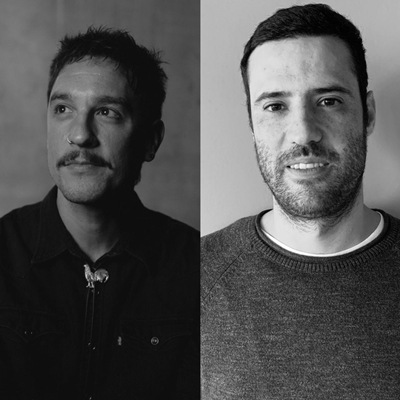
Event 28
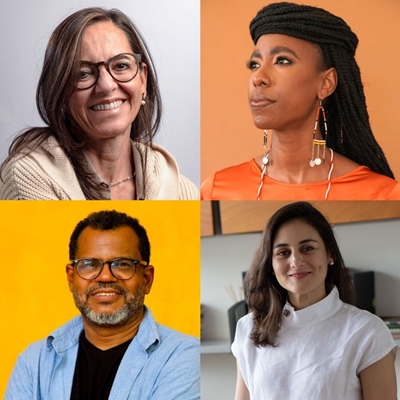
Mónica Acebedo and Chao Tayiana Maina in conversation with Alexandra Vives
Eccles Institute event: shared histories
Palacio de la Proclamación (Auditorio Juan José Nieto)
Read moreWe talk about what we love most: listening to stories. From the communal spaces for enjoying literature to collective spaces such as reading clubs; as well as archives for recovering shared histories, both physical and digital, and non-hegemonic narratives which act to nourish our languages. We offer space for this discussion with Mónica Acebedo (Colombia), the author of Letras compartidas. Una estrategia de lectura; and Chao Tayiana Maina (Kenya), founder and director of African Digital Heritage.
Interpretation from English to Spanish available
With the support of the Eccles Institute for American Studies at the British Library
Event 29
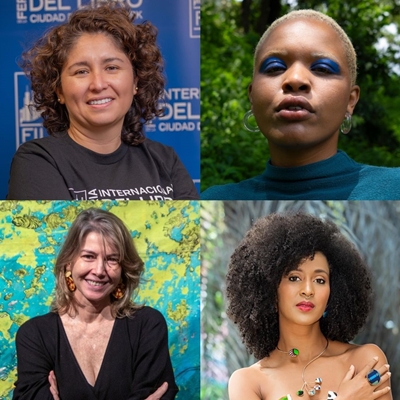
Dejanira Álvarez, Frekwéncia and Catalina Villa in conversation with Edna Liliana Valencia
Women leaders creating spaces
Casa Benkos Biohó
Read moreCommunity work and the links built up among communities are spaces of resistance in a context of global capitalism, a way of making the world a more liveable place. This also applies to cultural spaces and the visual arts. Three leaders, from the United States, Colombia, and Brazil, tell us how they work, from the field of cultural management (Dejanira Álvarez and Catalina Villa) and from multimedia art (Frekwéncia).
Consecutive interpretation from Portuguese to Spanish available
With the support of the Ford Foundation, CAF and AECID
Event 53
Karen Hao in conversation with José Carlos Cueto
What AI doesn’t want you to know
Teatro Adolfo Mejía
Read moreAfter listening to Karen Hao (USA), our view of artificial intelligence will never be the same. AI has come to stay, and nobody doubts that it can make certain tasks easier. Even this text could be generated by ChatGPT and few would notice. But nothing ever comes for free. First, because of the huge quantities of energy that this process consumes; and second, because the dark side of AI’s creators and the technological race is being revealed by researchers such as Hao, author of Empire of AI. In it, she examines the companies that act like empires, the exploitation of resources, the underpaid workers from the global South who compile and filter data... In conversation with José Carlos Cueto.
Simultaneous interpretation from English to Spanish available
Sponsored by RCN and Postobón
Event HFJ13
Lecture by Carry Somers
The Nature of Fashion
Universidad de Cartagena, Claustro de San Agustín (Biblioteca)
Read moreCarry Somers (UK), a proponent of ethical fashion and founder of Fashion Revolution, has recently published The Nature of Fashion, a fascinating look at how we learned to create clothing from plants. This lecture will reveal some of the most recent research involved in writing the book, as well as some of the stories included in its pages, which take us from the first vegetable fibres to the colonial era and beyond. After the talk, there will be a question and answer session moderated by Ricardo Chica, Deacon of the Faculty of Social Sciences and Education at the University of Cartagena.
With the support of British Council
Event 25B
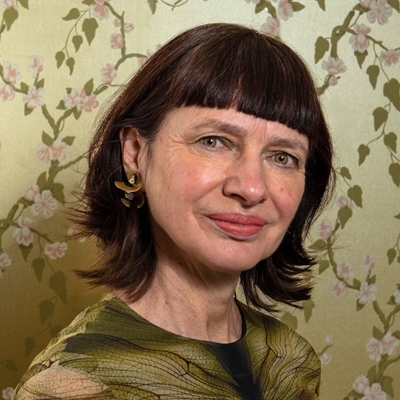
Omri Boehm, Pankaj Mishra y Philippe Sands in conversation with Mario Arriagada
The end of a world order?
Centro de Convenciones (Salón Barahona)
Read moreOmri Boehm, Pankaj Mishra, and Philippe Sands join Mario Arriagada to explore how the Holocaust and colonial memory collide with current legal and moral crises, and what it means to uphold humanistic universalism amid polarizing debates about genocide, xenophobia, and international law. Boehm is an Israeli philosopher and author of Radical Universalism: Beyond Identity, a philosophical critique that draws on Kant to reclaim the radical potential of Enlightenment humanism; in his earlier book Haifa Republic: A Democratic Future for Israel he proposed a binational federal model for Israel and Palestine. Sands (United Kingdom) is an international lawyer and acclaimed writer known for works such as East West Street, in which he examines the Holocaust, justice, and the legacies of the darkest chapters of the twentieth century. The Indian essayist and novelist Mishra is the author of The Age of Anger: A History of the Present, tracing links between contemporary violence and the rise of individualism and capitalism, and the recent The World After Gaza: A Short History, which analyzes Western complicity, colonial legacies, and moral fault lines in the aftermath of the Gaza conflict.
Simultaneous interpretation from English to Spanish available
Event HFJ12
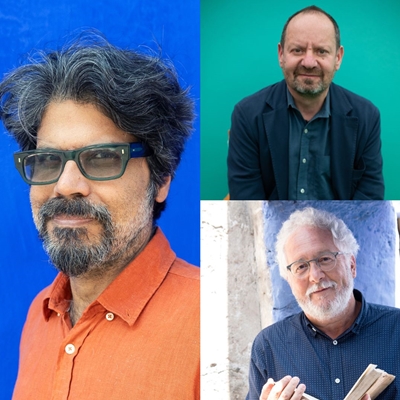
Rafael Dumett in conversation with Nahum Villamil
Incas, spies and astronauts
Universidad de Cartagena, Claustro de la Merced (Salón Eréndira)
Read moreIncas, espías y astronautas es un retrato de las preocupaciones, simpatías e intereses recurrentes de Rafael Dumett (Perú). En este libro de ensayos y prosa sin ficción, mira al pasado para transitar por escenarios contrafácticos de la historia; y al mismo tiempo orienta su mirada al futuro, imaginando los obstáculos a los que se enfrentarán los primeros humanos que migren desde la Tierra a nuevos planetas. También traza un mapa de inquietudes tan erudito como personal y revela la carpintería de su oficio narrativo. De todo ello, y del éxito cosechado con novelas como El espía del Inca y El camarada Jorge y el Dragón, conversa el autor.
Event HFJ14
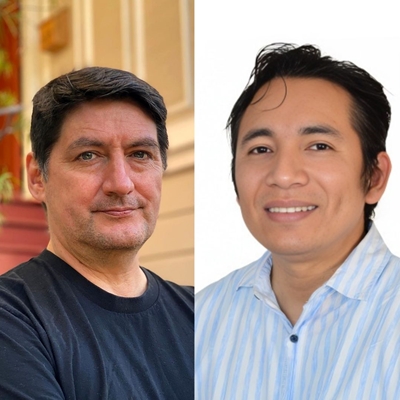
Conversation and concert with La Pambelé, moderated by Gustavo Bossa
Universidad Tecnológica de Bolívar (sede Manga) - Explanada Auditorio Jorge Taua
Read moreVarious members of the La Pambelé band will take part in this musical event, to talk about music and activism. This ensemble is heir to the salsa brava of Willie Colón and Héctor Lavoe, the salsa of the street, a protest salsa, that, instead of singing about love became about the life of the neighbourhood, with all its uprootedness, pride, pain and resistance. La Pambelé mingle conversations about their music and influences with performance, for the listening pleasure of those attending. The conversation will be moderated by Gustavo Bossa.

Event 30
Let's talk about Venezuela
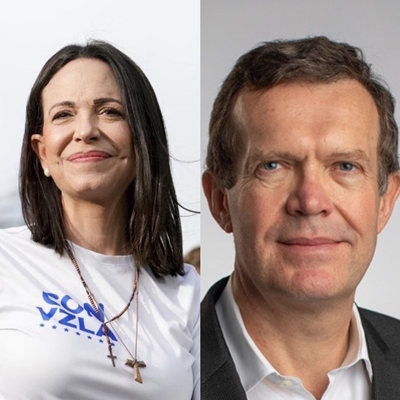
María Corina Machado (virtually) in conversation with Michael Stott + Venezuela Today and Possible Scenarios debate
Centro de Convenciones (Auditorio Getsemaní)
Read morePart I
María Corina Machado in conversation with Michael Stott
María Corina Machado (Venezuela) won the 2025 Nobel Peace Prize. Since becoming a member of parliament in 2010, Machado has become the main figure in opposition to Nicolás Maduro, and she is currently the leader of the Venezuelan democratic movement. This conversation will last 20 minutes, followed by 20 minutes of questions from the audience.
María Corina Machado will participate virtually
Part II
Debate: Venezuela Today and Possible Senarios
A 40 minute debate will take place on the current situation of Venezuela and the region and it's possible future scenarios, with the participation of: Javier Lafuente (Spain), director of the Américas for El País; Daniel Lozano (España), ccorrespondent for El Mundo en las Américas; Luz Mely Reyes (Venezuela), journalist, writer, analyst and the director and cofounder of the digital media outlet Efecto Cocuyo. Moderated by Michael Stott (United Kingdom), editor for Latin America for The Financial Times.
Sponsored by RCN and Postobón
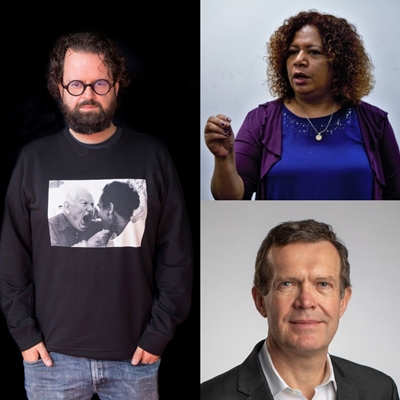
Event 31
Lea Ypi (digitally) in conversation with Marianne Ponsford
Freedom, inequality, indignity
Centro de Convenciones (Salón Barahona)
Read moreAlthough Albania is now becoming a tourist destination, it continues to be the most closed of the former Communist countries in eastern Europe. The Albanian philosopher Lea Ypi tells the story of her childhood in the country in Free, which has won awards including the Royal Society of Literature’s Ondaatje Prize and the Slightly Foxed First Biography Prize. Fronteras de clase is a compilation of three political essays about inequality, migration and citizenship; while her most recent work, Indignity, once again weaves together family and political history, reconstructing the life of her grandfather through secret police archives, in a story about individual and collective dignity in contexts of repression and transition. She talks to Marianne Ponsford.
Simultaneous interpretation from English to Spanish available
With the support of the British Council
Event 32
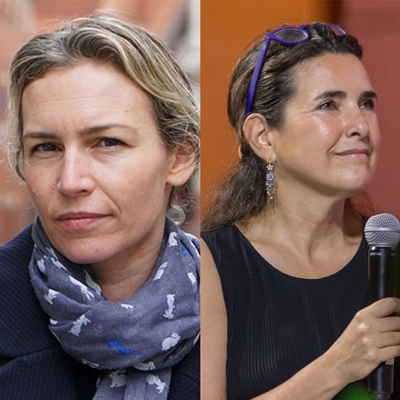
Pedro Mairal and Marcos Giralt Torrente in conversation with Pilar Reyes
Cuadernos hispanoamericanos
Claustro de la Merced
Read moreThe magazine Cuadernos hispanoamericanos promotes knowledge and exchange between writers of different generations and nationalities, united by a single language and a literary tradition enriched by diverse origins. At this special event, Pedro Mairal (Argentina) and Marcos Giralt Torrente (Spain) talk about their work and literary worlds with Pilar Reyes.
With the support of AECID
Event 33
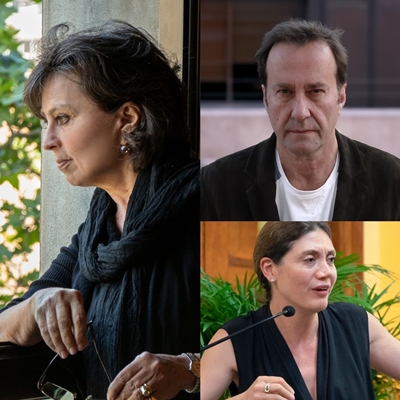
Iván Onatra in conversation with Jaime Abello Banfi
Macondo York
Centro de Formación de la Cooperación Española (Patio)
Read more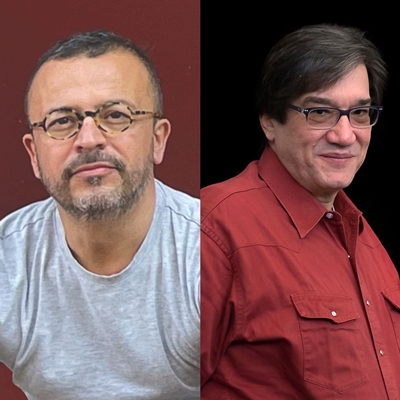
Event 34
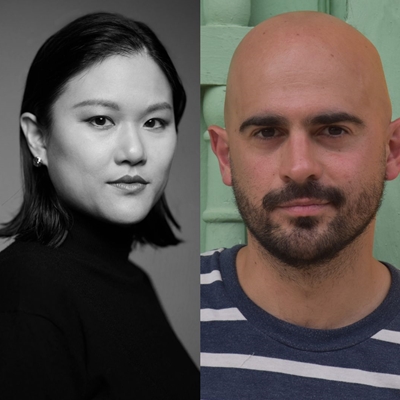
Arianna de Sousa-García, Eduardo Otálora Marulanda and Saia Vergara Jaime in conversation with Santiago Ángel
On mothers, fathers and children
Palacio de la Proclamación (Auditorio Juan José Nieto)
Read more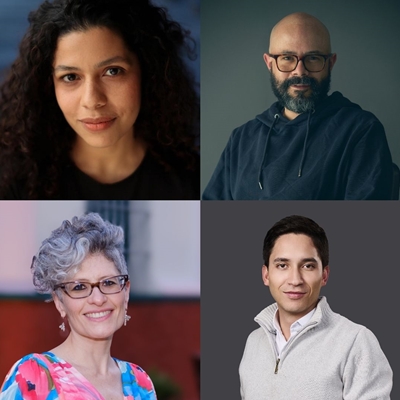
Event 35
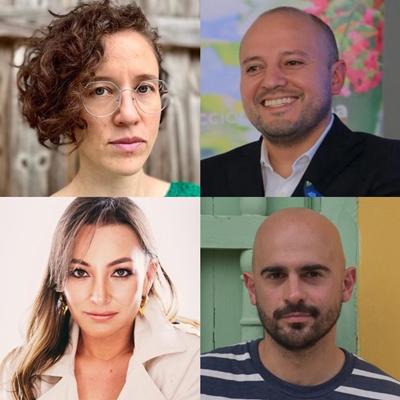
Andrea Díaz Cardona, Catalina Suárez and Jorge Súarez in conversation with Laura Plitt
Improbable: would you fall in love with someone with opposing political beliefs?
Casa Benkos Biohó
Read moreImprobable is a documentary podcast —the first original production by BBC Mundo— about the love story between Catalina and Jorge Suárez. She is a right-wing influencer, close to former president Álvaro Uribe; he is a former guerrilla fighter and son of Mono Jojoy, one of the main commanders of the FARC. The story, told through the voices of the protagonists, family members, friends and archive material, captures the complexities of the conflict and the peace agreement in a country that is slowly changing. Both of them, together with Andrea Díaz Cardona, the documentary maker behind Improbable, will talk to Laura Plitt, a journalist from BBC Mundo.
This event will be recorded and then broadcast as a podcast.
Event 36
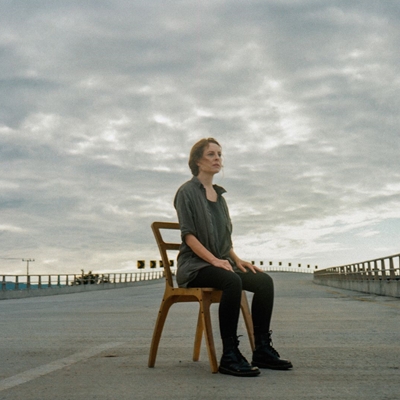
Play: Antígona González with Marina de Tavira
Teatro Adolfo Mejía
Read moreMarina de Tavira (México) stars in this play in which she plays Antígona González, a character who, just like Sophocles’ Antigone, has lost her younger brother, and seeks him in order to give him a burial. In doing so she faces threats, fears, social prejudices, family division and impotence. The work is a stage adaptation of the book of the same name by Sara Uribe, which reflects the reality of forced disappearances in Mexico. In the words of Tavira, “recently Mexico reached the official figure of a hundred and thirty thousand disappeared. This means that nearly a million people are living through horror, every day; the horror of Antígona González”.
Event HFC21
Workshop with Jairo Ojeda
Catching butterflies
Centro de Formación de la Cooperación Española (Biblioteca)
Read moreA workshop for singing songs, in order to listen to them. A workshop for “catching butterflies” in a playful and poetic sense, using the emotions. Participants will create their own songs together with the coordinator Jairo Ojeda, using the literary strategy of it looks to me. The workshop will include a conversation about the interaction between listening to and singing songs.
Event 37
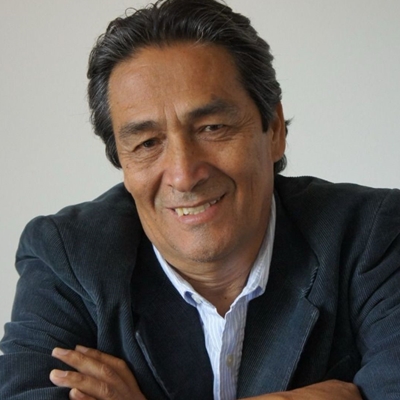
Javier Cercas in conversation with Juan Gabriel Vásquez
The atheist who spoke to the Pope
Centro de Convenciones (Auditorio Getsemaní)
Read moreThe publication of El loco de Dios en el fin del mundo coincided with the death of Pope Francis. Before this, Javier Cercas (Spain) —an atheist, anti-clerical and militant secularist— travelled to Mongolia with him: “a madman without God following God’s fool to the end of the world”. With unprecedented access, he has written a novel without the fiction, a spiritual thriller. This is Cercas at his most personal, one that resonates with successes such as The Impostor and The Anatomy of a Moment.
All events on Saturday, January 31st will be free for people with ID from the department of Bolívar. Complimentary tickets can be requested —up to capacity— at the box office of the Hay Festival (Centro de Convenciones) showing your identification on the same day the event is taking place.
Sponsored by Promigas, Surtigas and Spec and with the support of the Spanish Embassy in Colombia
Explore All Genres
- Afrodescendencias
- Latin America
- South to North
- Art
- Arts & Culture
- Children
- Culture
- Design
- Drawing
- Economics
- Equality
- Fashion
- Film
- Food
- Gender
- History
- Human Rights
- Indigenous Cultures
- Journalism
- Language
- Law
- Literature
- Music
- Nature & Environment
- Philosophy
- Photography
- Podcast
- Poetry
- Politics
- Psychology
- Religion
- Science
- Sport
- Technology
- Theatre
- Workshops
- World Affairs

Partner for Latin America

Principal Sponsors


Government Partners