Hay Festival Cartagena 2026
Event 7
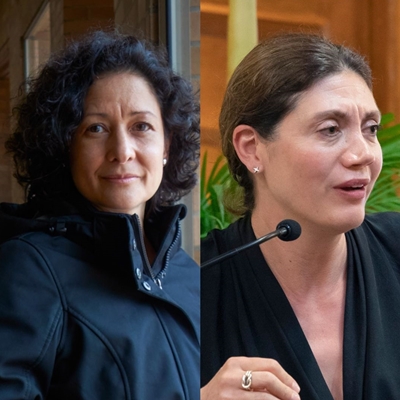
Pilar Quintana in conversation with Pilar Reyes
Noche negra: return to the Pacific
Centro de Convenciones (Auditorio Getsemaní)
Read moreIn Noche negra, Pilar Quintana (Colombia) returns to the untamed and exuberant Colombian Pacific that she portrayed so convincingly in the acclaimed novel La perra. In her latest book, the protagonist finds herself alone for four days in a setting that is both terrifying and fascinating. She feels threatened not only by nature, but by the people around her. As well as her work as a writer, Quintana has recently edited the second issue of the Biblioteca de Escritoras Colombianas. She talks to Pilar Reyes.
Event 8
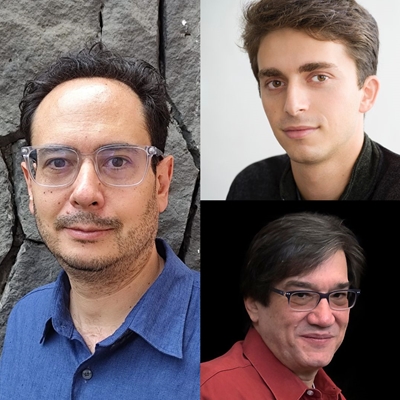
Federico Guzmán and Jordan Salama in conversation with Jaime Abello Banfi
Telling of journeys: travel writing
Centro de Convenciones (Salón Barahona)
Read moreFederico Guzmán (Mexico) won the 2022 Michael Jacobs Travel Writing Grant with his project Sí hay tal lugar: viaje a las ruinas de las utopías latinoamericanas. To write the book, he travelled to seven places in Latin America which have been the sites of utopian projects: Fordlandia, Pátzcuaro, Nueva Germania….Jordan Salama (USA) travelled the length of the River Magdalena, from its source to its mouth, writing a log of the past and present of Colombia’s most important river. The two authors will talk about their writings with Jaime Abello Banfi.
With the support of the Gabo Foundation and the Michael Jacobs Travel Writing Grant
Event 9
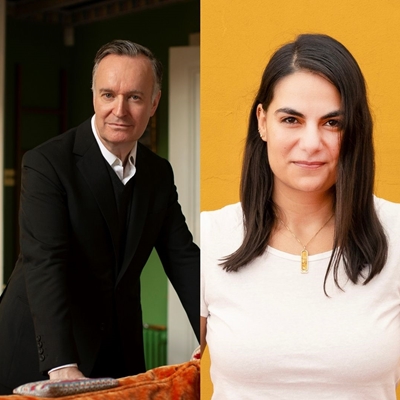
Andrew O'Hagan in conversation with Elvira Liceaga
The 'definitive' post-Brexit novel
Teatro Adolfo Mejía
Read moreAndrew O'Hagan (United Kingdom) talks to Elvira Liceaga about his latest book, Caledonian Road, the «definitive novel» about post-Brexit Great Britain. A novel with incisive insight into current social structures that builds a net of diverse characters that act as a mirror of British society.
Simultaneous interpretation from English to Spanish available
With the support of British Council
Event 10A
La Pambelé concert (General)
Centro de Convenciones (Explanada)
Read moreNoche de salsa brava con La Pambelé. La de la salsa más callejera, la reivindicativa, esa que bebe de Willie Colón y Héctor Lavoe, del Rubén Blades que grababa con Colón. Deudora del sonido que puso a bailar en las calles de Nueva York y los barrios del Caribe en los años setenta, esta orquesta originaria de Bogotá promete hacer lo propio con los asistentes al concierto inaugural del Hay Festival Cartagena de Indias 2026. Presentan Nací mestizo, álbum publicado a finales de 2024.
PULEP Code: MET232
With the support of Alcaldía de Cartagena

Event 10B
La Pambelé concert (Stalls)
Centro de Convenciones (Explanada)
Read moreNoche de salsa brava con La Pambelé. La de la salsa más callejera, la reivindicativa, esa que bebe de Willie Colón y Héctor Lavoe, del Rubén Blades que grababa con Colón. Deudora del sonido que puso a bailar en las calles de Nueva York y los barrios del Caribe en los años setenta, esta orquesta originaria de Bogotá promete hacer lo propio con los asistentes al concierto inaugural del Hay Festival Cartagena de Indias 2026. Presentan Nací mestizo, álbum publicado a finales de 2024.
PULEP Code: MET232
With the support of Alcaldía de Cartagena

Event HFC9
Encounter with Antonio Ortiz
Adolescence and literature: a bridge to understand me
Biblioteca Pública de Bayunca
Read moreLo que nunca te dije, Un silencio prohibido, MalEducada and Descubriendo a Miranda, Antonio Ortiz has become one of the most popular authors of young adult fiction in Colombia. The reason is simple: he speaks to their hearts, tackling the internal conflicts and concerns that are most relevant to them: bullying, loneliness and the breakup of relationships. It is with stories that cover such issues that he has been attracting so many young readers. This will be a close, enjoyable encounter that encourages young people to laugh at themselves, recognize their emotions, and discover how literature can help them understand themselves better.
Event HFC10
Creative Writing workshop with Rosmery Armenteros
Contar lo que somos: historias de Gambote
Centro de Formación de la Cooperación Española (Biblioteca)
Read moreGambote también puede convertirse en un libro: las aventuras, historias y tradiciones del día a día pueden plasmarse en cuentos breves rebosantes de imaginación. Rosmery Armenteros conduce este taller que fomenta la creatividad y el sentimiento de pertenencia a una comunidad de quienes tomen parte en él. Partiendo desde la palabra hablada, y combinando juegos, narraciones orales y escritura, cada participante creará un cuento breve inspirado en su territorio, y se construirá un Árbol de historias colectivas de Gambote.

Event 11
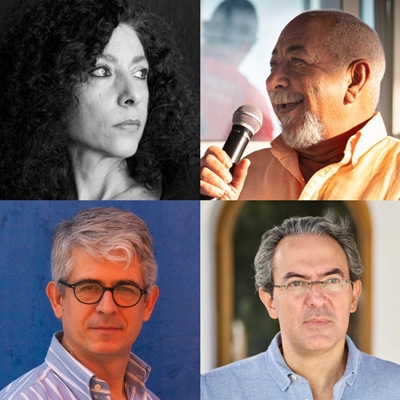
Leila Guerriero, Leonardo Padura and Juan Gabriel Vásquez in conversation with Javier Moreno
The world of El País in it’s first 50 years
Centro de Convenciones (Auditorio Getsemaní)
Read moreAs well as being three of Latin America’s most renowned writers, Leila Guerriero Argentina), Leonardo Padura (Cuba) and Juan Gabriel Vásquez (Colombia) are all El País columnists. They will talk to Javier Moreno Barber, exdirector of the Spanish newspaper, about how they tackle writing, why it is so important for the reputation of a newspaper to have high profile columnists, and how they contribute to maintaining the narrative, cultural and social bridge between Latin America and Spain.
Coorganized with EP América
Event 12
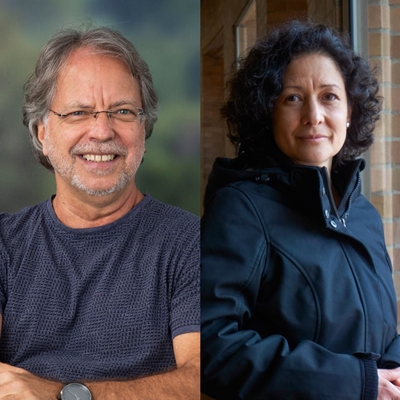
Mia Couto (digitally) in conversation with Pilar Quintana
The mapper of absences
Centro de Convenciones (Salón Barahona)
Read moreMia Couto (Mozambique) is the first Portuguese language writer to win the PEN/Nabokov Prize. He became well known for works such as Sleepwalking Land and the Sands of the Emperor trilogy. He has received many distinctions, including the Camões Prize, the Guadalajara Book Fair Award for Literature in Romance Languages, and he was shortlisted for the International Booker Prize. His most recent book, O mapeador do ausências, is his most autobiographical to date, telling the story of a Mozambican intellectual who returns to his home city, where he confronts memories of his childhood and his father, while he meets a magnetic woman with whom he shares a tangled past. In conversation with Pilar Quintana.
Mia Couto will participate virtually
Simultaneous interpretation from Portuguese to Spanish available
With the support of the Ford Foundation
Event 13
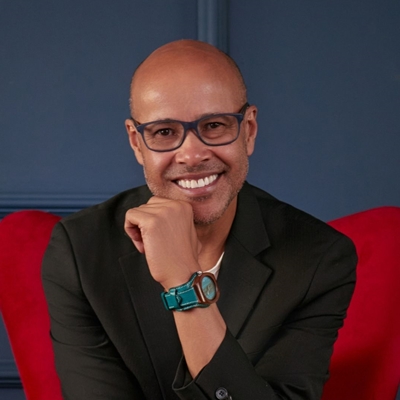
Fernando Arancón in conversation with Claudia Gurisatti
The forces that move the world
Teatro Adolfo Mejía
Read moreFernando Arancón (Spain) is the Editor of El orden mundial, the most read Spanish-language outlet covering international affairs and analysis. Its goal is not just to say what is happening, but why, and it has just published the book Las fuerzas que mueven el mundo, an illustrated work that uses maps, graphs and accessible language to explain 21st-century geopolitics and global economics. He talks to Claudia Gurisatti..
Sponsored by SURA and Bancolombia and with the support of Acción Cultural Española, AC/E
Event 14
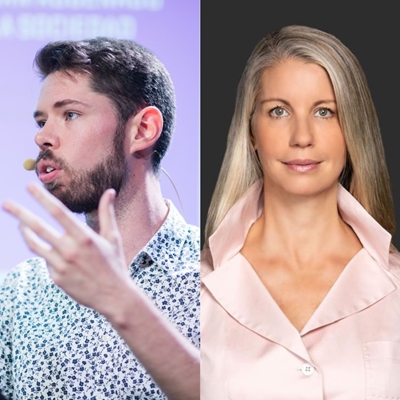
Frank Báez and Cristina Bendek in conversation with Yeniter Poleo
Writing from the Caribbean
Centro de Formación de la Cooperación Española (Patio)
Read moreFrank Báez (Dominican Republic) and Cristina Bendek (Colombia) are from different places, and their writing too occupies different latitudes — poetry and non-fiction in the first case, novels and essays in the case of Bendek. But their creative processes all take place by the shores of the same sea: the Caribbean, with images and topics bathed by the same sun. Bajo otras luces, by Báez, is the portrait of a region and a book about exile, a poet’s personal view of a territory. Los cristales de la sal, by Bendek, talks about returning to one’s roots, to San Andrés, where the protagonist starts to question her identity and relationship with the island. In conversation with Yeniter Poleo.
With the support of the Ford Foundation
Event 15
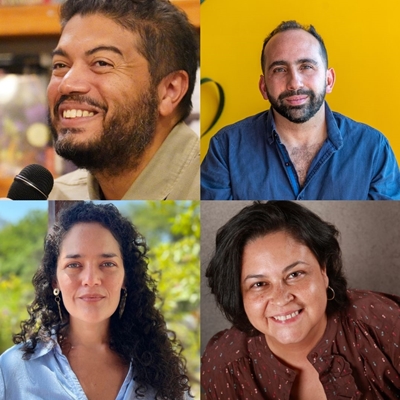
Sani Ladan and Karima Ziali in conversation with Diego Aretz
South to North Conversations: necessary histories
Palacio de la Proclamación (Auditorio Juan José Nieto)
Read moreA look at the world through non-hegemonic narratives. We will get to know more about the diversity of the great African continent with Sani Ladan (Cameroon), an expert in international relations and author of the podcast África en 1 click, and the philosopher and writer Karima Ziali (Spain/Morocco) will talk about the migratory links between Spain and North Africa, and the reality of the diaspora. In conversation with Diego Aretz.
With the support of Open Society Foundations and Acción Cultural Española, AC/E
Event HFC12
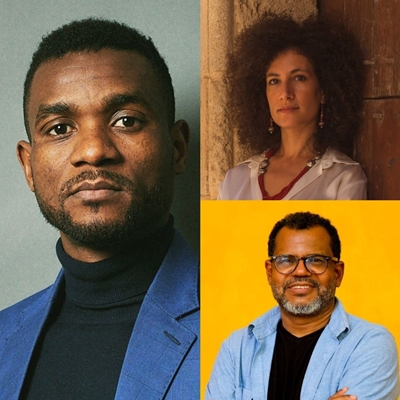
Fanzine and collage workshop with Rodrigo Paredes
Rebel media
Institución Educativa Politécnico del Pozón
Read moreStarting the workshop with the question “If you had your own media outlet, what issue would you put on the front cover?”, Rodrigo Paredes introduces the fanzine —an alternative format for popular communication—, and each participant will create their own using the technique of collage. This is an exercise for exploring creative skills and channelling energies through art.
Event HFC13
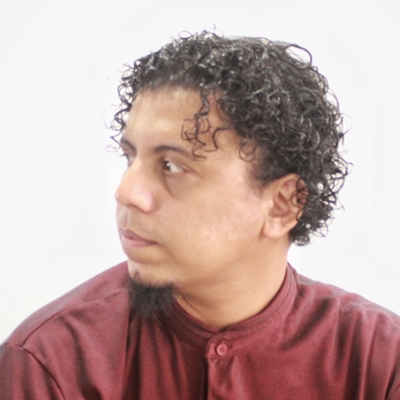
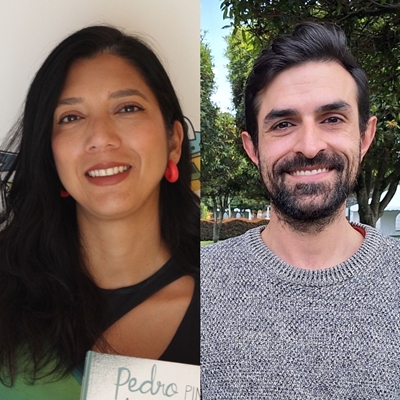
Workshop with Mónica Diago and Pedro Caballero
Ciencia magnética
Turbana (Bolívar), Centro Comunitario Cerro Norte
Read moreRespira ciencia is a collection of illustrated stories whose goal is to bring science to children. This is a project run by Ciencia Magnetica, two of whose members are Mónica Diago and Pedro Caballero, which seeks to awaken scientific curiosity among the young. Because often, children are only a story away from discovering the world of science. This session will be on the book El tití y el mojojoy.
Event HFC14
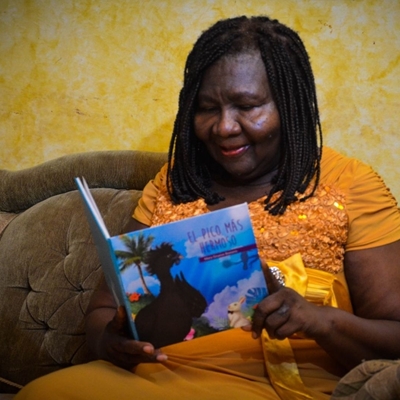
Workshop with Mary Grueso
CDI Santa Rosa
Read moreThe poet, storyteller, writer, activist and teacher Mary Grueso is the first Afro-descendent woman to be a member of the Colombian Academy of the Language. This pioneer in Afro-Colombian children’s literature, who has black children as the protagonists of her stories, is the author of entertaining books such as Agüela, se fue la nuna, about a child who wants to understand what has happened to the moon, and the modern classic La muñeca negra, a narrative poem that is now an illustrated book.
Event HFJ8
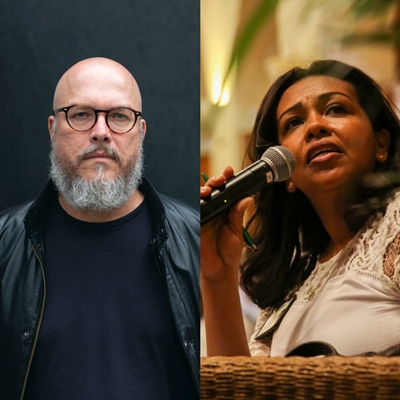
Joca Reiners Terron in conversation with Valentina Rodríguez Ayola
Death and the meteor
Universidad de Cartagena, Claustro de San Agustín (Biblioteca)
Read moreThe Brazilian writer, publisher and translator Joca Reiners Terron has written the novel O morte e o meteoro. In it, the last members of the Kaajapukugi tribe, barely surviving in the heart of the Amazon, are sent to Oaxaca, in Mexico, as political refugees. Just days before they arrive, the anthropologist responsible for the transfer dies, and then begins a story full of mystery, overflowing imagination and adventures. In conversation with Valentina Rodríguez Ayola.
Event TE1
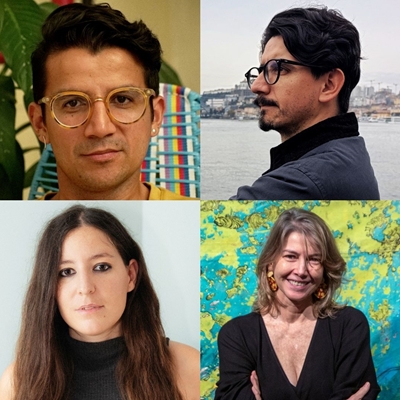
Óscar Daniel Campo, Laura C. Vela and Alejandro Villate in conversation with Catalina Villa
Editoriales indies: una hermosa historia que no cesa
Casa Benkos Biohó
Read moreAgainst all expectations, since 2020 we have seen a large and growing number of new publishing houses opening all over Latin America. Three publishers present their exciting projects: Óscar Daniel Campo (Himpar Editores, Colombia), Alejandro Villate (Yarumo Libros, Colombia) and Laura. C. Vela (Ediciones Comisura, España).
Co-organized with Librerías Cálamo and with the support of AECID and Acción Cultural Española, AC/E
Event HFC3
Workshop with Antonio Ortiz
Adolescence and literature: a bridge to understand me
Institución Educativa Politécnico del Pozón
Read moreWith books such as Lo que nunca te dije, Un silencio prohibido, MalEducada and Descubriendo a Miranda, Antonio Ortiz has become one of the most popular authors of young adult fiction in Colombia. The reason is simple: he speaks to their hearts, tackling the internal conflicts and concerns that are most relevant to them: bullying, loneliness and the breakup of relationships. It is with stories that cover such issues that he has been attracting so many young readers. This will be a close, enjoyable encounter that encourages young people to laugh at themselves, recognize their emotions, and discover how literature can help them understand themselves better.
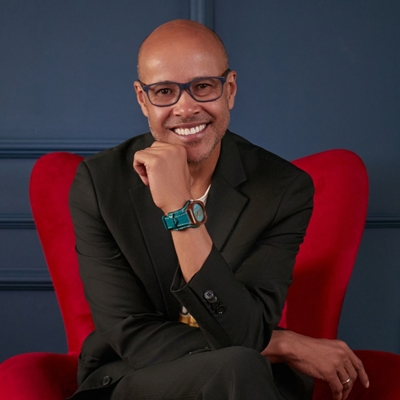
Event 16
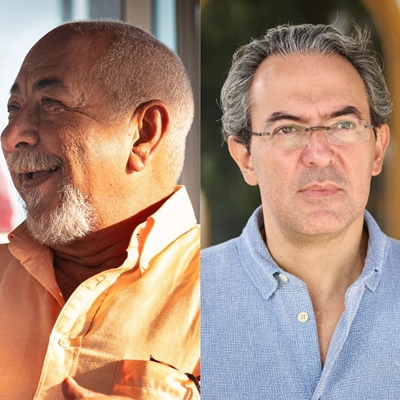
Leonardo Padura in conversation with Juan Gabriel Vásquez
Dying in the sand
Centro de Convenciones (Auditorio Getsemaní)
Read moreWith Morir en la arena Leonardo Padura returns with another masterful description of his native Cuba. He is the chronicler of a lost generation, one that has endured half a century of difficulties, and in his book Havana becomes another character, a witness to the passage of time and wasted promises. Rodolfo, marked by the patricide committed by his brother and reminders of the war in Angola, has recently retired, and intimacy with his sister-in-law, an old love, begins. With his brother, terminally ill, leaving prison and returning home, echoes of the past, long buried, haunt the present. Padura will talk about the book with the writer Juan Gabriel Vásquez (Colombia).
Sponsored by RCN and Postobón
Event 17
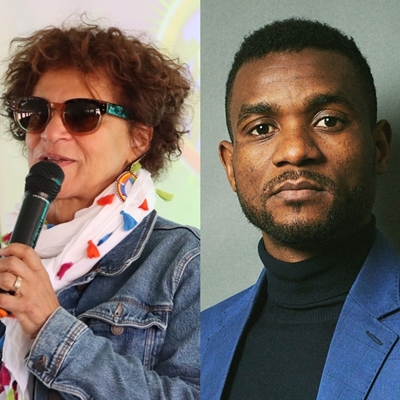
Mireille Fanon in conversation with Sani Ladan
Post-colonialism and emancipation
Centro de Convenciones (Salón Barahona)
Read moreMireille Fanon-Mendès-France (France) is a fearless speaker, ready to say exactly what she thinks. This jurist, lecturer in literature and anti-racist and anti-colonial activist is one of the most important voices in emancipatory theory and struggle: “Emancipation is not magical thinking, it demands assuming rupture”. She chairs the Frantz Fanon Foundation, continuing in the footsteps of her father, an essential author in terms of post-colonial theory: “All colonised peoples have the right to defend themselves.” Sheila talks to Sani Ladan.
Simultaneous interpretation from French to Spanish available
With the support of Ford Foundation and Acción Cultural Española, AC/E
Explore All Genres
- Afrodescendencias
- Latin America
- South to North
- Art
- Arts & Culture
- Children
- Culture
- Design
- Drawing
- Economics
- Equality
- Fashion
- Film
- Food
- Gender
- History
- Human Rights
- Indigenous Cultures
- Journalism
- Language
- Law
- Literature
- Music
- Nature & Environment
- Philosophy
- Photography
- Podcast
- Poetry
- Politics
- Psychology
- Religion
- Science
- Sport
- Technology
- Theatre
- Workshops
- World Affairs

Partner for Latin America
Principal Sponsors


Government Partners