Hay Festival Cartagena 2027
The twenty-second edition of Hay Festival Cartagena de Indias will be held from January 28 to 31. On this page you can find the events in the general programme, as well as Hay Festival Joven activities for university audiences, Hay Festival Comunitario sessions which take place in different areas of Cartagena, and Reading Clubs.
For any inquiries, please contact tickets@hayfestival.org and contacto@hayfestival.org.
Event 41
Patrick Radden Keefe in conversation with Javier Lafuente
Corruption, lies and a death to clear up
Centro de Convenciones (Auditorio Getsemaní)
Read moreSome book titles function as synopses. The full title of London Falling by the investigative journalist Patrick Radden Keefe (United States) is London Falling; A Mysterious Death in a Gilded City; and a Family’s Search for Truth. The young man? Zac Brettler, a 19-year-old compulsive liar who posed as the son of a deceased Russian oligarch. The tragedy? His suspicious death following a fall from the balcony of a luxury fifth-floor apartment overlooking the Thames, and his parents’ subsequent efforts to uncover the truth. The city? The darker side of London: a world rife with corruption, violence and dirty money. Keefe will discuss with Javier Lafuente (Spain) how he reconstructed the events leading up to Brettler’s death, as well as everything he uncovered during his meticulous investigation.
Simultaneous interpretation from English to Spanish available
All events on Saturday, January 30th will be free for people with ID from the department of Bolívar. Complimentary tickets can be requested —up to capacity— at the box office of the Hay Festival (Centro de Convenciones) showing your identification on the same day the event is taking place.
Event 42
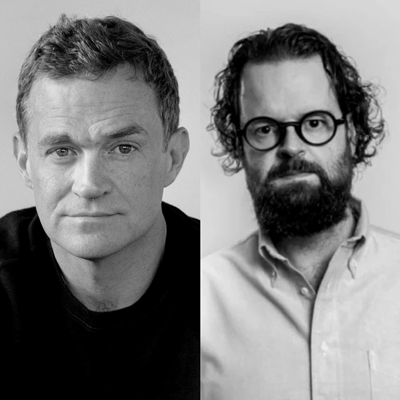
Branko Milanović in conversation with Mario Arriagada
The great transformation
Centro de Convenciones (Salón Barahona)
Read moreA new international economic order is taking shape. As global neoliberalism wanes, a different form of neoliberalism is emerging: one centred on the national market: a political economy that embraces the free market domestically while promoting protectionism and tariffs toward other nations. In The Great Global Transformation, the economist Branko Milanović (Serbia/USA) —an expert on the economics of inequality— argues that the status quo of the last 50 years has come to an end, and that from its ashes, an anti-globalist, more nationalist order is rising. Together with Mario Arriagada, he will examine the causes and consequences of this shift, which could lead to a transformation of the prevailing political and economic order.
Simultaneous interpretation from English to Spanish available
All events on Saturday, January 30th will be free for people with ID from the department of Bolívar. Complimentary tickets can be requested —up to capacity— at the box office of the Hay Festival (Centro de Convenciones) showing your identification on the same day the event is taking place.
With the support of Open Society Foundations
Event 43
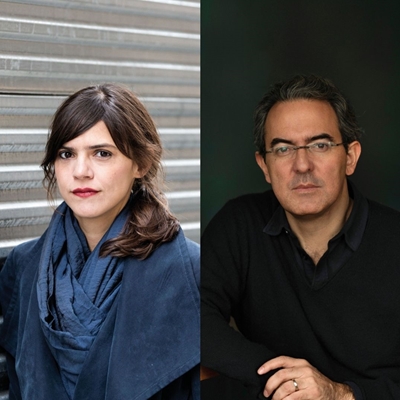
Valeria Luiselli in conversation with Juan Gabriel Vásquez
Origin, frontier, memory
Teatro Adolfo Mejía
Read moreThe books of Valeria Luiselli (Mexico) cross borders —both physical and intangible— gravitating between imagination and memory, crafting words that stitch together the fissures between essay and fiction. She feels at home in this borderland; it serves, in fact, as a foundational element of her writing. This is also true of Principio, medio, fin —her latest novel, which she will discuss with Juan Gabriel Vásquez (Colombia)— a work that reflects on time, memory, women’s history, and the origins and reinvention of things. The book centres on a mother and daughter traveling through Sicily, exploring identity and the mother’s bond with her own mother, whose mind is in decline. The author of Desierto sonoro and Los niños perdidos continues to evolve in her writing, seeking to understand that fleeting phenomenon we call life.
Accessibility: Colombian Sign Language interpretation
All events on Saturday, January 30th will be free for people with ID from the department of Bolívar. Complimentary tickets can be requested —up to capacity— at the box office of the Hay Festival (Centro de Convenciones) showing your identification on the same day the event is taking place.
Sponsored by RCN and Postobón
Event 44
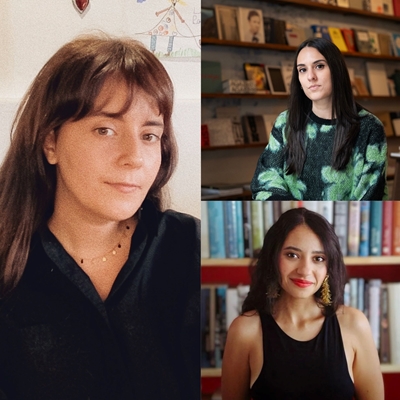
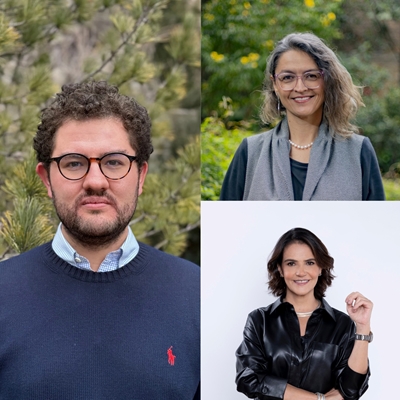
Ana Lucía Barros, Alexandra Pareja and Felipe Restrepo Pombo in conversation with Claudia Neira Bermúdez
Publishing Talent. This is no time to play around: Publishing in the Age of Editorial Intelligence
Palacio de la Proclamación (Auditorio Juan José Nieto)
Read moreArtificial Intelligence not only questions the concept of authorship, but also revolutionizes every aspect of publishing. A conversation with Ana Lucía Barros of Laguna editorial, Felipe Restrepo Pombo of Ideal magazine, and Alexandra Pareja of Angosta Editores, moderated by Claudia Neira Bermúdez.
All events on Saturday, January 30th will be free for people with ID from the department of Bolívar. Complimentary tickets can be requested —up to capacity— at the box office of the Hay Festival (Centro de Convenciones) showing your identification on the same day the event is taking place.
With the support of Agencia Española de Cooperación Internacional para el Desarrollo AECID and Librerías Cálamo
Event CL4
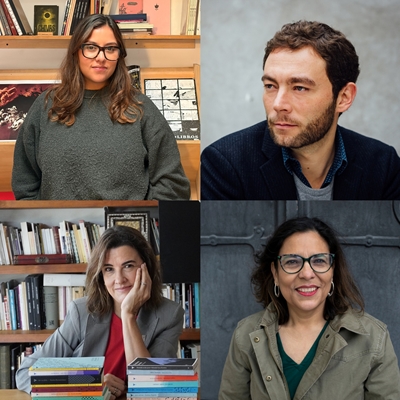
Book club with Vanessa de la Torre and Ana María Medina
The scent of the end of the world
Casa Hay Festival SURA/Bancolombia (Centro de Convenciones)
Read moreThe Hay Festival Cartagena de Indias book clubs offer intimate encounters with a selection of the festival’s featured participants. These sessions provide a space for in-depth discussion about their most recent works. In this session, Vanessa de la Torre (Colombia) speaks with Ana María Medina about El olor del fin del mundo.
Book to be read before attending

Event HFJ15
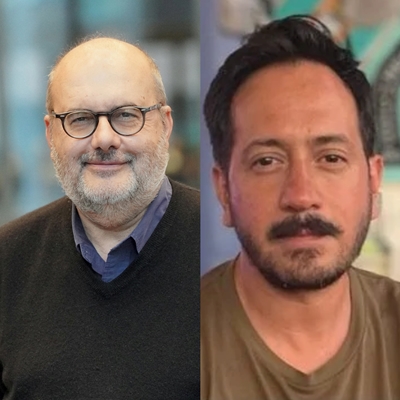
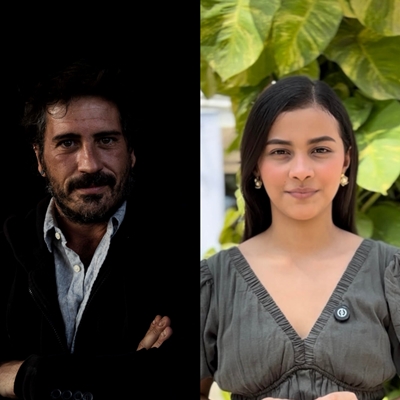
Sebastián Blanco Valiente and Jacobo García in conversation with Vanessa González
Journalism and social justice
Universidad Tecnológica de Bolívar (sede Manga)
Read moreCan a journalist report on reality without becoming personally involved in it? Should they? Where does one’s commitment to people end, and where does the duty to maintain a critical perspective begin, even when it comes to causes one personally supports? Is it possible to practice journalism independently without turning a blind eye to the injustices that surround us? Those accustomed to asking questions will, this time, have to answer them. Sebastián Blanco Valiente and Jacobo García will reflect on the responsibilities of the profession and its capacity to strengthen democracy — from the local level to the national and international spheres. In conversation with Vanessa González, UTB Social Communication student.
With the support of Acción Cultural Española, AC/E
Event HFJ14
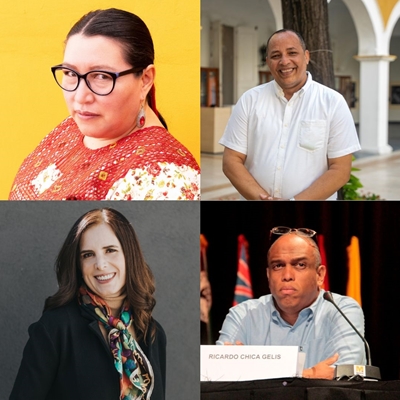
Yásnaya Elena A. Gil, Elisa Guerra and Willian Malkún Castillejo in conversation with Ricardo Chica
Education for tomorrow’s world
Universidad de Cartagena, Claustro de San Agustín (Biblioteca)
Read more“A great deal of work is needed: attempting to develop an educational system of one’s own, producing teaching materials, and guaranteeing linguistic rights”, says Yásnaya Elena A. Gil (Mexico), a researcher and linguistic rights activist. “School is the only place where learning experiences can be introduced that have the potential to impact human development”, notes Elisa Guerra (Mexico), an educator. “Education is the best vehicle for creating better opportunities — and this cannot be achieved without young people. We have the best raw material: an eager youth”, states Willian Malkún Castillejo (Colombia), Rector of the University of Cartagena. Three internationally renowned educators will discuss their visions for the future of education in conversation with Ricardo Chica (Colombia) as part of an event celebrating the bicentennial of the University of Cartagena.
Event HFC25
Event with Velia Vidal
Kákiri kákiri
Centro de Formación de la Cooperación Española (Biblioteca)
Read more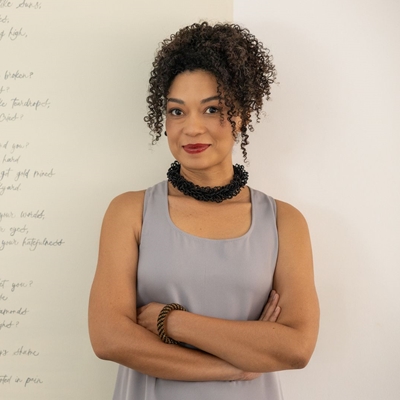
Event HFC26
Laboratory with La Chucua Récords
Pal Barrio podcast, session 2
Corporación Ruleli
Read more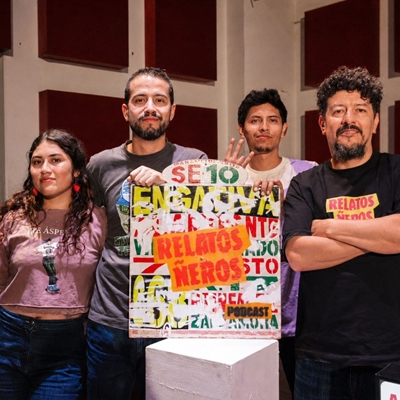
Event 45
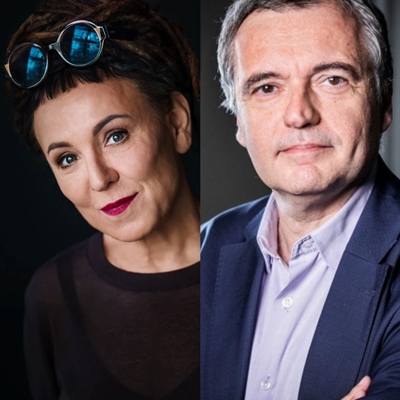
Olga Tokarczuk in conversation with Xavi Ayén
Fragments of a constellation
Centro de Convenciones (Auditorio Getsemaní)
Read moreNow, with Świata jest za dużo, we have reached what feels like the culmination of the literary career of Olga Tokarczuk (Poland), it is a fitting moment to pause and reflect on the path travelled. After all, the best part of any journey is the road itself. Primeval and Other Times first brought her to our attention; Flights —which earned her the International Booker Prize— cemented her standing; The Books of Jacob further solidified her renown; then came the Nobel Prize in 2018, followed by The Empusium. Known for prose that is accessible yet structured in a demanding way, Tokarczuk will join Xavi Ayén (Spain) to discuss her "constellation novels" — works composed of fragments that blend memoir, fiction, and brief vignettes. They will explore themes of rootedness, where the elemental and the pastoral shift into "non-places", and the concept of tenderness as a way of perceiving the world.
Simultaneous interpretation from Polish to Spanish available
All events on Saturday, January 30th will be free for people with ID from the department of Bolívar. Complimentary tickets can be requested —up to capacity— at the box office of the Hay Festival (Centro de Convenciones) showing your identification on the same day the event is taking place.
Event 46
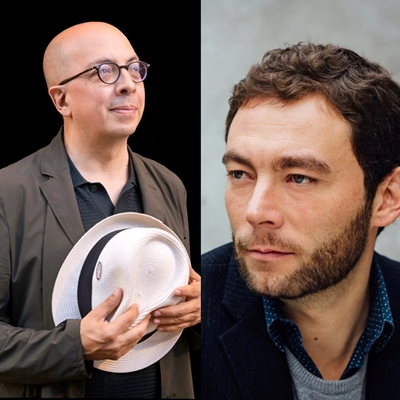
Jorge Volpi in conversation with Felipe Restrepo Pombo
Literature, Plato and algorithms
Centro de Convenciones (Salón Barahona)
Read moreMexican author Jorge Volpi returns to bookstores with La República, a dystopian work that presents a scenario disturbingly close to our own reality: what would happen if we were to cede all power to algorithms? In a post-Trump United States —where democracy has given way to something as yet undefined— Volpi explores the dilemmas and choices we face today through the lens of Nick, a unique artificial intelligence. Efficiency, dehumanization and power are just a few of the themes he will discuss with Colombian journalist Felipe Restrepo Pombo; this is a conversation that will also touch upon Plato, Shakespeare, and the role of literature as a counterweight to the relentless advance of technology.
All events on Saturday, January 30th will be free for people with ID from the department of Bolívar. Complimentary tickets can be requested —up to capacity— at the box office of the Hay Festival (Centro de Convenciones) showing your identification on the same day the event is taking place.
With the support of Revista Ideal
Event 47
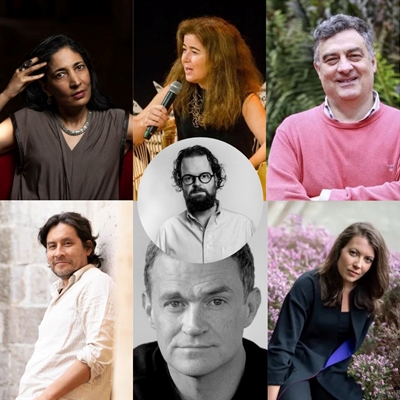
Kiran Desai, Jeremías Gamboa, Catalina Gómez Ángel, Patrick Radden Keefe, Carl Henrik Langebaek and Maria Reva in conversation with Javier Lafuente
Maps for better understanding ourselves
Teatro Adolfo Mejía
Read moreMaps are never neutral: they define borders, reflect power relations, record conflicts and reveal the ways in which societies imagine and organise the world. At a time of profound geopolitical change, marked by territorial disputes, migration, climate crises and new configurations of global power, cartographies take on renewed significance. Kiran Desai, Patrick Radden Keefe, Catalina Gómez Ángel, Jeremias Gamboa, Carl Henrik Langebaek and Maria Reva will share different ways of interpreting and narrating the world. Each will choose their own physical, cultural, linguistic or emotional map and discuss how these shape our understanding of identity, memory, territory and a sense of belonging.
Simultaneous interpretation from English to Spanish available
All events on Saturday, January 30th will be free for people with ID from the department of Bolívar. Complimentary tickets can be requested —up to capacity— at the box office of the Hay Festival (Centro de Convenciones) showing your identification on the same day the event is taking place.
With the support of Open Society Foundations and the Peruvian Embassy in Colombia
Event 48
Piedad Bonnett and Fernando Vallespín in conversation with Mario Jursich
The Generation of '27, one century on
Centro de Formación de la Cooperación Española (Patio)
Read moreIn 1927, a handful of young poets gathered in Seville to honour Góngora, three hundred years after his death. Less than a decade later, the Civil War scattered them across the Americas. In 1947, Pedro Salinas spent several weeks in Bogota, and in the 1950s, the magazine Mito paid tribute to that tradition. Did the Colombian generation of García Márquez —intent on modernizing the country— embrace it? In the presentation of a special issue of Revista de Occidente dedicated to the Generation of '27, its director, Fernando Vallespín, and Piedad Bonnett trace that journey, with Mario Jursich moderating the discussion.
All events on Saturday, January 30th will be free for people with ID from the department of Bolívar. Complimentary tickets can be requested —up to capacity— at the box office of the Hay Festival (Centro de Convenciones) showing your identification on the same day the event is taking place.
With the support of Revista de Occidente
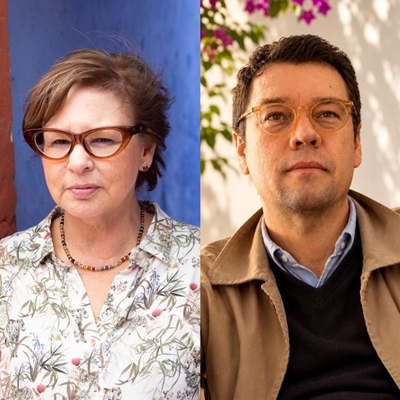
Event 49
Margarita Rosa de Francisco and Laura Mora in conversation with Camila Osorio
On film: reality told through a camera.
Palacio de la Proclamación (Auditorio Juan José Nieto)
Read moreColombian reality has been portrayed from many perspectives in film and television. From the margins, where Laura Mora has depicted a Medellín shaped by violence and inequality in films such as The Kings of the World, to the iconic characters played by Margarita Rosa de Francisco. Both have told its story through characters who inhabit the city’s most marginal urban reality, through human stories that do not reduce their characters to the circumstances surrounding them. Mora has also adapted Colombia’s most important novel, in which De Francisco plays Fernanda del Carpio. They will speak with Camila Osorio about the importance of perspective when approaching a city like Medellín properly, one that should not be portrayed the same way at the end of the last century as it is today.
All events on Saturday, January 30th will be free for people with ID from the department of Bolívar. Complimentary tickets can be requested —up to capacity— at the box office of the Hay Festival (Centro de Convenciones) showing your identification on the same day the event is taking place.
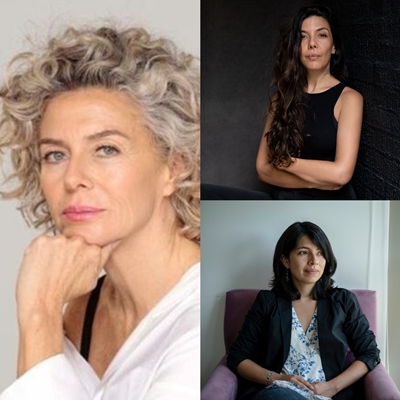
Event CL5
Book club with Juliana Gómez Nieto and Ana María Aponte
Our gifts
Casa Hay Festival SURA/Bancolombia (Centro de Convenciones)
Read moreThe Hay Festival Cartagena de Indias book clubs offer intimate encounters with a selection of the festival’s featured participants. These sessions provide a space for in-depth discussion about the guests' most recent works. In this session, Juliana Gómez Nieto (Colombia) speaks with Ana María Aponte about the book Nuestros dones.
Book to be read before attending
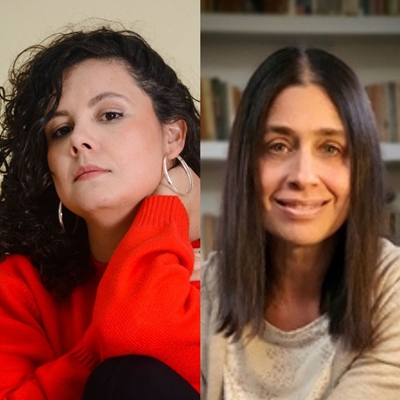
Event HFJ17
Carlos Cortés Castillo and Camilo Díaz in conversation with Jenny Ballestas
Reflections on digital disconnections
Universidad Tecnológica de Bolívar (sede Manga)
Read moreWe spend between seven and nine hours a day connected to the Internet, much of that time on social media — at the mercy of the algorithm’s insatiable offerings. Do we pay attention to the information we consume? Beyond a simple "like," to what extent do we actually interact and share? Carlos Cortés Castillo —author of the essay La zona de la máquina and a member of TikTok’s Safety and Trust Advisory Council for Latin America—and Camilo Díaz —a member of the Communication and Education Research Group at UTB— join Jenny Ballestas in a conversation exploring social media, the nature of our attention, and the growing influence of artificial intelligence in our lives.
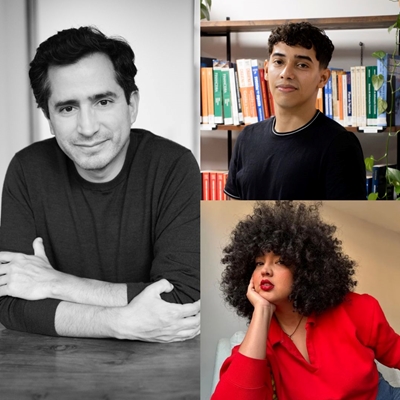
Event HFJ16
Ricardo Chica and Cristina Monge in conversation with Ariel Sudea
Understanding and managing social malaise
Universidad de Cartagena, Claustro de San Agustín (Biblioteca)
Read moreCristina Monge —a Spanish author and winner of the Paidós Essay Prize for Contra el descontento— presents a sharp analysis of our primary collective malaise: precarious economic conditions, digital loneliness, and a growing sense of disaffection toward institutions and their representatives. These phenomena are as local as they are global. The landscape may seem bleak. Even so, how can we reclaim public discourse and activate the safeguards that democracy provides? What role does education play in all of this? Monge and Ricardo Chica, Dean of the Faculty of Social Sciences and Education at the University of Cartagena, join Ariel Sudea for a conversation.
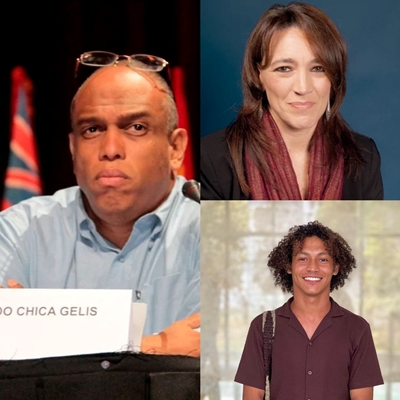
Event 50
Julia Navarro in conversation with Juan Lozano
A modern family
Centro de Convenciones (Auditorio Getsemaní)
Read moreAt the age of seventy, Martha and Thomas watch with bewilderment as the world changes. She became a principal dancer with the most prestigious ballet companies, while he is a renowned philosopher. They have a daughter, Felicitas, who runs a digital channel and is a single mother by choice. Julia Navarro, one of Spain’s most widely read and beloved novelists, talks to Juan Lozano about her latest novel, Una familia moderna, in which she reflects on contemporary life and tackles some of today’s most pressing issues, such as cancel culture and immigration.
Accessibility: Colombian Sign Language interpretation LSC
All events on Saturday, January 30th will be free for people with ID from the department of Bolívar. Complimentary tickets can be requested —up to capacity— at the box office of the Hay Festival (Centro de Convenciones) showing your identification on the same day the event is taking place.
Sponsored by RCN and Postobón and with the support of Spanish Embassy in Colombia
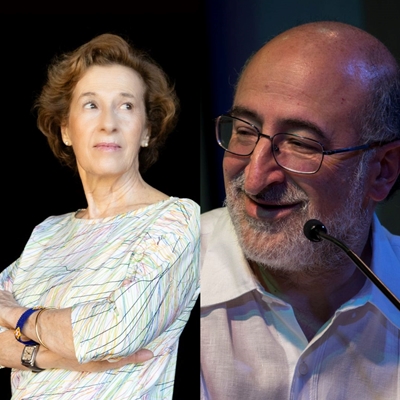
Event 51
Ece Temelkuran in conversation with Marianne Ponsford
Exile and home in the 21st century
Centro de Convenciones (Salón Barahona)
Read moreFollowing the attempted coup d’état in Turkey ten years ago, Ece Temelkuran left her country, becoming an exile — much like so many others who have felt compelled to abandon their homeland. Whether driven by armed conflict, the climate crisis, or simply the desire to live in freedom, millions of people have found themselves forced to relocate. In Nation of Strangers, the Turkish writer shares conversations with many of these individuals; the book completes a sort of trilogy alongside her previous works, How to Lose a Country and Together: A Manifesto Against a Heartless World. Reflecting on the experience of exile —and the profound sense of losing one’s home— she asks whether it is possible to reorganize our way of life in order to rebuild what has been lost. She will be in conversation with Marianne Ponsford.
Simultaneous interpretation from English to Spanish available
All events on Saturday, January 30th will be free for people with ID from the department of Bolívar. Complimentary tickets can be requested —up to capacity— at the box office of the Hay Festival (Centro de Convenciones) showing your identification on the same day the event is taking place.
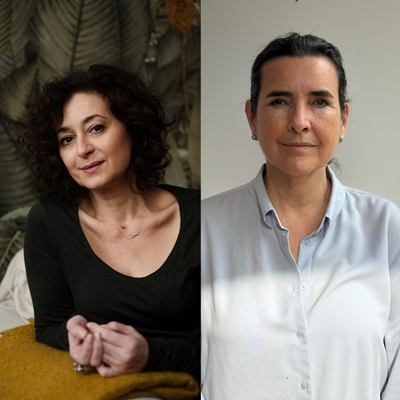
Event 52
David Uclés in conversation with Daniel Marquínez
An overwhelming obsession, a thrilling imagination
Teatro Adolfo Mejía
Read moreFew novelists from his country would have dared to approach the Spanish Civil War through the lens of magic realism, as David Uclés did in La península de las casas vacías. There is an uncommon boldness in these stylistic risks —which he navigates unscathed— as well as an intense, almost obsessive dedication; the book took him fifteen years to write — a notable detail, given that he was born in 1990. Only in this way can a work avoid being just another book about the Civil War. Following the novel that propelled him to prominence, he has published La ciudad de las luces muertas, in which various eras of Barcelona converge, leading to such improbable encounters as Pablo Picasso moving Simone Weil to tears, or Julio Cortázar creating a portrait of Carmen Laforet.
Accessibility: Colombian Sign Language interpretation
All events on Saturday, January 30th will be free for people with ID from the department of Bolívar. Complimentary tickets can be requested —up to capacity— at the box office of the Hay Festival (Centro de Convenciones) showing your identification on the same day the event is taking place.
With the support of the Spanish Embassy in Colombia
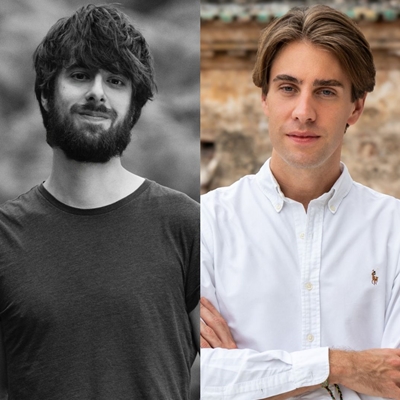
Event 53
Pablo Montoya in conversation with Vanessa Londoño
The garden of the world
Centro de Formación de la Cooperación Española (Patio)
Read moreMuch as he did in his acclaimed and memorable Tríptico de la infamia, Pablo Montoya (Colombia) returns to the subject of painting as the focus of a novel, more than a decade later. El jardín del mundo recreates the 15th and 17th centuries with remarkable power, seen through the eyes of two painters whose lives span the Low Countries, imperial Spain, and the Americas — lands only recently added to the world map. Through these two perspectives, the author explores themes such as desire, creation and wonder. He will be in conversation with Vanessa Londoño (Colombia) to discuss the work and his penchant for weaving his deep knowledge of painting into his narrative fiction.
All events on Saturday, January 30th will be free for people with ID from the department of Bolívar. Complimentary tickets can be requested —up to capacity— at the box office of the Hay Festival (Centro de Convenciones) showing your identification on the same day the event is taking place.
Event 54
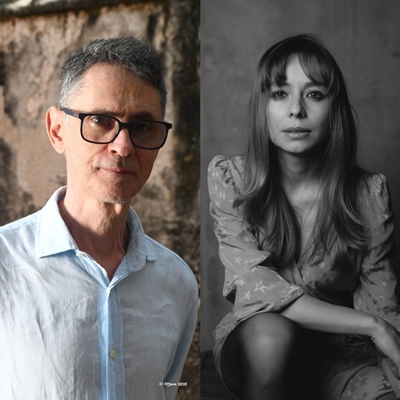
Julian Sancton in conversation with Daniel Gutiérrez Ardila
Cartagena and the search for the sunken galleon
Palacio de la Proclamación (Auditorio Juan José Nieto)
Read moreThe galleon San José was attacked by a British fleet during the Battle of Barú in 1708, ultimately sinking off the coast of Cartagena de Indias. Nearly 600 people perished, and with them, vast quantities of gold, silver, emeralds and porcelain came to rest on the seabed. As the centuries passed, the legend of the galleon’s treasure grew, yet its location remained unknown until the wreckage was discovered by Roger Dooley in 2015. In his book Neptune’s Fortune, the journalist Julian Sancton recounts Dooley’s story and the events that led to the discovery. Meanwhile, the San José remains beneath the sea. Its exact coordinates are a state secret, and there is currently an ongoing legal dispute over who owns the vessel.
Simultaneous interpretation from English to Spanish available
All events on Saturday, January 30th will be free for people with ID from the department of Bolívar. Complimentary tickets can be requested —up to capacity— at the box office of the Hay Festival (Centro de Convenciones) showing your identification on the same day the event is taking place
Event CL6
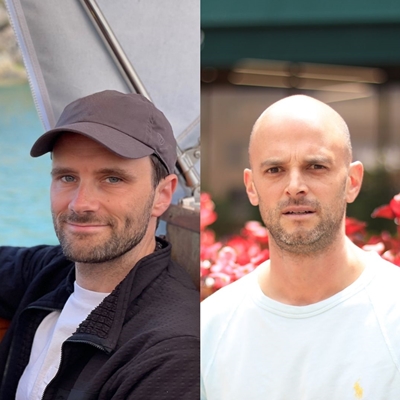
Book club with Camila Charry Noriega and Mafe Piñeres
Contracriatura
Casa Hay Festival SURA/Bancolombia (Centro de Convenciones)
Read moreThe Hay Festival Cartagena de Indias book clubs offer intimate gatherings with a selection of programme guests. They provide a space for in-depth discussion of their most recent works. In this session, Camila Charry Noriega (Colombia) will talk to Mafe Piñeres about Contracriatura.
Book to be read before attending
Event HFJ18
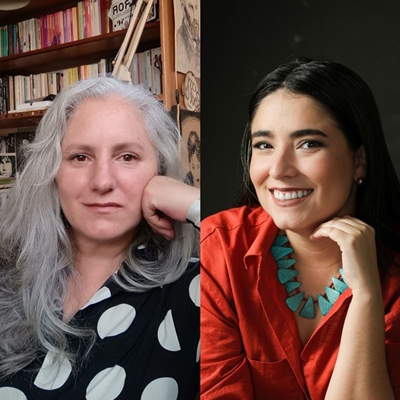
Jenny Ballestas, Sebastián Blanco Valiente and Nicole Sánchez Castillo in conversation
I want to be a content creator; where do I start?
Universidad de Cartagena, Claustro de San Agustín (Biblioteca)
Read moreMost students know Jenny Ballestas, Sebastián Blanco Valiente and Nicole Sánchez Castillo from seeing their videos on social media. All three are content creators with distinct voices and large followings among young people. But where do you even begin? Is it enough to simply have something to say and the desire to share it? Or is a deep understanding of how algorithms work, video editing, and other technical aspects required? Our three guests will share their experiences and lessons learned in the digital world during a session aimed at those looking to take their first steps — whether as a burgeoning professional path or as a way to gain a platform from which to voice their concerns.
Event HFJ19
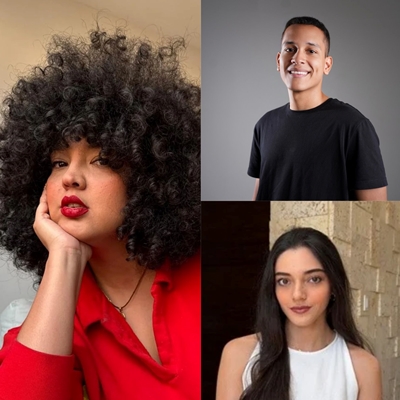
Lana Corujo and Lucía Solla Sobral in conversation with Valentina Rodríguez Ayola
The links that change us
Universidad Tecnológica de Bolívar (sede Manga)
Read moreThere are bonds that sustain us, and others that leave us teetering on the edge of a precipice — much like those explored by Lana Corujo and Lucía Solla Sobral in novels such as Han cantado bingo and Comerás flores. In the former, the bond is an ambivalent relationship between two sisters living at the foot of a volcano; in the latter, it is an unequal romantic connection entered into by a protagonist who is in the midst of grieving. Ultimately, both works delve into the less comfortable aspects of human connection, employing a narrative style that balances delicacy with raw, unflinching honesty — a topic the authors will discuss with anthropologist and cultural studies and literature researcher Valentina Rodríguez Ayola.
With the support of Acción Cultural Española, AC/E
Event 55
Homage and performance Gabo tiene quién lo narre
Centro de Convenciones (Auditorio Getsemaní)
Read moreTo mark the centenary of the birth of Gabriel García Márquez, we pay tribute to this great writer through a theatrical production that combines a carefully curated selection of texts by Piedad Bonnett with a live musical narrative. Prominent figures from the Spanish-speaking world will bring this event to life as it celebrates the Nobel laureate’s legacy and his profound impact on global culture.
All events on Saturday, January 30th will be free for people with ID from the department of Bolívar. Complimentary tickets can be requested —up to capacity— at the box office of the Hay Festival (Centro de Convenciones) showing your identification on the same day the event is taking place.
Jointly organized with Penguin Random House

Event 56
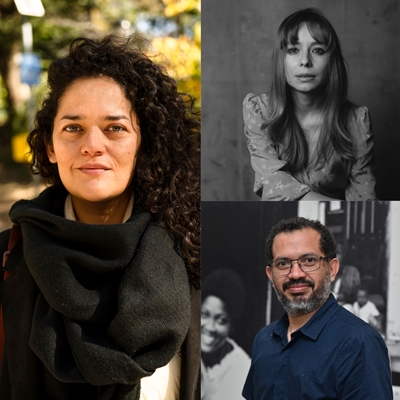
Cristina Bendek and Vanessa Londoño in conversation with Francisco Flórez
Narrative geographies
Centro de Convenciones (Salón Barahona)
Read moreVanessa Londoño —winner of the 2026 Eccles Institute & Hay Festival Global Literature Award for her book project Por las aguas de arribo— and Cristina Bendek will discuss their narrative geographies with Francisco Flórez. While the narrative maps of these two Colombian writers may differ, their emotional landscapes often draw from the same social currents. Works such as El asedio animal, Salt Crystals, and Las pérdidas explore the Caribbean, territory, the body, and grief — themes that will surely be central to the conversation.
All events on Saturday, January 30th will be free for people with ID from the department of Bolívar. Complimentary tickets can be requested —up to capacity— at the box office of the Hay Festival (Centro de Convenciones) showing your identification on the same day the event is taking place.
With the support of Eccles Institute for the Americas and Oceania at the British Library
Event 57
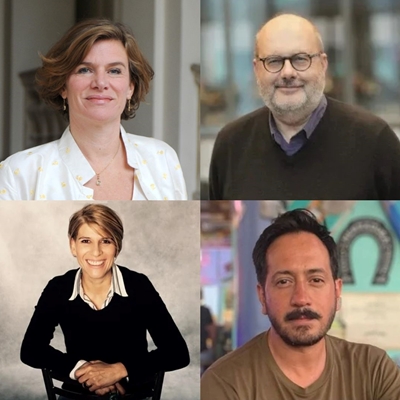
Mariana Mazzucatto, Marcela Meléndez and Branko Milanović in conversation with Mario Arriagada
The future of capitalism
Teatro Adolfo Mejía
Read moreWe are already familiar with all the ills of capitalism, such as inequality, the concentration of wealth, and even the climate crisis. Yet, at the end of the day, we continue to live in a capitalist society. For this reason, three economists —Mariana Mazzucato, Marcela Meléndez and Branko Milanovic— will bring together three distinct perspectives on potential futures of the market economy. In a conversation with Mario Arriagada, they will examine what currently works, reflect on the models best suited for society, and explore ways to reduce pressing inequality.
Simultaneous interpretation from English to Spanish available
All events on Saturday, January 30th will be free for people with ID from the department of Bolívar. Complimentary tickets can be requested —up to capacity— at the box office of the Hay Festival (Centro de Convenciones) showing your identification on the same day the event is taking place.
SURA and Bancolombia invite
Event 58
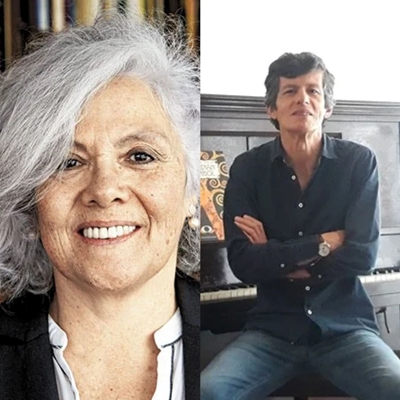
Margarita Serje in conversation with Juan Carlos Flórez
A visual history of capitalism
Centro de Formación de la Cooperación Española (Patio)
Read moreThrough 22 maps, paintings, engravings, posters and photographs, Margarita Serje (Colombia) recounts the cultural and visual history of capitalism in La vida secreta del capitalismo. She explores the subject from both its obverse —trade routes, corporations, empires, consumption, and finance— and its reverse —violence, dispossession, and ecological crisis— sides by way of short essays that address various characteristics of the capitalist system. In conversation with Juan Carlos Flórez, the anthropologist and researcher will explain the historical events that shape the story of the economic, political and social system in which we live; she will also discuss the images she selected for the book, looking into the significance of each one.
All events on Saturday, January 30th will be free for people with ID from the department of Bolívar. Complimentary tickets can be requested —up to capacity— at the box office of the Hay Festival (Centro de Convenciones) showing your identification on the same day the event is taking place
Event 59
Martín Murillo in conversation with Rosmery Armenteros
My Life in Books
Palacio de la Proclamación (Auditorio Juan José Nieto)
Read moreMy Life in Books is a new series of Hay Festival conversations in which public figures open the doors to their personal libraries and share with the audience the books that have most shaped and inspired them. Martín Murillo (Colombia) is a man inseparable from his cart; he promotes reading by pushing his mobile library throughout the Caribbean region. As the founder of La Carreta Literaria ¡Leamos! —and one of the most beloved figures in the country’s book world— he brings his cart onto the stage to discuss his passion for literature, which he considers the ultimate form of entertainment for everyday life, with Rosmery Armenteros (Colombia).
All events on Saturday, January 30th will be free for people with ID from the department of Bolívar. Complimentary tickets can be requested —up to capacity— at the box office of the Hay Festival (Centro de Convenciones) showing your identification on the same day the event is taking place.
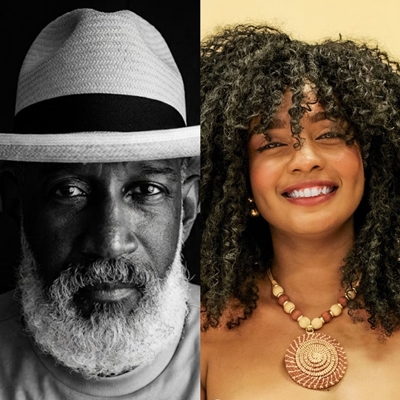
Event 60
Emma Holten, Clara E. Mattei, Marcela Meléndez and Ece Temelkuran in conversation with Máriam Martínez-Bascuñán
Who speaks for the world?
Centro de Convenciones (Auditorio Getsemaní)
Read moreUnderstanding the world also depends on who is attempting to explain it and the vantage point from which they do so. We have brought together a feminist activist (Emma Holten), a theorist of the care economy (Clara E. Mattei), a former economist of the World Bak (Marcela Meléndez) and an advocate for democracy living in exile (Ece Temelkuran) to explore who speaks for the world. In conversation with Máriam Martínez-Bascuñán, they will examine the discourses that shape our reality —through the lens of the power-economy-democracy triad— to discuss both those who make the decisions and those who bear the consequences.
Simultaneous interpretation from English to Spanish available
All events on Sunday, January 31st will be free for people with ID from the department of Bolívar. Complimentary tickets can be requested —up to capacity— at the box office of the Hay Festival (Centro de Convenciones) showing your identification on the same day the event is taking place.
With the support of Open Society Foundations and Acción Cultural Española, AC/E
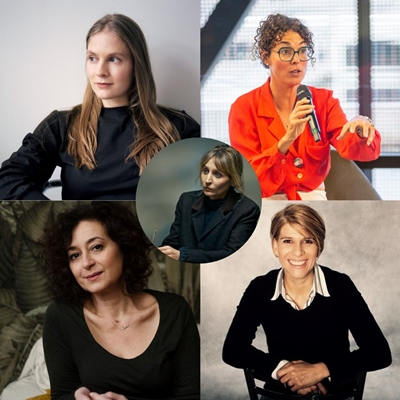
Event 61
Kiran Desai in conversation with Silvana Paternostro
Between memory and identity
Centro de Convenciones (Salón Barahona)
Read moreAfter becoming the youngest author to win the prestigious Booker Prize for The Inheritance of Loss, one might have expected Kiran Desai (India) to publish her next novel immediately. However, The Loneliness of Sonia and Sunny arrives only after two decades spent slowly simmering her memories of India. As in her previous novel, the story unfolds between the United States and India — but also in Mexico, where she lived for a time, which helped her view American influence through a different lens. The story of Sonia and Sunny is one of love, migration, and displacement and, above all, of the various forms of loneliness that emerge on the margins.
Simultaneous interpretation from English to Spanish available
All events on Sunday, January 31st will be free for people with ID from the department of Bolívar. Complimentary tickets can be requested —up to capacity— at the box office of the Hay Festival (Centro de Convenciones) showing your identification on the same day the event is taking place.
With the support of Open Society Foundations
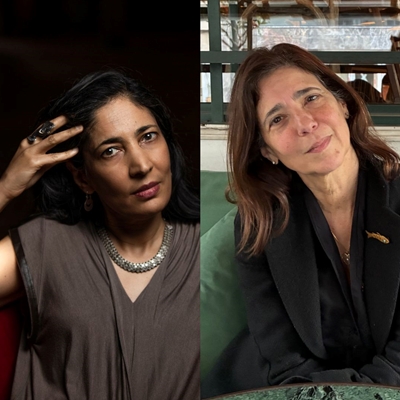
Event 62
Sofia Andrukhovych and Tatiana Țîbuleac in conversation with Elianna Kan
Who owns European memory?
Teatro Adolfo Mejía
Read moreWho defines the borders of Europe when it comes to European memory? Do they lie at the Urals, or much further west? For many years, Western Europe has dominated the narrative, while the accounts of other countries have been relegated to the margins. Two writers from Eastern Europe —novelist Sofia Andrukhovych (Ukraine), and author Tatiana Țîbuleac (Moldova/Romania)— explore the fragile relationship between personal memory and collective history in their fiction. In conversation with Elianna Kan (United States), they invite us to question traditional narratives regarding European identity and to reconsider who holds the power to tell the story of Europe.
Simultaneous interpretation from English to Spanish available
All events on Sunday, January 31st will be free for people with ID from the department of Bolívar. Complimentary tickets can be requested —up to capacity— at the box office of the Hay Festival (Centro de Convenciones) showing your identification on the same day the event is taking place.
With the support of Open Society Foundations
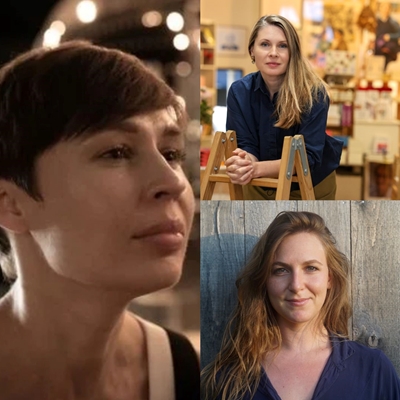
Event 63
Jacobo García in conversation with María Alejandra Villamizar
Light years: two decades covering Latin America
Centro de Formación de la Cooperación Española (Patio)
Read moreOver the two decades he has spent reporting in Latin America, the Spanish journalist Jacobo García has covered more than 30 elections, two coups d’état, and numerous natural disasters. His extensive experience is captured in Años luz —winner of the Anagrama Chronicle Prize/Giangiacomo Feltrinelli Foundation Award— in which he revisits unpublished notes from his journals to explore recurring themes: violence, authoritarianism, the climate emergency, the courage of women and the power of culture. In conversation with María Alejandra Villamizar, he will reflect on the realities of Latin America over the last twenty years —as seen through his own eyes and recorded by his pen— and share stories of the people he has encountered along the way.
All events on Sunday, January 31st will be free for people with ID from the department of Bolívar. Complimentary tickets can be requested —up to capacity— at the box office of the Hay Festival (Centro de Convenciones) showing your identification on the same day the event is taking place.
With the support of Acción Cultural Española, AC/E
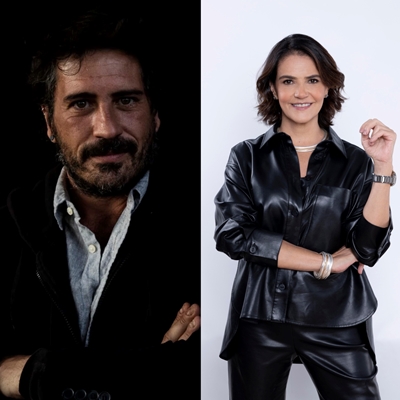
Event 64
Héctor Abad Faciolince in conversation with Mario Jursich
Going back to the books that made us
Palacio de la Proclamación (Auditorio Juan José Nieto)
Read moreSignos de admiración presents two sides of Héctor Abad Faciolince (Colombia): the reader and the writer. It is an autobiography that functions as a personal library —a collection of the authors who have shaped his life, such as Kipling, Borges, Rulfo, and Cervantes...— and serves as an intimate map, a self-portrait of a writer defined by his reading. The book brings together essays, lectures and pieces of literary criticism. The author of Oblivion: A Memoir will engage in a conversation with Mario Jursich about those writers who left their mark on him — authors to whom one, whether as a writer or a reader, always returns. For, in a sense, life is always about returning.
All events on Sunday, January 31st will be free for people with ID from the department of Bolívar. Complimentary tickets can be requested —up to capacity— at the box office of the Hay Festival (Centro de Convenciones) showing your identification on the same day the event is taking place.
With the support of the Agencia Española de Cooperación Internacional para el Desarrollo AECID and Librerías Cálamo
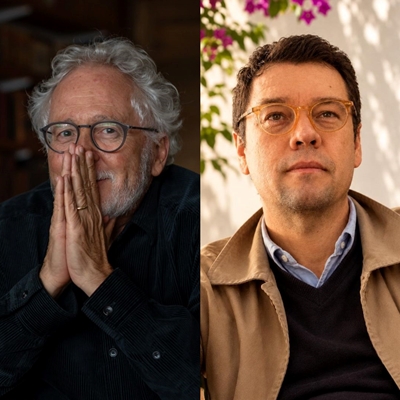
Event HFC27
Fanzine laboratory with Rodrigo Paredes
Pocket-sized stories 2
Biblioteca Popular de Playa Blanca
Read more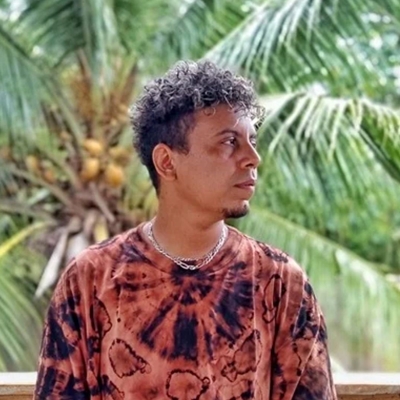
Event 65
Alma Guillermoprieto in conversation
Reporting the continent
Centro de Convenciones (Auditorio Getsemaní)
Read moreEsta improbable tierra prometida serves as a living chronicle of an entire continent. It is Latin America as seen through the eyes and pen of the reporter Alma Guillermoprieto (Mexico) — a compendium of violence, power, and beauty that forms her third volume of reports dedicated to the region, completing a portrait of tragedy and glory in the age of populism and demagoguery. It features interviews with murderers and the families of their victims; conversations with thoughtful politicians and heads of state; as well as with artists, street sweepers, and more. It is Latin America as it has been in recent years.
Accessibility: Colombian Sign Language interpretation
All events on Sunday, January 31st will be free for people with ID from the department of Bolívar. Complimentary tickets can be requested —up to capacity— at the box office of the Hay Festival (Centro de Convenciones) showing your identification on the same day the event is taking place.
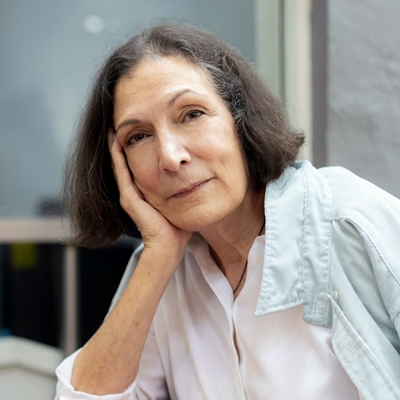
Event 66
Lucas Marín Llanes and María Alejandra Vélez in conversation with María Alejandra Villamizar
Drugs: economy, power and politics
Centro de Convenciones (Salón Barahona)
Read moreIllegal drug markets affect the economies and daily lives of millions of people in Latin America. The armed groups that control these markets do not merely traffic drugs; they also govern and impose the rules of everyday life on more than 14% of the region’s population. Meanwhile, the war on drugs has failed to reduce either production or consumption, and it has harmed vulnerable communities far more than the organizations it seeks to weaken. The researchers Lucas Marín Llanes and María Alejandra Vélez join María Alejandra Villamizar to discuss their new book, Del cultivo al consumo, which synthesizes what is known about how these markets operate in Colombia and proposes ways to reduce violence and poverty.
All events on Sunday, January 31st will be free for people with ID from the department of Bolívar. Complimentary tickets can be requested —up to capacity— at the box office of the Hay Festival (Centro de Convenciones) showing your identification on the same day the event is taking place.
Event 67
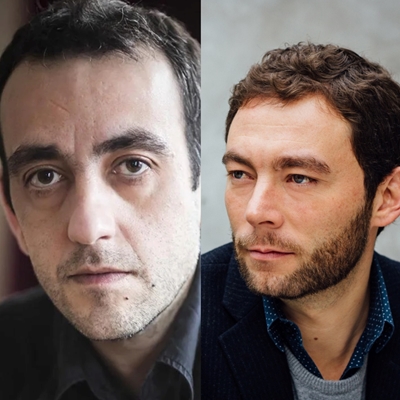
Jérôme Ferrari in conversation with Felipe Restrepo Pombo
The island of the murdered tourist
Teatro Adolfo Mejía
Read moreIn his most recent novel, Nord Sentinelle, the Goncourt Prize winner Jérôme Ferrari (France) reflects on how tourism and greed corrupt the land and the character of those who inhabit it. A biting, tragicomic satire on tourism and human stupidity, the book explores family heritage, violence, and the disillusionment that comes with discovering that we are less than we once believed ourselves to be. In conversation with Felipe Restrepo Pombo (Colombia), the Corsican author will discuss his prolific literary body of work — which includes titles such as À son image and Le sermon sur la chute de Rome—that has established him as one of the most significant voices in contemporary French literature.
Simultaneous interpretation from French to Spanish available
All events on Sunday, January 31st will be free for people with ID from the department of Bolívar. Complimentary tickets can be requested —up to capacity— at the box office of the Hay Festival (Centro de Convenciones) showing your identification on the same day the event is taking place.
Event 68
Sofia Andrukhovych in conversation with Héctor Abad Faciolince
Novels to shed light on a country
Palacio de la Proclamación (Auditorio Juan José Nieto)
Read moreWhat does one write about when one’s country is being invaded and thousands of people are dying in a war? Sofia Andrukhovych (Ukraine) explores the past and present reality of Ukraine, structuring her novel Amadoka around three distinct periods: post-EuroMaidan Ukraine and the Russian invasion; the Holocaust during the Second World War; and the Stalinist repressions of the 1930s.
Simultaneous interpretation from English to Spanish available
All events on Sunday, January 31st will be free for people with ID from the department of Bolívar. Complimentary tickets can be requested —up to capacity— at the box office of the Hay Festival (Centro de Convenciones) showing your identification on the same day the event is taking place.

Explore All Genres
- Afrodescendencias
- Latin America
- Adventure
- Architecture
- Arts & Culture
- Biography
- Children
- Crime
- Culture
- Economics
- Education
- Equality
- Fiction
- Film
- Food & Travel
- Futures
- Gender
- Geography
- Heritage
- History
- Human Rights
- Ideas
- Indigenous Cultures
- Journalism
- Literature
- Memoir
- Music
- Nature & Environment
- Performance
- Philosophy
- Philosophy & Religion
- Photography
- Podcast
- Poetry
- Politics
- Psychology
- Science
- Society & Health
- Spanish Language
- Technology
- Theatre
- Thinking
- Travel
- World Affairs

Partner for Latin America

Principal Sponsors


Government Partners