Hay Festival Cartagena 2024
Hay Festival Cartagena de Indias 2024 was held from 25 to 28 January. In this page you can find the events in the general programme as well as Hay Joven activities for university audiences, Hay Comunitario sessions which took place in different areas of Cartagena, Reading Clubs and Talento Editorial.
Events video and audio is available on Hay Festival Anytime.
Event 39
Catalina Gómez Ángel and Janne Teller in conversation with José Manuel Acevedo
South to North Conversations: The world is different after Gaza
Teatro Adolfo Mejía
Read moreAfter the ceasifre agreement between Israel and Hamas, a new era has opened up for the people of Gaza: to build a peace amidst the rubble of war and barbarism, all in a context of the most powerful uncertainty. What the future will bring will be the subject of a discussion among journalist Catalina Gómez Ángel and Janne Teller, whose most recent novel, Justicia, is set against the backdrop of the Palestinian-Israeli conflict. With the moderator José Manuel Acevedo.
Simultaneous interpretation from English to Spanish available
All events on Saturday, January 31st will be free for people with ID from the department of Bolívar. Complimentary tickets can be requested —up to capacity— at the box office of the Hay Festival (Centro de Convenciones) showing your identification on the same day the event is taking place.
With the support of Open Society Foundations
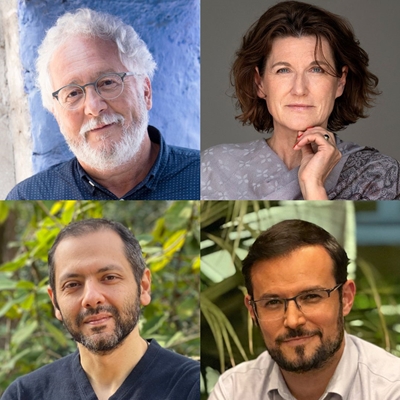
Event 40
Cristina Bendek and Carlos Granés in conversation with Cristina Fuentes La Roche
Other histories from the Archivo de Indias
Centro de Formación de la Cooperación Española (Patio)
Read moreOtras historias del Archivo de Indias, edited by Erna von der Walde, is an anthology compiling texts by ten recognised Ibero-American authors, who have created short stories based on documents preserved in the Archivo General de Indias. This Hay Festival and CAF project aims to make public some of the archives’ huge store of documents, rescuing some of the many stories, from a great variety of voices, recorded there. Two of the writers participating in the initiative, the Colombians Cristina Bendek and Carlos Granés, will discuss the anthology with Cristina Fuentes La Roche, International Director of the Hay Festival. The book will be published in September 2026.
All events on Saturday, January 31st will be free for people with ID from the department of Bolívar. Complimentary tickets can be requested —up to capacity— at the box office of the Hay Festival (Centro de Convenciones) showing your identification on the same day the event is taking place.
Sponsored by CAF
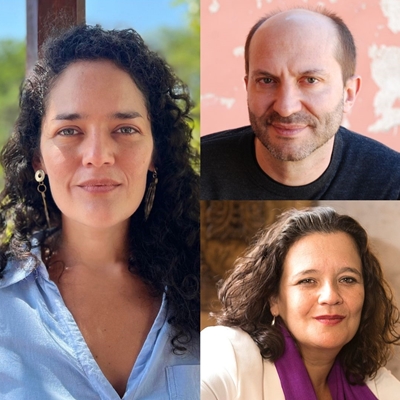
Event 41
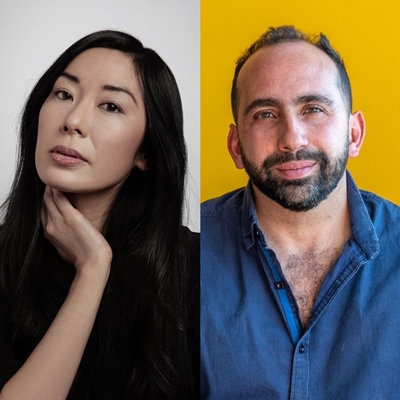
Katie Kitamura and Andrew O’Hagan in conversation with Daniel Alarcón
Palacio de la Proclamación (Auditorio Juan José Nieto)
Read moreTwo of the most distinctive voices in contemporary literature, Katie Kitamura (USA) and Andrew O’Hagan (UK) will talk about their most recent books to be published in Spanish, Audition, shortlisted for the 2025 Booker Prize, and Caledonian Road, the “definitive novel” about post-Brexit UK. Two novels that offer incisive inquiry into our current social structures: Kitamura, on the emotional hierarchies of an intimate relationship; O’Hagan, building a network of varied characters that works as a mirror on British society today. In conversation with Daniel Alarcón.
Simultaneous translation from English to Spanish available
All events on Saturday, January 31st will be free for people with ID from the department of Bolívar. Complimentary tickets can be requested —up to capacity— at the box office of the Hay Festival (Centro de Convenciones) showing your identification on the same day the event is taking place.
With the support of British Council
Event 44
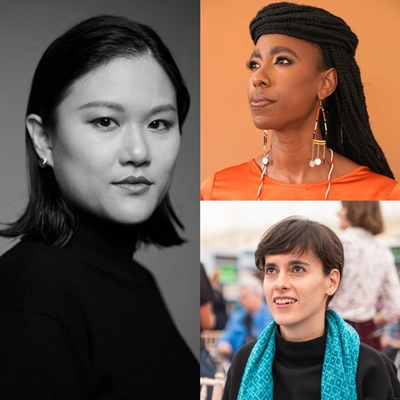
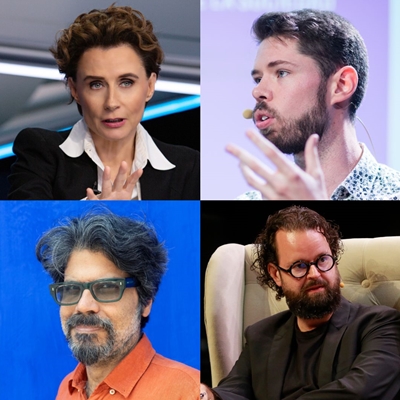
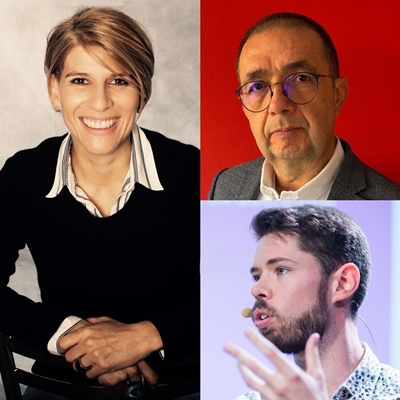
Karen Hao, Chao Tayiana and Carissa Véliz in conversation with Luhan Gabel
The hidden side of artificial intelligence
Centro de Convenciones (Salón Barahona)
Read moreAll that glitters in the world of artificial intelligence is not gold. The friendly side of the tools that in principle make our lives easier have an unknown dark side, as explained by Karen Hao ((USA), Chao Tayiana (Kenya) and Carissa Véliz (UK). It is not a matter of sounding the alarm, more a matter of bringing to light what we do not know about these new technologies: a massive and unprecedented consumption of energy resources, exploited workers in the global South, algorithmic manipulation, loss of privacy when we give over our data, and other problems that we, as users, are rarely aware of. They talk to Luhan Gabel.
Simultaneous interpretation from English to Spanish available
All events on Saturday, January 31st will be free for people with ID from the department of Bolívar. Complimentary tickets can be requested —up to capacity— at the box office of the Hay Festival (Centro de Convenciones) showing your identification on the same day the event is taking place.
Sponsored by SURA and Protección and with the support of Open Society Foundations and Acción Cultural Española, AC/E
Event HFC23
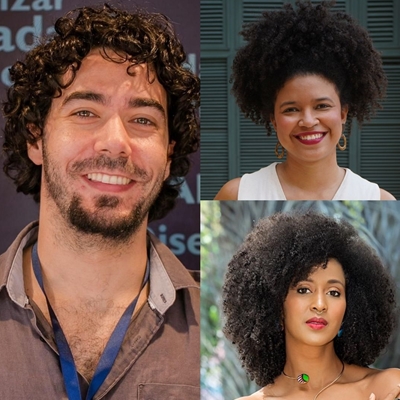
Pablo Muñoz, Laura Romero and Edna Liliana Valencia in conversation
Can I touch your hair?
Institución Educativa Politécnico del Pozón
Read moreA question that may seem to be an innocent one conceals a history of exoticisation and resistance. For many people of African heritage, hair is much more than a part of the body, it is identity, memory and pride. The long essay ¿Te puedo tocar el pelo? De la negación al exotismo: Experiencias en torno al pelo afro explores the relationship between hair, self-esteem and history, looking at the historical value of hair in African and Afro-descendent societies. A conversation with Pablo Muñoz, Laura Romero and Edna Liliana Valencia. Because hair is also an anti-colonial political struggle.
Event HFC24
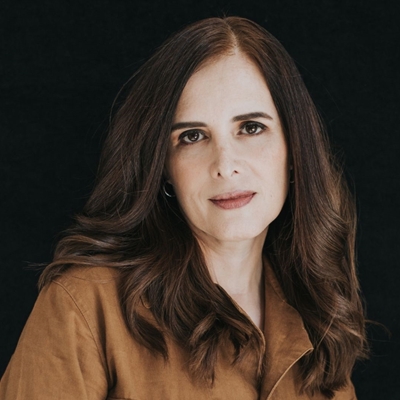
Storytelling with Elisa Guerra
Jacaranda and Hummingbird
Biblioteca Pública de Clemencia
Read moreWhere do loved ones go when they are no longer here? What can trees teach us about care, grief and memory? Based on one of the stories in her book Las voces de los árboles, the Mexican educator Elisa Guerra will present a story for exploring how pain and loss can become gratitude and resilience.
Event HFC25
Encounter with Antonio Ortiz
Adolescence and literature: a bridge to understand me
Nelson Mandela, Ludoteca Sonrisas de Cartagena
Read moreWith books such as Lo que nunca te dije, Un silencio prohibido, MalEducada and Descubriendo a Miranda, Antonio Ortiz has become one of the most popular authors of young adult fiction in Colombia. The reason is simple: he speaks to their hearts, tackling the internal conflicts and concerns that are most relevant to them: bullying, loneliness and the breakup of relationships. It is with stories that cover such issues that he has been attracting so many young readers. This will be a close, enjoyable encounter that encourages young people to laugh at themselves, recognize their emotions, and discover how literature can help them understand themselves better.
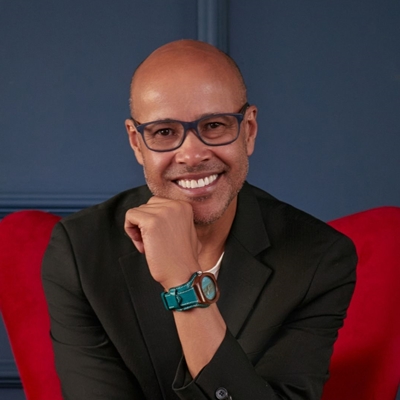
Event HFC26
Workshop with Edgar Rodríguez
Dulce de Coco
Biblioteca Popular de Playa Blanca
Read moreThe Cartagena writer, performer and storyteller Edgar Rodríguez offers a workshop about reading, memory and tradition using the book Dulce de Coco. The event brings us the cultural traditions of the Colombian Caribbean through exercises in raising awareness, musical rounds, readings, a discussion and the creation of “recipe huts”.
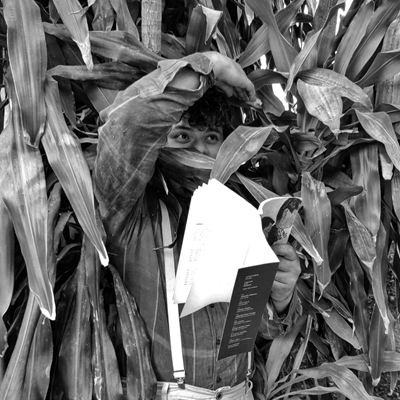
Event 38
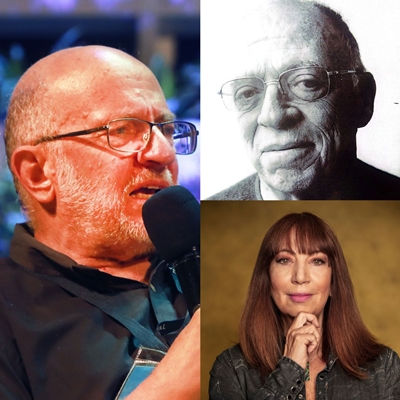
Daniel Samper Pizano and Enrique Santos in conversation with María Jimena Duzán
Conversations among friends
Centro de Convenciones (Auditorio Getsemaní)
Read moreDaniel Samper Pizano and Enrique Santos are two of the sharpest commentators and analysts of Colombian current affairs. Whether via the digital platform Los Danieles, columns, analysis or memoires, they have spent over four decades closely following the national political panorama — sometimes at first hand. Sometimes offering shared perspectives, at other times their views have been opposing. They are in the process of finishing a book that tells the story of both voices. With the provisional title of Memorias charladas, it will gather their journalistic memories, full of humor, anecdotes and reflections around the practice of the profession in Colombia. Accompanied on stage by María Jimena Duzán.
All events on Saturday, January 31st will be free for people with ID from the department of Bolívar. Complimentary tickets can be requested —up to capacity— at the box office of the Hay Festival (Centro de Convenciones) showing your identification on the same day the event is taking place.
Event 42
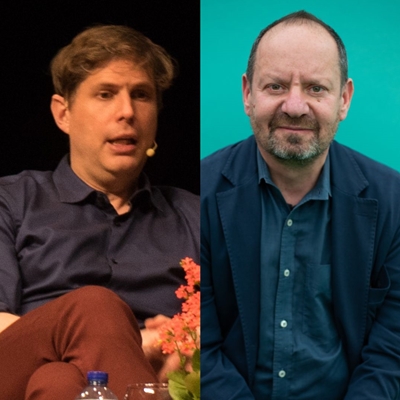
Daniel Kehlmann in conversation with Philippe Sands
The director’s ethical dilemma
Teatro Adolfo Mejía
Read moreHow did one of the greatest film directors of his time come to be working for Joseph Goebbels? G. W. Pabst fled the rise of Nazism, taking refuge in Hollywood, where he was a failure. His mother’s illness brought him back to his native Austria, now under the yoke of the Third Reich, where the Nazis attempted to entice him into their propaganda apparatus. After captivating us with novels such as F and Tyll —shortlisted for the Booker Prize—, Daniel Kehlmann (Germany) tells the story of this director, who faced the moral and artistic dilemma of collaborating with the Nazi regime in exchange for saving himself and being able to continue making films. He talks to Philippe Sands.
Simultaneous interpretation from English to Spanish available
All events on Saturday, January 31st will be free for people with ID from the department of Bolívar. Complimentary tickets can be requested —up to capacity— at the box office of the Hay Festival (Centro de Convenciones) showing your identification on the same day the event is taking place.
With the support of the Goethe-Institut
Event 43
Fernando Arancón, Denise Maerker and Pankaj Mishra in conversation with Javier Lafuente
Media organisations outside the Anglo-centric world
Palacio de la Proclamación (Auditorio Juan José Nieto)
Read moreThere is journalism beyond the major media corporations of the United States and the United Kingdom. There are many issues to cover and many perspectives to understand, above and beyond those on the Western, English-speaking agenda. On rowing against the current and the importance of speaking about one’s own issues and from one’s own viewpoint we have Fernando Arancón (Spain), Director de El orden mundial; journalist Denise Maerker (Mexico) and Pankaj Mishra (India), an essayist and creator of magazine Equator talk to El País journalist Javier Lafuente.
Simultaneous interpretation from English to Spanish available
All events on Saturday, January 31st will be free for people with ID from the department of Bolívar. Complimentary tickets can be requested —up to capacity— at the box office of the Hay Festival (Centro de Convenciones) showing your identification on the same day the event is taking place.
With the support of Open Society Foundations and Acción Cultural Española, AC/E
Event 45
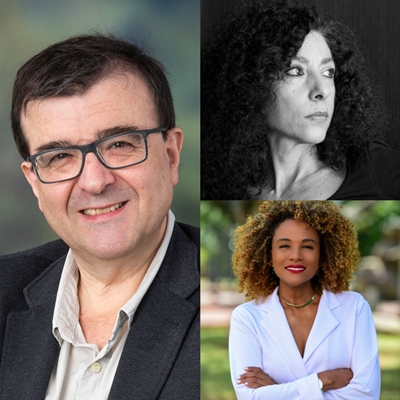
Javier Cercas and Leila Guerriero in conversation with Mábel Lara
Memory, truth and history
Centro de Convenciones (Salón Barahona)
Read moreBetween fiction and non-fiction there is a fertile land where memory, truth and history mingle. Javier Cercas (Spain) and Leila Guerriero (Argentina) have made this space their field of exploration with novels that are living testimonies and chronicles bursting with narrative. In conversation with Mábel Lara (Colombia), they will talk about these three themes, constants in their work, and about how to pick which path when it comes to telling stories.
All events on Saturday, January 31st will be free for people with ID from the department of Bolívar. Complimentary tickets can be requested —up to capacity— at the box office of the Hay Festival (Centro de Convenciones) showing your identification on the same day the event is taking place.
With the support of the Spanish Embassy in Colombia
Event HFJ15
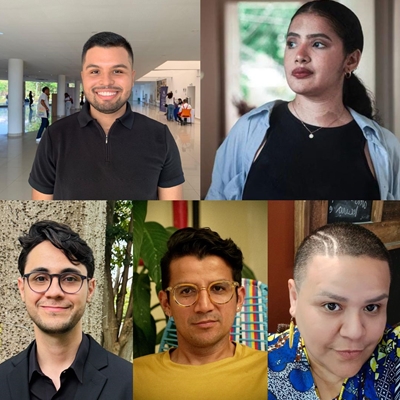
Omar Lubo, Lusdary Martínez y Piero Pradilla in conversation with Óscar Daniel Campo y Mar Ortega
Encender la página: crear en espacios académicos
Universidad de Cartagena, Claustro de San Agustín (Biblioteca)
Read more¿Cómo se encienden las ideas creativas e investigativas en la academia? Estudiantes y docentes de la Maestría en Literatura y Escrituras Creativas de la Universidad del Norte se reúnen para explorar qué ocurre cuando teoría y práctica se encuentran y qué tensiones y hallazgos surgen en ese cruce. Una mirada a la universidad como un laboratorio vivo que acompaña escrituras con ambición estética y pensamiento crítico. Los cursantes de la maestría Omar Lubo, Lusdary Martínez y Piero Pradilla conversan con Óscar Daniel Campo y Mar Ortega.
Event HFC27
Encounter with Antonio Ortiz
Adolescence and literature: a bridge to understand me
Centro de Formación de la Cooperación Española (Biblioteca)
Read moreWith books such as Lo que nunca te dije, Un silencio prohibido, MalEducada and Descubriendo a Miranda, Antonio Ortiz has become one of the most popular authors of young adult fiction in Colombia. The reason is simple: he speaks to their hearts, tackling the internal conflicts and concerns that are most relevant to them: bullying, loneliness and the breakup of relationships. It is with stories that cover such issues that he has been attracting so many young readers. This will be a close, enjoyable encounter that encourages young people to laugh at themselves, recognize their emotions, and discover how literature can help them understand themselves better.
Event HFC28
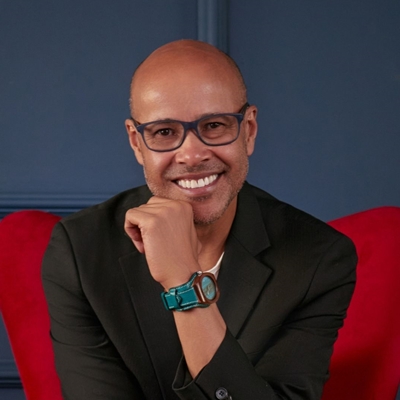
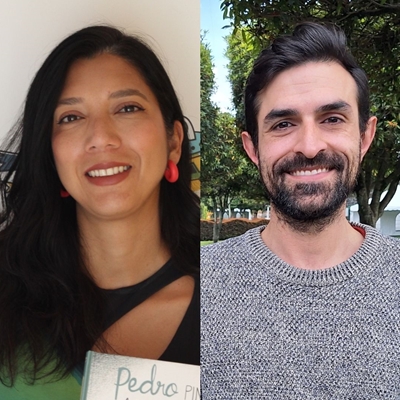
Workshop with Mónica Diago and Pedro Caballero
Ciencia magnética
Biblioteca Pública de Pontezuela
Read moreRespira ciencia is a collection of illustrated stories whose goal is to bring science to children. This is a project run by Ciencia Magnetica, two of whose members are Mónica Diago and Pedro Caballero, which seeks to awaken scientific curiosity among the young. Because often, children are only a story away from discovering the world of science. This session will be on the book Pedro pintado, el jaguar desafinado.
Event HFC22
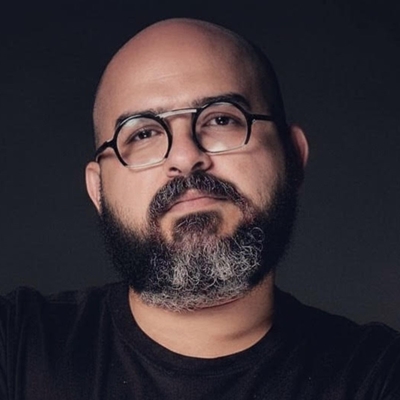
Art workshop with Rubén Egea
A critical exploration of territory and its cultural assets
Corporación Ruleli
Read moreCulture should be accessible to all and local art deserves a higher profile. This is the thinking behind the work of Colartis, the Corporación Pulso Creativo, which offers artistic education to young people who have limited access to cultural spaces. Those taking part in this workshop will use artistic media to create visible narratives based on texts written by 2026 Hay Festival Cartagena de Indias guests, thus creating a link between literature and the visual arts. Workshop lead by Rubén Egea.
Event HFJ15B
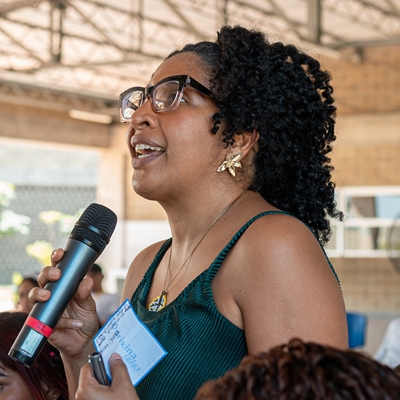
¿Cuáles son los límites de la libertad de expresión en los eventos culturales?
Conversación en mesa redonda
Universidad de Cartagena, Claustro de San Agustín (Biblioteca)
Read moreAnfitriones del encuentro: David Lara Ramos, escritor, periodista, abogado y director del programa de Comunicación Social de la Universidad de Cartagena, y Rosmery Armenteros, escritora y gestora cultral.
Event 46
Amor Towles in conversation with Santiago Ángel
Table for two
Centro de Convenciones (Auditorio Getsemaní)
Read moreTable for Two, by Amor Towles (USA), includes six tales that take place around the year 2000, as well as a novella set during the Golden Age of Hollywood. There is apparently no connection among the stories, but they deal with universal themes, including the search for happiness, the power of money, and the subversion of social conventions. The author of the memorable A Gentleman in Moscow once again creates fascinating characters who talk about relationships, family, trust, ambition, guilt and the value of friendship. He talks to Santiago Ángel.
Simultaneous interpretation from English to Spanish available
All events on Saturday, January 31st will be free for people with ID from the department of Bolívar. Complimentary tickets can be requested —up to capacity— at the box office of the Hay Festival (Centro de Convenciones) showing your identification on the same day the event is taking place.
Sponsored by Sura and Bancolombia
Event 47
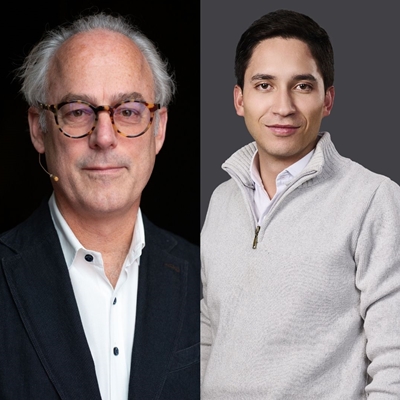
Fernando Arancón, Marcela Meléndez and Carlos Alberto Patiño in conversation with María Martín
Getting up to speed with geopolitics
Centro de Convenciones (Salón Barahona)
Read moreAbout a quarter of a century ago, Zygmunt Bauman defined our time as one of “liquidity”. Since then, our structures have only continued to change, with a geopolitical spectrum that is more volatile than ever: the rise of autocratic politics, the invasion of Ukraine, the future of Gaza after the ceasefire, the US incursions in Colombian and Venezuelan waters… Talking about all this will be Fernando Arancón, Director of the digital media outlet El orden mundial; Marcela Meléndez, a World Bank economist; and Carlos Alberto Patiño, author of La Guerra Global Invisible. Ucrania, el mundo y el retorno de los imperios, together with journalist María Martín.
All events on Saturday, January 31st will be free for people with ID from the department of Bolívar. Complimentary tickets can be requested —up to capacity— at the box office of the Hay Festival (Centro de Convenciones) showing your identification on the same day the event is taking place.
With the support of Acción Cultural Española, AC/E
Event 48
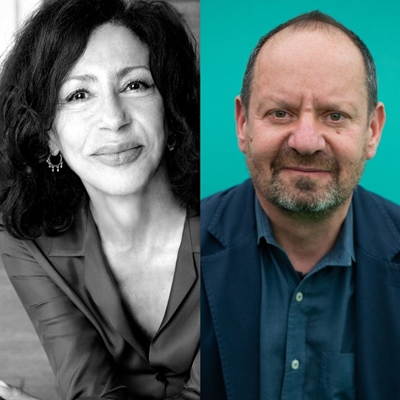
Yasmina Reza in conversation with Philippe Sands
Teatro Adolfo Mejía
Read moreWith plays such as Art and God of Carnage, which have played in over 30 countries, Yasmina Reza (France) has created a position for herself as one of the most respected and interesting of contemporary playwrights. She is also an actor (Lejos, Hasta mañana…), filmmaker (Chicas), novelist (Babylone, Serge…) and screenwriter (Jusqu’à la nuit, la noche, Le pique-nique de Lulu Kreutz). In her latest book, Récits de certains faits, she brings together personal memories and trial reports in order to investigate moral fragility and everyday imperfection. A biting, psychological observation of the human, using concise and incisive texts.
Simultaneous interpretation from French to Spanish available
All events on Saturday, January 31st will be free for people with ID from the department of Bolívar. Complimentary tickets can be requested —up to capacity— at the box office of the Hay Festival (Centro de Convenciones) showing your identification on the same day the event is taking place.
Explore All Genres
- Afrodescendencias
- Latin America
- South to North
- Art
- Arts & Culture
- Children
- Culture
- Design
- Drawing
- Economics
- Equality
- Fashion
- Film
- Food
- Gender
- History
- Human Rights
- Indigenous Cultures
- Journalism
- Language
- Law
- Literature
- Music
- Nature & Environment
- Philosophy
- Photography
- Podcast
- Poetry
- Politics
- Psychology
- Religion
- Science
- Sport
- Technology
- Theatre
- Workshops
- World Affairs

Partner for Latin America
Principal Sponsors


Government Partners