Hay Festival Colombia Digital
Hay Festival Colombia took place from 21 to 30 of January 2022, with events in the cities of Cartagena de Indias, Medellín and Jericó. You are currently browsing the digital programme of the festival.
If you want to browse the in-person events of Hay Festival Cartagena de Indias, click here.
If you want to browse the in-person events of Hay Festival Medellín, click here.
If you want to browse the in-person events of Hay Festival Jericó, click here.
Event 60
Mathias Enard in conversation with Helena de Bertodano
Melancholy of the Outskirts
IE University. Refectorio
Cities and journeys through the traces left by the past and its memory are settings that Mathias Enard places at the heart of his works as in his latest book, Melancolía de los confines: Norte, in which he blends memoir, travelogue and literary essay. Physical landscapes, but also moral ones, run through his entire body of work, creating a kind of geographical, human and literary border. He explores other borders that have more to do with memory and with the ability to understand who we are when we cease to exist.His latest work, the first part of a quartet on the cardinal points, serves as a vehicle for discussing all this with Helena de Bertodano, a journalist specialising in interviews and profiles of celebrities for prestigious publications. The event will be presented by Zélie Perpignaa, an expert in cultural mediation and attaché for Books, the Exchange of Ideas, and Media Libraries at the Institut Français in Spain.
At the end of the event, the author will be signing copies of his books
Event in Spanish
Co-organized with the French Embassy in Spain and the Institut Français and in collaboration with Penguin Random House Grupo Editorial


Event 6
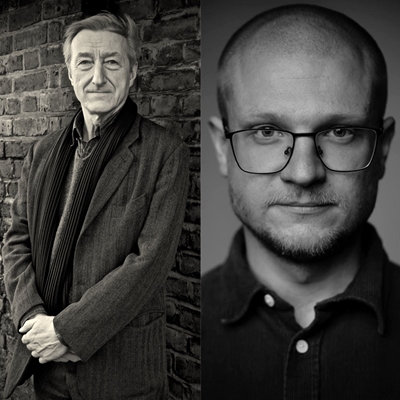
Julian Barnes (United Kingdom) has suggested that Departure(s), published earlier this year, will be his final book. With this novel about love, happiness and farewells, he brings a long literary career into focus, one that established him as a central figure in contemporary English fiction with works such as Flaubert’s Parrot and The Sense of an Ending. Recently awarded the Princess of Asturias Award for Literature, he is a writer with a distinctly European outlook, whose work moves between fiction and reality, irony and melancholy, and a sustained attention to how stories are constructed, remembered, and revised. One of the most important writers of contemporary fiction will be in conversation with Oleksandr Mykhed.
Event 7
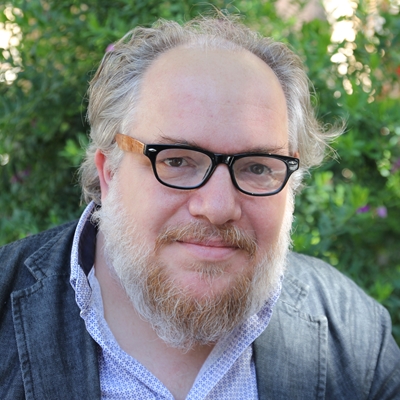
Mathias Énard (France) has built his work around the circulation of people, languages, and wars across overlapping historical and geographical spaces. In Zone, a single train journey becomes an inventory of modern violence from the Mediterranean to the Middle East, while Compass —winner of the Prix Goncourt— traces centuries of cultural exchange between Europe and the East through music, literature, and travel. His most recent novel, The Deserters, returns to war through two separated timelines, following figures who step away from systems of violence and the structures that sustain them.
Event 4
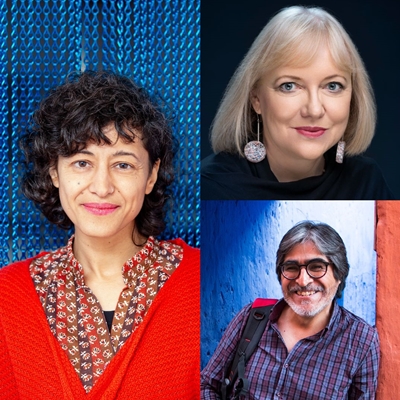
Sarah Babiker Moreno and Renata Salecl in conversation with Omar Zevallos
How to change the state of things
Teatro Municipal
Simultaneous interpretation from English to Spanish available
With the support of Acción Cultural Española, AC/E
Event 7
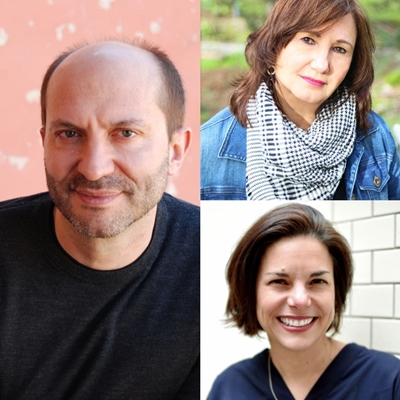
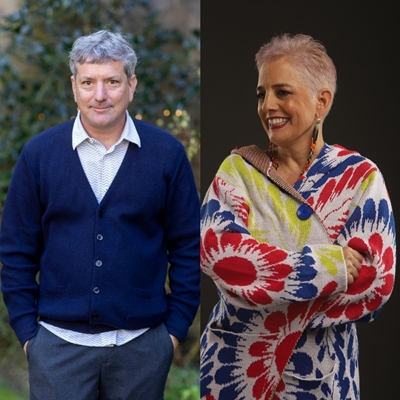
Carlos Granés and Fietta Jarque in conversation with Katerina Valdivia Bruch
How art can explain a continent
Teatro Municipal
Can art explain a continent better than politics or history? Latin America has found in creativity a space to imagine futures, challenge power, preserve memory and reinvent its identity. The Colombian essayist Carlos Granés, author of Delirio americano and El rugido de nuestro tiempo, reflects on the relationship between art, culture and politics in the region. The journalist and writer Fietta Jarque (Peru), author of Cómo piensan los artistas and known for her long career as a critic and chronicler of the visual arts, explores how Latin American artists have covered the continent’s major transformations and challenged traditional perspectives on its history. These two thinkers will engage in a dialogue alongside the curator and independent researcher Katerina Valdivia Bruch.
SURA Invites and with the support of ICPA
Event 12
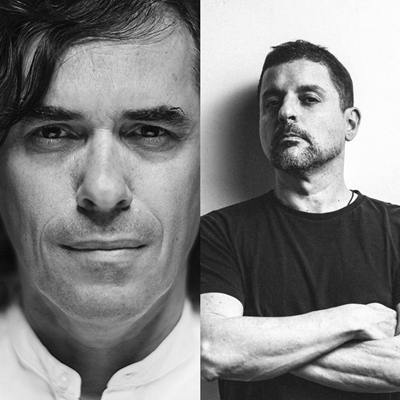
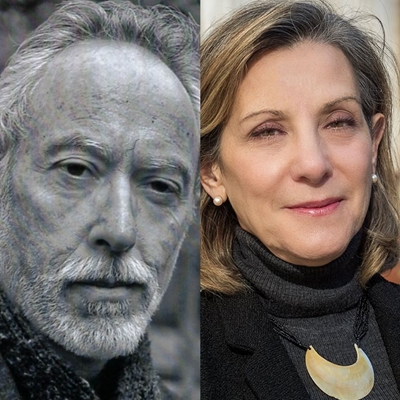
Mircea Cărtărescu (Romania) is one of the most prominent authors in contemporary European literature. A writer with a mystical bent, he has constructed a dreamlike, almost Macondian literary universe in which the real and the imaginary are interwoven with lyrical force. The author himself has remarked that some people view Romania as a Latin American country lost in Europe, and that he agrees with this view. The author of more than twenty books of poetry, fiction and essays, his most recent works translated into Spanish are the monumental Blinding trilogy—considered to be the summit of his literary output, together with Solenoid, Theodoros and Los conocedores. In conversation with Dante Trujillo.
Consecutive interpretation from Romanian to Spanish available
Sponsored by Fundación BBVA
Event 18
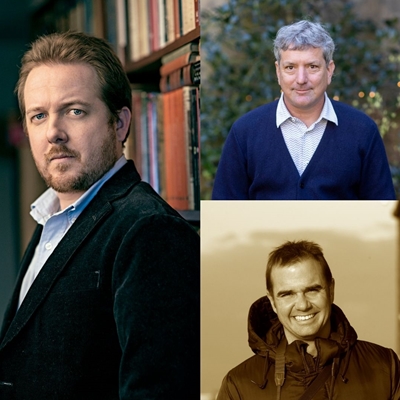
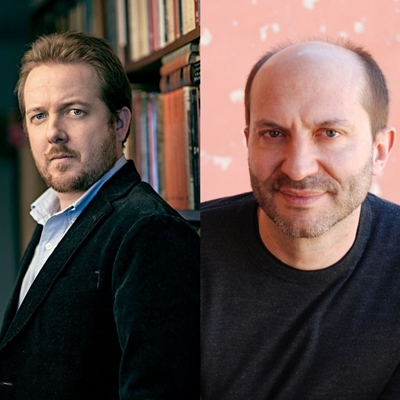
Juan Esteban Constain and Santiago Roncagliolo in conversation with Raúl Tola
Magnificent humanity: Leo XIV’s encyclical
Teatro Municipal
Streaming available
Sponsored by Gloria
Event 23
Juan Esteban Constain in conversation with Carlos Granés
Greece, Rome and Israel: where Christianity began
Teatro Municipal
El Hijo del Hombre, by Juan Esteban Constaín, is a historical and literary essay in which the author delves, in his unmistakable style, into the history of the origins of Christianity and the intersection between Judaism and Greco-Roman paganism. The author will be in conversation with the Colombian essayist Carlos Granés about this book, which explores classical antiquity and how Christianity eventually became the official religion of the Roman Empire.
Accesibility: interpretation into Peruvian Sign Language (LSP) available
Event 29
Santiago Roncagliolo in conversation with Patricia del Río
The unexpected rise of Leo XIV
Teatro Municipal
El pastor y los lobos by Santiago Roncagliolo (Peru) is the true story of Pope Leo XIV and the darkness. The story: a narrative investigation into Robert Prevost’s rise to the papacy. The darkness: the internal struggles, contradictions and challenges facing the Catholic Church. Two factions, one reformist and the other fundamentalist; two ways of understanding the Church, and one had to choose the successor to Francis I. It was here that the discreet figure of Prevost, far removed from the media spotlight, emerged. Roncagliolo traces the clergyman’s path, from his ecclesiastical and social work in Chiclayo to his pivotal role in investigating the Curia’s most murky cases. He also weaves a personal narrative in which he confronts values such as hypocrisy and faith, as well as corruption and justice. He will talk to the journalist and writer Patricia del Río.
Sponsored by Gloria
Event 33
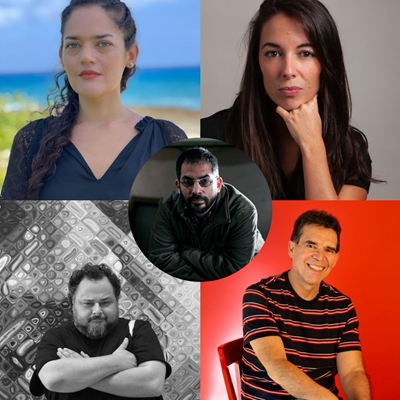
Cristina Bendek, Álvaro Bisama and Edmundo Paz Soldán in conversation with Enrique Planas
Maps to orient us
Casa Tristán del Pozo - Fundación BBVA
Maps are never neutral. They define borders, reflect power relations, record conflicts and reveal the ways in which societies imagine and organise the world. At a time of profound geopolitical change, characterised by territorial disputes, migration, climate crises and new configurations of global power, cartography takes on renewed significance. Cristina Bendek (Colombia), Álvaro Bisama (Chile) and Edmundo Paz Soldán (Bolivia) will share different ways of interpreting and narrating the world. Each will choose their own physical, cultural, linguistic or emotional map and discuss how these shape our understanding of identity, memory, territory and a sense of belonging.
Sponsored by La Joya Mining Group and with the support of the Embassy of Chile
Event 35
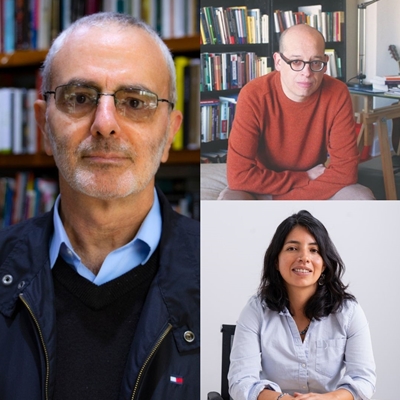
Farid Kahhat and Alberto Vergara in conversation with Camila Osorio
El País lecture: What is happening in the region?
Teatro Municipal
Peru is experiencing a period of particular political disillusionment: weakened institutions, a sense of insecurity, and a citizenry distanced from its representatives. At the same time, Latin America also seems to be shifting its priorities, veering to the right, with security as a key electoral priority for its presidential candidates. What does the Peruvian case tell us about this trend? Is this change in the political landscape due to a cyclical ideological shift in the region, or is there something deeper behind it? Farid Kahhat and Alberto Vergara will discuss the reasons for this disenchantment with politics in Peru, the new forms of leadership emerging in the region, and where all of this might lead us.
Event 39
Reading in homage to Mario Vargas Llosa
Casa Tristán del Pozo - Fundación BBVA
Twelve participants of the Hay Festival Arequipa 2026 will pay tribute to Mario Vargas Llosa by reading 24 autobiographical texts by the extraordinary Arequipa writer. From his birth to his eighties, we will explore the many sides of this multifaceted figure, remembering the universal writer, the incisive journalist and the generous human being. A unique opportunity to celebrate life, art and the transformative power of literature.
Taking part: Claudia Apablaza, Augusto Carrasco, Ulises Gutiérrez Llantoy, Fietta Jarque, Alma Delia Murillo, Giovanna Pollarolo, Luis Rodríguez Pastor, Ricardo Sumalavia, Alonso Ruiz Rosas, Raúl Tola, Josefina Townsend, Zoila Vega Salvatierra
Accessibility: Peruvian Sign Language (LSP) interpretation
Co-organised with the Cátedra Mario Vargas Llosa and with the support of Integra Tech
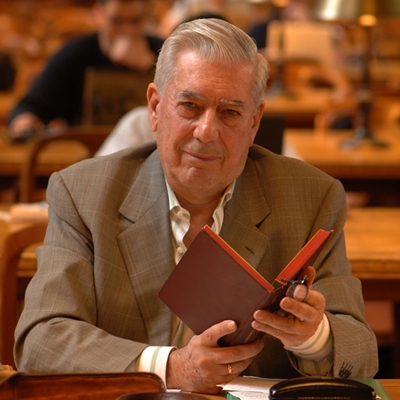
Event 41
J. M. Coetzee and Valerie Miles in conversation
The 'making of': Mariano Melgar, poetry of love and rebellion
Teatro Municipal
There is a link that connects a Nobel laureate like J. M. Coetzee (South Africa) with Arequipa: the poetry of Mariano Melgar. At the end of last year, he translated, along with Valerie Miles (USA), the poem "Por no sé qué capricho" into English and published it in the prestigious literary magazine The Paris Review under the title "On Some Whim or Other." This is a small preview of what is to come: the publication of Mariano Melgar: poesía de amor y rebelión, a bilingual edition in Spanish and English with poems by the "poet of the yaravíes." They will discuss the culmination of three years of work in which they selected and translated Melgar's work, how Coetzee came to discover Melgar, and what fascinated him about his poems. It is significant that, 200 years after Melgar's death, his poetry is finally being translated into English.
Simultaneous interpretation from English to Spanish available
SURA Invites
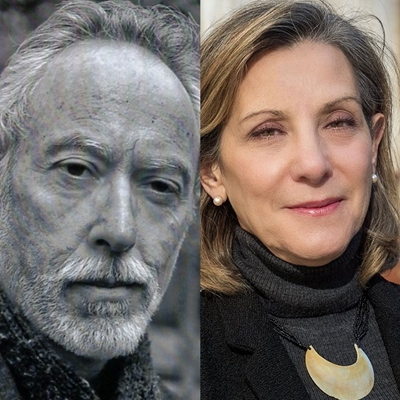
Event 48
Ximena López Bustamante and Giovanna Pollarolo in conversation with Luis Rodríguez Pastor
Varela-Ferrer: echoes of a conversation that never took place
Casa Tristán del Pozo - Fundación BBVA
On the centenary of Blanca Varela's birth and following the recent publication of Julia Ferrer's En la orilla de todos los sueños. Poesía reunida, two outstanding voices of 20th-century Peruvian poetry meet again through those who have studied their work. Giovanna Pollarolo, Ximena López Bustamante and Luis Rodríguez Pastor will bring into dialogue two poetics that seem to advance along opposite paths: Varela's extreme refinement and Ferrer's boundless imagination. In both, however, there is a way of exploring the body, language, freedom and the female experience. Their verses, their lives and the readings they have inspired will be the starting point for revisiting a poetic tradition that continues to raise questions.
Sponsored by Cerro Verde with the support of PUCP
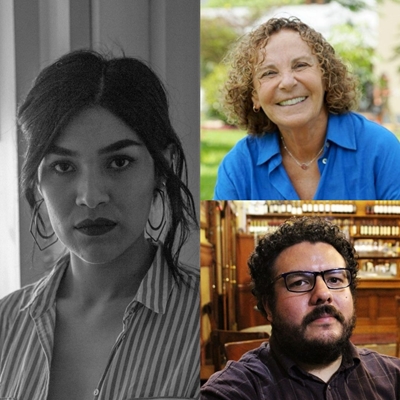
Event 50
They say you always return to where you were happy, and for André Aciman (Egypt/United States), that place is Italy. It was Italy in Call Me By Your Name and Find Me, and it takes on a more personal dimension in My Roman Year, where he recalls the first year he spent in Rome with his family after fleeing Egypt. There, a teenager discovers the city while trying to find his place in the world and experiencing love. This possibility of becoming someone else also runs through Room on the Sea, his most recent novel, not yet translated into Spanish, whose protagonists imagine the lives they could have lived. Alongside filmmaker Miguel Barreda Delgado (Peru), he will discuss literature and film, that profoundly human matter that lies between who we are and who we imagine we could have been.
Simultaneous interpretation from English to Spanish available
With the support of the Open Society Foundations
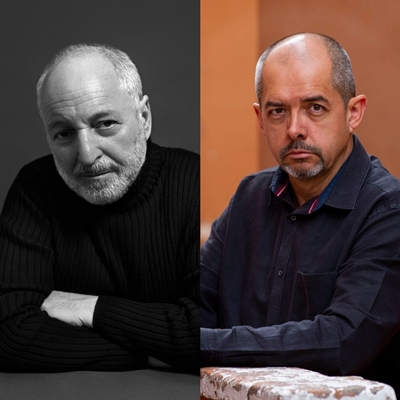
Event 55
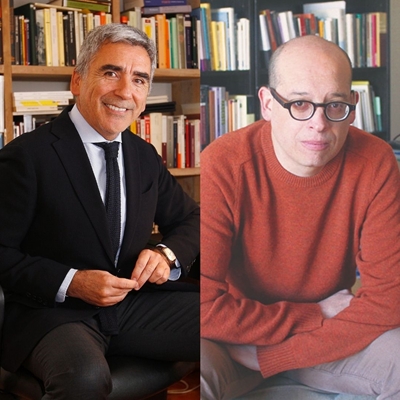
Carlos Peña in conversation with Alberto Vergara
More humanism
Casa Tristán del Pozo - Fundación BBVA
With the sponsorship of Yura and with the support of the Open Society Foundations
Event 57
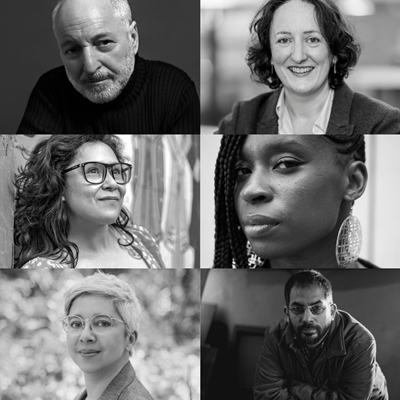
André Aciman, Elma Correa, Catherine Fletcher, Vidya Narine and Irenosen Okojie in conversation with Enrique Planas
Maps for understanding ourselves
Teatro Municipal
Maps are never neutral. They define borders, reflect power relations, record conflicts, and reveal how societies imagine and organize the world. At a time of profound geopolitical transformations, marked by territorial disputes, migrations, climate crises and new configurations of global power, cartographies take on renewed significance. André Aciman (Egypt/United States), Elma Correa (Mexico), Catherine Fletcher (United Kingdom), Vidya Narine (France) and Irenosen Okojie (Nigeria/United Kingdom) will share different ways of reading and narrating the world. Each will choose their own physical, cultural, linguistic or emotional map and discuss how these shape our understanding of identity, memory, territory and belonging.
Simultaneous interpretation from English to Spanish available
SURA Invites and with the support of the British Council
Event 62
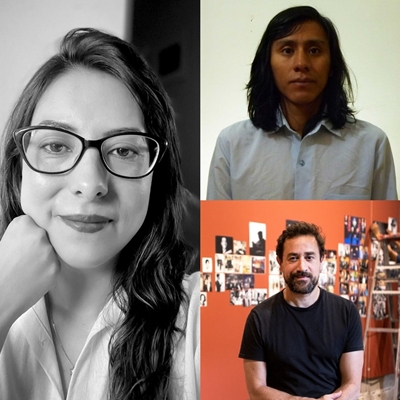
Ros Postigo and Raúl Chuquimia in conversation with Carlos Caamaño
Arequipa–Lima: photography as a meeting place
Casa Tristán del Pozo - Fundación BBVA
In the first half of the 20th century, Arequipa helped shape some of Peru's most memorable images. Today, new generations of photographers, curators and thinkers are once again asking what it means to look at a country in transformation. Photographer Ros Postigo and visual artist Raúl Chuquimia will speak to curator Carlos Caamaño about photography as a tool for creating memory and understanding territory, identity and diversity, and something more essential: photography can teach us to see the country better, and Arequipa, with its history and artistic vitality, can become a space for reflecting on contemporary photography in Peru.
Sponsored by Fundación BBVA
Event 63
Recital accompanied by music, by J.M. Coetzee and Valerie Miles
Closing event: readings of Mariano Melgar
Teatro Municipal
Sponsored by Credicorp and the support of the Open Society Foundations
Event 64
Mauricio Ambrossio, Claudia Delgado and Andrés Garay in conversation
How Arequipa adopted photography
Casa Tristán del Pozo - Fundación BBVA
The evolution of photography over its two-hundred-year history has transformed our relationship with images. Since 1875, Arequipa has been a major hub of photographic activity, radiating influence across the entire region. Mauricio Ambrossio, Claudia Delgado and Andrés Garay will discuss how shifts in usage and technology have shaped the work and creative output of photographers from Arequipa.
With the support of the French Embassy in Peru
Explore All Genres
- Afrodescendencias
- Latin America
- South to North
- Art
- Arts & Culture
- Children
- Culture
- Design
- Drawing
- Economics
- Equality
- Fashion
- Film
- Food
- Gender
- History
- Human Rights
- Indigenous Cultures
- Journalism
- Language
- Law
- Literature
- Music
- Nature & Environment
- Philosophy
- Photography
- Podcast
- Poetry
- Politics
- Psychology
- Religion
- Science
- Sport
- Technology
- Theatre
- Workshops
- World Affairs

Partner for Latin America
Principal Sponsors

Government Partners